Paint Cost at Home Depot: A Practical DIY Guide 2026
Explore real-world paint cost ranges at Home Depot, from interior latex to primers and finishes. Learn budgeting tactics, regional variation, and smarter shopping for DIY projects with PaintQuickGuide.


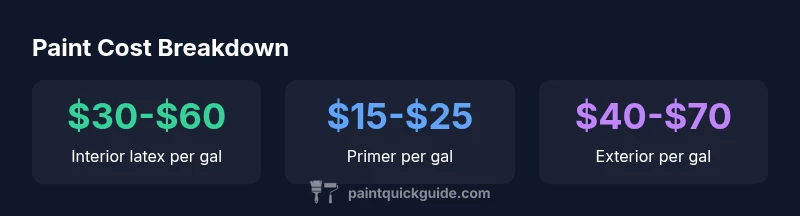
Average paint costs at Home Depot for standard interior latex range roughly from $30 to $60 per gallon, with premium brands climbing toward $70 or more depending on color depth, finish, and pigment load. Primer typically runs $15–$25 per gallon, while finishes, exterior paints, and specialty sheens can push total project costs higher depending on the quantity purchased, whether you need stain blockers, and the number of coats required.
How Home Depot Prices Paint: An Overview
Home Depot prices paint by product category, brand, and finish, with standard interior latex offering the broadest value. You’ll typically see price bands that reflect common consumer choices: mid-range brands with solid coverage and reliability, premium lines with extended durability, and economized options for quick projects. Behr and other widely distributed lines sit alongside regional brands in the Behr ecosystem, and many stores provide color-matching services that can influence the final price when you need custom shades. As a rule, these prices are baseline estimates, and actual costs will vary by location, sales, and the specific pigments or additives you select. This section lays out the typical structure so you can budget confidently before you walk the aisle.
PaintQuickGuide's 2026 analysis shows that the can price is only part of the story. When calculating total project cost, homeowners should factor in primer, surface preparation, tools, and at least two coats for most color changes. Store policies on bulk discounts, color-matching, and paint-return windows also play a role in the final tally. Understanding these components helps you compare across brands and finishes without surprises at checkout.
Key Cost Drivers for Paint Projects
The cost of painting a room goes beyond the sticker price on a single can. The main cost drivers are: (1) product type (interior vs exterior, latex vs oil-based), (2) finish or sheen (flat, eggshell, satin, semi-gloss, gloss), (3) brand and quality (standard, premium, eco-friendly or zero-VOC), (4) color changes and coverage requirements, and (5) prep needs (sanding, priming, stain blocking). In general, interior latex paints provide the best balance of coverage and price, while exterior paints prioritize durability and weather resistance, often at a higher per-gallon cost. Primers and specialty coats (like stain-blocking shellac primers or high-hide enamels) further impact the budget. The PaintQuickGuide analysis also highlights the impact of regional demand and promotional events on final prices. Smart budgeting accounts for waste (typically 10% extra), the number of rooms, and whether you’ll need multiple finish types in a single project.
To maximize value, compare not just per-gallon prices but coverage rates, the number of coats required, and the availability of bundled deals (paint + primer + supplies) that stores like Home Depot frequently offer. A cost-conscious approach often includes choosing mid-range brands that balance color match quality with durability, reserving premium lines for accent walls or high-traffic areas where wear is greatest.
Regional Price Variation and Store Policies
Prices for paint at Home Depot are not uniform across the country. Regional demand, shipping costs, and local promotions can cause noticeable differences between markets. Large urban stores may feature more frequent sales on premium lines, while rural locations might emphasize value-oriented options. In addition to regional variation, store policies affect the final price. Seasonal promotions, end-cap displays, and membership programs can unlock discounts on paints, primers, and accessories. It’s common to see a mix of standard sale prices and bulk discounts for potions of paint, primers, and accessories. If you’re planning multiple colors or a color-matched batch, check in advance whether your local store can guarantee product availability and delivery timing to avoid price discrepancies caused by out-of-stock issues.
For DIYers, understanding local pricing dynamics helps you align your budget with realistic expectations and avoid overpaying during peak-demand periods. PaintQuickGuide's 2026 analysis notes that savvy shoppers monitor weekly ads, sign up for email promotions, and leverage loyalty programs to secure better pricing on both paints and related supplies.
Budget Scenarios: Small Project vs Large Renovation
A small project, such as refreshing a single accent wall or a powder room, typically requires 1–2 gallons of paint plus primer and a few tools. In this scenario, the cost centers are the paint can, primer for base coverage, and fast-drying tools. For a larger project—think multiple rooms or an entire floor—expect to multiply the quantities and possibly invest in more advanced tools (extension rollers, mixed color kits, and protective gear). Drying time and recoat windows influence labor costs if you hire professionals. For DIYers, a budget-conscious plan proposes selecting mid-range interior latex paints, using a standard primer, and calculating coverage with the manufacturer's stated square footage per gallon. If color changes are drastic, factor in a primer with good stain-blocking properties. The upshot is that the per-gallon cost remains a rough guide; total project cost depends on coverage efficiency, number of coats, and whether you encounter problematic surfaces like textured drywall or glossy finishes that require scuffing. PaintQuickGuide’s framework emphasizes planning for contingencies and treating the project as a series of cost centers rather than a single price tag.
A practical budgeting method is to calculate gallons needed using the room’s dimensions, add 10–15% for waste, and then layer primer and topcoats. For projects spanning several rooms, explore bundled offers that combine paint, primer, and tools to maximize savings. A well-planned shopping list prevents impulse purchases that can derail your budget.
DIY vs Professional Application: Cost Trade-offs
Choosing between DIY and professional painting hinges on time, skill, and the value of your time. DIY painting costs are primarily driven by materials: paint, primer, rollers, brushes, tape, drop cloths, and protective gear. Labor costs, if you hire a pro, typically reflect square footage, surface preparation, number of coats, and any specialty finishes. In general, professional pricing can still be competitive if your space requires extensive surface prep or if you’re covering a large area in a short timeframe. The real value in hiring a pro often lies in surface preparation quality, even finish, and faster project completion, which can offset higher labor costs in terms of time saved and reduced rework. PaintQuickGuide recommends comparing quotes, verifying that pros include surface prep, priming, and two coats in their estimates, and requesting a breakdown of material fees to understand the overall cost composition. When it makes sense to DIY, plan for your own labor, potential mistakes, and a multi-coat strategy to achieve an durable finish at a lower total price.
In sum, your decision should balance budget, timeline, and tolerance for mess and cleanup. For many homeowners, a hybrid approach—DIY for straightforward rooms and professional oversight for tricky finishes or high-traffic spaces—delivers the best value.
How to Estimate Your Project Cost Step-by-Step
Step 1: Measure each room to determine total wall area and calculate ceiling area if you’re painting ceilings. Step 2: Choose your paint type (interior latex is often most cost-effective) and estimate gallons per room using the manufacturer’s coverage rates. Step 3: Add primer gallons if you’re making a drastic color change or painting a challenging surface. Step 4: Factor in supplies (tapes, rollers, trays, brushes), plus drop cloths and cleaners. Step 5: Include a waste factor (about 10%), plus an additional coat if you switch color families or require special finishes. Step 6: If hiring a pro, request a detailed quote with labor hours, materials, and any prep work listed as separate line items. Finally, check for bulk discounts, color-matching offers, and seasonal sales at Home Depot that can reduce the total cost. This systematic approach helps you build a realistic budget and avoid sticker shock at checkout.
Tips to Maximize Value: Coupons, Bundles, and Colors
To stretch your paint budget, take advantage of Home Depot’s promotions and color-matching services, when available. Look for bulk bundles that include paint, primer, and accessories, which often carry a lower combined price than buying items separately. Consider mid-range finishes that offer durability without the premium price tag, especially in low- or medium-traffic rooms. If you’re tackling multiple colors, try using a single base color with accent walls to minimize waste while achieving a fresh look. Finally, prepare surfaces properly—sanding, cleaning, and priming where needed—to reduce the number of coats and ensure a smoother finish that lasts longer. These practical steps align with PaintQuickGuide’s data-driven guidance for cost-conscious DIYers.
Home Depot paint cost ranges by product type (rough ranges)
| Product Type | Typical Range (per gal) | Notes |
|---|---|---|
| Interior latex paint | $30-$60 | Standard finishes, common brands |
| Primer | $15-$25 | Base coats and undercoats |
| Exterior paint | $40-$70 | Durable finishes, weather resistance |
| Specialty finishes | $70-$110 | High-end sheens, epoxy or zero-VOC |
Your Questions Answered
What is the typical price range for interior latex paint at Home Depot?
Most customers see $30-$60 per gallon for standard latex paints, depending on brand and finish. If you opt for premium lines, expect higher prices, and always compare coverage efficiency to gauge value.
Most people pay between thirty and sixty dollars a gallon, depending on brand and finish.
Does Home Depot offer discounts on paint purchases?
Home Depot frequently runs sales and bulk discounts, including color-matching promotions and contractor pricing. Sign up for deals and check weekly ads to maximize savings on paints and supplies.
Yes, Home Depot runs sales and bulk discounts; look for coupons and weekly ads.
How many coats are typically required for coverage?
Coverage depends on color, base, and surface, but two coats are common for most color changes. A single coat might suffice with a high-hide primer and proper surface preparation.
Usually two coats, but it depends on color and surface.
Is primer necessary before painting?
Primer improves adhesion and color coverage, especially when changing from dark to light colors or on irregular surfaces. Plan for primer in your cost estimates for a smoother finish.
Primer helps a lot; you’ll probably need it for big color changes.
How can I estimate total project cost?
Add paint cost, primer, tools, and any rental or specialty supplies. Use product coverage rates to determine gallons needed and add a buffer for waste and touch-ups.
Calculate by multiplying gallons by price and adding supplies.
Are there price differences for DIY vs pro painting?
DIY saves labor costs but requires time and effort; pros quote by square footage and may include prep. Weigh your time, risk, and finish quality when deciding which path offers the best value.
DIY saves money but takes time; pros may be faster and provide a smoother finish.
“Price transparency helps homeowners budget effectively; always account for primer, tools, and multiple coats, not just the can price.”
Quick Summary
- Plan with ranges, not fixed prices, to account for variability
- Budget for primer, tools, and at least two coats
- Shop the sales and bundles for best value
- Consider DIY vs pro based on time and skill
- Calculate total cost from gallons, coats, and supplies