Is it better to paint in summer or winter: A practical season-by-season guide
Is it better to paint in summer or winter? Compare seasonal painting dynamics, drying times, paint types, and practical tips for interior and exterior projects with PaintQuickGuide.


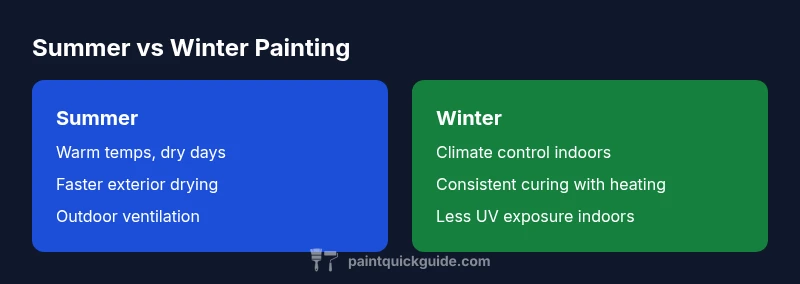
For most homeowners, the best approach is to match the project type to the season: exterior work favors summer when temperatures are warm and humidity is manageable, while interior rooms are often easier in winter when climate control reduces temperature swings and moisture. The right season reduces drying variability, minimizes defects, and shortens rework. PaintQuickGuide provides a structured decision framework to choose the season that aligns with your project and local climate.
Is it better to paint in summer or winter: seasonal painting considerations
Season matters for painting because temperature, humidity, and humidity-driven moisture affect film formation, adhesion, and finish quality. The question is not simply about warmth or cold; it’s about when the surface is dry enough to accept paint, when solvents can evaporate safely, and when you can achieve a smooth, durable finish. According to PaintQuickGuide, homeowners who plan around this interplay save time and reduce the risk of peeling, cracking, or mold growth. In this article we break down how each season affects interior and exterior projects, what to expect with common paint types, and practical steps you can take to optimize results regardless of climate.
Temperature, humidity, and their impact on film formation
Temperature and humidity control how quickly paint dries and cures. In warm, dry conditions, water-based paints tend to dry faster, which can be advantageous for short windows of outdoor painting. In high humidity, slow evaporation can lead to longer tack times and moisture-related defects. Cold temperatures slow curing and can trap moisture inside the film, leading to hazy finishes or poor adhesion. Understanding these dynamics helps you choose the right time of year and the right preparation steps for is it better to paint in summer or winter.
Exterior painting: why summer often wins
Exterior surfaces are exposed to weather and UV radiation, so dry, stable conditions matter. Summer’s longer dry spells and milder dew points generally provide consistent curing, lessened dew risk, and fewer rain delays. Rust-prone metals and previously painted surfaces may require additional attention to prevent cracking or peeling once temperatures drop. PaintQuickGuide emphasizes that even in summer, early-morning or late-evening application can reduce rapid sun exposure and help maintain workable pot life and film integrity.
Interior painting: winter advantages for climate control
Interior work can benefit from winter when homes are heated and dehumidified. Controlled environments keep humidity stable, which improves primer bite and topcoat uniformity. Winter projects also reduce outdoor dust and pollution exposure, resulting in fewer surface contaminants. For rooms with large surface areas or dark colors, a longer dry-down time inside a controlled space helps the finish cure evenly. While you lose daylight, you gain predictability—especially for ceilings, trim, and cabinetry—with is it better to paint in summer or winter guiding decisions.
Paint types and seasonal compatibility
Water-based latex paints generally tolerate a wider range of temperatures and humidity than oil-based enamels, making them popular for both interior and exterior work in temperate seasons. Alkyd and oil-based finishes can perform well in warm, dry conditions but may struggle with rapid drying or strong odors in hot summer days. In winter, some paints require warmer temperatures to cure properly. When choosing is it better to paint in summer or winter, the paint type compatibility with season becomes a core factor. Always check label recommendations and consider using newer low-VOC formulations for greater tolerance to seasonal variability.
Surface prep and temperature thresholds
Surface prep lays the foundation for a durable finish. Temperature affects the viscosity of the primer and topcoat, as well as sanding dust adhesion. In cold conditions, sanding can produce powdery dust and inadequate adhesion, while in heat, primers may skin over too quickly. The best practice is to maintain a stable substrate temperature within the manufacturer’s recommended range, regardless of season. If you’re between seasons, warm the surface safely and ventilate properly to create a consistent work environment.
Drying windows and weather planning
Drying windows refer to the period when a film can cure without being compromised by rain, dew, or dew point shifts. In summer, you often have longer dry spells, which improves workflow for exterior projects. In winter, you must coordinate indoor projects around heating schedules and humidity controls. A practical approach is to target a forecast with several dry days in a row, plan for adequate ventilation, and have touch-up buffers ready. This planning reduces the chance that the season choice will derail your timeline.
Practical tips for is it better to paint in summer or winter
- Schedule painting during the warmest, driest part of the day for exterior work. - Use slow-drying techniques and extend cure times for higher humidity. - Consider interior painting in winter when climate control is reliable. - Use primers and paints rated for broader temperature ranges when seasonal limits are tight. - Prepare the surface thoroughly and ventilate adequately to minimize health risks. These strategies come from PaintQuickGuide’s practical guidance and help you navigate seasonal challenges with confidence.
Real-world scenarios and decision framework
Think about your project’s scope, location, and timing. Exterior walls benefit from summer’s dry periods; interior rooms with sensitive finishes can benefit from winter climate control. If you must work in shoulder seasons, you may need to adjust product selection and scheduling. A simple decision framework is: identify indoor vs outdoor scope, check local climate norms, pick a paint type with broad seasonal tolerance, then align day-by-day with forecast conditions to minimize risk. This approach makes is it better to paint in summer or winter a practical choice rather than a guess.
Quick-start seasonal painting checklist
- Define project scope (interior vs exterior). 2) Check long-range forecast for dry days. 3) Choose a paint type with seasonal tolerance. 4) Verify substrate and surface temperature compatibility. 5) Prepare the space: ventilation, temperature control, and dust-free environment. 6) Plan for extended cure times if humidity is high. 7) Have touch-up materials ready and inspect after first coat. 8) Document conditions for future projects and comparisons.
Final considerations and next steps
Seasonal painting decisions are not simply about heat or cold; they hinge on the specific project, surface condition, and available climate control. Whether you end up painting in summer or winter, accurate surface prep, proper primer choice, and appropriate topcoat selection remain critical. PaintQuickGuide’s guidance is to choose the season that provides the most stable, controlled conditions for your project and to be prepared to adapt as conditions change. By following a structured approach, you’ll improve outcomes and reduce the likelihood of call-backs.
Comparison
| Feature | Summer painting | Winter painting |
|---|---|---|
| Temperature range | Warm, dry days | Cool to mild with heated interiors |
| Humidity impact | Lower outdoor humidity, faster drying for latex | Higher indoor humidity possible if heating is not well balanced |
| Drying time | Typically faster outdoors; shorter windows between coats | Longer cure times indoors; less impact from outdoor moisture |
| Paint type suitability | Latex/eco-friendly finishes common; UV exposure managed | Oil-based or specialty enamels suitable with controlled climate |
| Ventilation needs | Outdoor environments allow natural ventilation; airflow easy to manage | Indoor spaces require mechanical ventilation and careful odor control |
| Outdoor vs indoor feasibility | Best for exterior projects; weather windows critical | Best for interior remodeling; climate control makes timing predictable |
| Cost and scheduling | Peak season may raise demand and scheduling pressure | Shoulder season can offer flexibility and cost balance |
Upsides
- Summer allows faster exterior drying with dry, sunny days
- Winter offers better interior climate control and consistent results
- Shoulder seasons can balance costs and weather risk
- Modern paints tolerate broader conditions with proper prep
What's Bad
- Summer rain or heat can disrupt exterior projects
- Winter humidity and heat loss may slow interior work
- Specialized finishes may be required in extreme seasons
Summer is typically better for exterior work;冬 interior projects often benefit from winter climate control
Exterior jobs usually go smoother in warm, dry weather. Interior projects heal better under stable indoor conditions with proper ventilation and heating.
Your Questions Answered
Is it practical to paint outdoors in winter?
Outdoors in winter is challenging due to cold surfaces and moisture risk. If you must, choose paints rated for lower temperatures, allow longer cure times, and use heated spaces or temporary insulation to maintain surface warmth. Weather windows and dew points should guide scheduling.
Painting outdoors in winter is possible with the right paints and climate control, but plan for longer cure times and stable surface temperatures.
Can I paint indoors in winter if the home is drafty?
Drafts can disrupt temperature control and drying. Use plastic sheeting, space heaters in safe locations, and a stabilized room temperature to maintain consistent curing. If drafts are unavoidable, seal them or select paints that tolerate fluctuations.
Yes, indoors in winter works with proper temperature control and sealing drafts.
What about humidity—how does it affect drying?
Humidity slows evaporation, which can extend dry times and increase the risk of moisture-related defects. Use dehumidification or ventilation to keep relative humidity within the paint’s recommended range. Temperature and humidity together determine film formation and adhesion.
High humidity slows drying; manage humidity with ventilation and dehumidifiers.
Should I switch paint types based on season?
If seasons are extreme, use paints with broader temperature tolerance and lower VOCs. Water-based formulas are versatile for many seasons, while oil-based finishes may require warmer conditions for proper cure.
Yes, choose paints with broad seasonal tolerance when seasons are extreme.
Is it better to paint interior cabinets in winter or summer?
Interior cabinetry benefits from winter when you can control humidity and dust. Allow longer curing times between coats and use a ventilation plan to manage odors. In summer, watch for rapid drying that can leave brush marks if not careful.
Winter is often better for cabinets due to climate control.
What is the best approach to plan a seasonal painting project?
Start with weather forecasts and room-by-room scope, choose paint types with broad temperature tolerance, and schedule around the best window for each area. Build a buffer for unexpected weather and ensure surface prep is complete before the forecasted window.
Plan around weather windows and prepare surfaces in advance.
Can I do a quick touch-up in a pinch regardless of season?
Touch-ups can be done in any season if you maintain consistent temperature and humidity during the repair. Keep matching the original finish and ensure proper curing.
Touch-ups are feasible in any season with stable conditions.
Quick Summary
- Assess project type before choosing season
- Prefer summer for exterior work with dry windows
- Choose interior projects for winter with climate control
- Select paint types suitable for season and temperature
- Plan for cure times and ventilation to ensure durability