Cheapest Paint for Home Painting: A Practical Budget Guide
Discover how to choose the cheapest paint without sacrificing essential quality. Learn budget options, practical cost-saving strategies, and a step-by-step workflow to estimate total project costs.


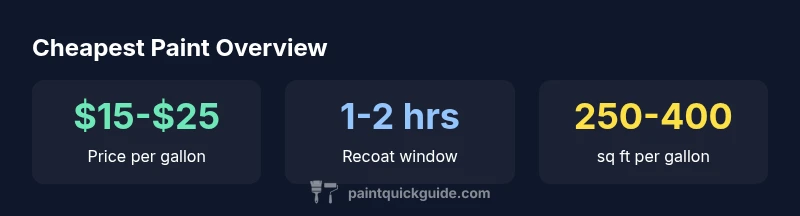
For most painting projects, the cheapest option is budget-grade latex (water-based) paint from value brands. It’s widely used for walls and ceilings and costs less per gallon than premium lines. In practice, budget latex typically runs from about the mid-teens to the mid-twenties per gallon, depending on finish and color. Expect higher prices for specialty sheens or primers bundled with the paint.
What qualifies as the cheapest paint and where it fits in a project
Cheapest paint is generally budget-grade latex from value brands. It’s designed to cover large areas quickly and costs less upfront, which makes it appealing for renovations, rentals, or ongoing maintenance. However, the term 'cheap' reflects price not pedigree; these products vary in pigment load, resin quality, and available colors. In practice, homeowners use budget paint for ceilings, low-traffic walls, or spaces that won’t face heavy abrasion. For car refinishing hobbyists, budget enamel can handle small touch-ups, but durability and gloss will differ from premium lines. When evaluating value, compare price per gallon, predicted coverage, and the typical number of coats required to reach the target finish. Don’t forget primer, surface prep, and tools, which can shift the total cost of a low-price option.
Price dynamics: finish, color, and packaging
Price is not just a number; it’s tied to finish (flat, eggshell, satin), color complexity, and packaging (gallon vs. quarts/buckets). Matte or flat finishes tend to be cheaper upfront than high-sheen or pearl finishes, but they can require more frequent cleaning in busy spaces. Tinting can slightly raise price, especially for unique colors or custom shades. Packaging matters too: gallon jugs are cost-effective, while multi-pack options may save per-gallon but require upfront investment. For budget projects, most shoppers start with a standard white base and select a common neutral color to minimize tinting costs. If you’re painting high-traffic areas, plan for potential extra coats to achieve uniform color and sheen, which increases the overall cost.
Primer, prep costs, and how to maximize value
Prep work is where cheap paint can lose value quickly if corners are cut. Proper surface cleaning, patching, and sanding are essential. Many budget paints are formulated to provide decent adhesion, but primer is still crucial on problematic surfaces (new drywall, stained areas, glossy finishes). Using a compatible primer can improve coverage, reduce the number of coats, and extend the life of the finish. In some cases, a tinted primer can make color changes easier and reduce overall paint usage. When budgeting, include primer costs and consider whether a single premium primer will save you one extra coat later.
Shopping strategies to snag the best deals
Smart shopping makes the cheapest paint even more attractive. Look for sales, bulk discounts, and store-brand equivalents that offer solid coverage. Compare price per gallon rather than per can; sales on quarts or half-gallons can be tempting but may lead to mismatched colors or more frequent re-paints. Read product labels for VOC content, washability, and durability—these affect long-term value. Consider stocking up on a limited palette of universally compatible neutrals to maximize usage across multiple rooms without needing frequent color purchases. Finally, join loyalty programs and check return policies to minimize risk when buying lower-cost paint.
Quality expectations and trade-offs for budget paints
Budget paints deliver reasonable coverage and washability for most residential jobs but often trade off durability, color variety, and long-term resistance to scuffs. They may require more coats, especially on bold colors or high-contrast walls. In high-moisture areas (kitchens, bathrooms) you might notice less resilience to stains or humidity with the cheapest formularies. To reduce risk, test a small patch, apply a couple of coats, and assess how well it covers, dries, and cleans. If you plan frequent redecoration, budget options can still fit the project by budgeting for repeat coats and maintenance.
A practical budgeting workflow for a room
Start with a room square footage: length × width × height to estimate wall area (subtract windows/doors). Use a conservative coverage rate from the product label (often given in sq ft per gallon). Add 10–15% extra for waste and cut-ins. Determine gallons needed, then compare budget latex ranges ($15–$25 per gallon) against mid-range and premium options. Include primer if required, plus tools and painter’s tape. If a color change is dramatic, consider a tinted primer to reduce coats. Finally, tally labor costs if you’re hiring help or the value of your own time.
Health, VOCs, and sustainability in budget options
Even budget paints can vary in volatile organic compound (VOC) content. Look for low-VOC or zero-VOC labels to improve indoor air quality, especially in smaller or poorly ventilated spaces. Many budget lines now offer low-VOC options that meet standard indoor air quality guidelines without sacrificing color or coverage. When choosing, compare the total cost of ownership: paint price, coverage efficiency, and the potential need for odor control measures. If you have sensitivities, select a product with explicit low-VOC certification and a reputable third-party sustainability label.
Maintenance and repaint planning with cheap paint
Budget paint can be a smart choice for quick refreshes in rental properties or high-traffic rooms where color is refreshed every few years. Create a simple maintenance plan: schedule inspections for scuffs or washability, prep surfaces before touch-ups, and keep a small reserve of the same brand and batch to avoid shade mismatches. By aligning your budget with a practical maintenance cycle and picking compatible accessories (brushes, rollers, and primers), you can achieve consistent results without overspending.
Pricing bands and finish notes for common latex paints
| Paint Type | Typical Price per Gallon | Finish/Notes |
|---|---|---|
| Budget latex | $15-$25 | Matte/Eggshell; good coverage |
| Mid-range latex | $25-$45 | Better durability; more color options |
| Premium latex | $45-$70 | Best finish; stain resistance |
Your Questions Answered
What counts as the 'cheapest paint'?
Cheapest paint refers to budget-grade latex from value brands, priced lowest among common options. It is suitable for many interior walls and ceilings, with color choices and finish options that are more limited than premium lines. Always verify coverage and required coats before starting.
Budget-grade latex is usually the cheapest option, great for large surfaces, but expect more coats in some cases.
Will cheap paint perform as well as premium?
Cheapest paint can perform adequately for many spaces, but it may require more coats and may have less durability or color retention. For high-traffic areas or exterior walls, plan for additional coats or consider a mid-range option for better longevity.
It can perform well with prep and extra coats, but durability may lag behind premium lines.
How do I estimate total project cost with budget paint?
Calculate gallons required based on room size and coverage rates, then multiply by the price per gallon. Add primer, brushes, rollers, tape, and any stain-blocking products. Include a contingency for waste and overage, typically 10–15%.
Calculate paint plus primer, tools, and a little extra for waste.
Is budget paint suitable for exterior use?
Some budget lines are rated for exterior work, but durability under weather exposure can vary. If you choose budget exterior paint, select a product with good UV resistance and add a quality topcoat or sealant if needed.
Exterior work is possible with budget paint, just check weather resistance and maintenance needs.
Are there health or VOC considerations with cheap paint?
Yes—many budget paints now offer low-VOC options. Always check the label for VOC content and air-quality certifications if painting in occupied spaces. Low-VOC options help maintain interior air quality.
Look for low-VOC labels to keep indoor air safer.
How can I maximize savings without sacrificing results?
Prep surfaces well, use the right primer, and buy during promotions. Stick to a limited color palette to reduce waste and batch-match as needed. Compare two or three brands to find the best mix of price and coverage.
Prep well, prime, and shop smart to stretch your budget.
“Budget paint can deliver solid results when you plan prep and coats carefully. The cheapest option should still meet your project goals with proper application.”
Quick Summary
- Identify budget-grade latex for lowest upfront cost
- Expect trade-offs in durability and coverage
- Factor primer and prep costs into total project price
- Shop during promotions and stock up on compatible colors
- Choose low-VOC options when indoor air quality matters