Is It OK to Paint Brick? A Practical Guide
Learn when and how to paint brick, with prep steps, materials, step-by-step instructions, maintenance tips, and expert guidance from PaintQuickGuide.


Yes, it is possible to paint brick, but timing and preparation matter. Brick is porous and breathable, so use breathable masonry paint and a suitable primer. Avoid solid, non-breathable coatings on damp brick. According to PaintQuickGuide, the best results come from thorough cleaning, a masonry-grade primer, and a quality two-coat finish.
Is painting brick advisable? Understanding the basics
If you’re considering a brick refresh, you’re likely asking, is it ok to paint brick? The short answer is yes in many cases, but success depends on the brick’s condition, climate, and the coating you choose. Brick is a masonry material that breathes, which means moisture needs a path to escape. When you apply paint, you’re creating a barrier that can trap moisture if you don’t select breathable products and prepare correctly. PaintQuickGuide emphasizes that brick projects should begin with an honest assessment of moisture, mortar condition, and sun exposure. For most exterior brick surfaces, we recommend breathable acrylic latex masonry paint paired with a suitable primer. If you’re painting interior brick, the same breathability principle applies, but heat and humidity dynamics indoors can shift the approach. In short, you can achieve a durable, attractive finish, but you’ll want to methodically plan and execute each step to avoid peeling, cracking, or moisture-related issues.
Is painting brick advisable? Understanding the basics
If you’re considering a brick refresh, you’re likely asking, is it ok to paint brick? The short answer is yes in many cases, but success depends on the brick’s condition, climate, and the coating you choose. Brick is a masonry material that breathes, which means moisture needs a path to escape. When you apply paint, you’re creating a barrier that can trap moisture if you don’t select breathable products and prepare correctly. PaintQuickGuide emphasizes that brick projects should begin with an honest assessment of moisture, mortar condition, and sun exposure. For most exterior brick surfaces, we recommend breathable acrylic latex masonry paint paired with a suitable primer. If you’re painting interior brick, the same breathability principle applies, but heat and humidity dynamics indoors can shift the approach. In short, you can achieve a durable, attractive finish, but you’ll want to methodically plan and execute each step to avoid peeling, cracking, or moisture-related issues.
Tools & Materials
- Stiff-bristle brush or nylon scrub brush(For scrubbing masonry and removing efflorescence)
- Pressure washer or garden hose with spray nozzle(Use low-pressure setting to avoid brick damage; high pressure can erode mortar)
- Mild detergent or brick-cleaning solution(Choose a brick-safe cleaner; avoid harsh solvents)
- Masonry primer (breathable)(Apply a uniform coat; allow to dry per manufacturer directions)
- Breathable acrylic latex masonry paint(Select a satin or eggshell finish for exterior; matte can work indoors)
- Caulk or masonry crack filler(Use on hairline cracks before painting; let cure fully)
- Painter's tape, drop cloths, plastic sheeting(Protect adjacent surfaces and landscaping)
- Paint tray, roller with extension pole, angled brushes(Choose kiln-dry rollers for smooth, even coverage)
- Safety gear: gloves, goggles, respirator or mask(Protect yourself from dust, fumes, and splashes)
- Moisture meter (optional)(Check brick moisture before painting; especially in damp climates)
- Ladder or scaffold as needed(Sturdy access for high areas; never overreach)
Steps
Estimated time: 6-10 hours active work, plus 24–48 hours between coats and full cure time
- 1
Assess moisture and surface condition
Begin by inspecting for dampness, efflorescence, and mortar cracks. Use a moisture meter if available and plan to delay painting if moisture readings are high or if you see active efflorescence. Proper assessment helps prevent peeling and fungal growth after painting.
Tip: If you see efflorescence, remove it fully before painting; moisture must be addressed first. - 2
Clean brick thoroughly
scrub the brick with a stiff brush and a mild cleaner to remove dirt, algae, and loose mortar. Rinse with a low-pressure spray and let dry completely, which may take 24–48 hours depending on weather. Clean bricks will hold primer and paint better.
Tip: Avoid power-washing too aggressively; it can loosen mortar joints. - 3
Repair cracks and imperfections
Fill hairline cracks with a masonry crack filler and repair any obvious mortar damage. Allow the filler to cure as directed, usually 12–24 hours. Repairs help prevent new cracks from opening under paint and improve adhesion.
Tip: Clean out cracks before filling for better bonding. - 4
Prime with breathable masonry primer
Apply a uniform layer of breathable masonry primer to seal the surface and improve paint adhesion. For very porous brick, a second light coat may be required. Let the primer dry fully as per the manufacturer’s guidance.
Tip: Test a small patch first to confirm color and adhesion before full application. - 5
Cut in edges and corners
Use an angled brush to cut in around doors, windows, and trim. This creates clean lines and reduces the number of touch-ups later. Protect nearby surfaces with painter’s tape.
Tip: Work in small sections to avoid lap marks on the primer. - 6
Apply the first coat of paint
Roll the paint onto the brick with even, vertical strokes and a light to medium pressure. Overlap each pass slightly to avoid bright patchy areas. Maintain a wet edge to prevent peeling at the seams.
Tip: Keep temperatures within 50–85°F (10–29°C) and avoid painting in direct sun on hot days. - 7
Apply a second coat and inspect
After drying, apply a second coat for even color and coverage, especially on porous brick. Inspect for pinholes or thin spots and touch up as needed. Allow a full cure time before exposure to heavy rain or freezing temperatures.
Tip: If color looks uneven, a third coat may be necessary on very irregular surfaces. - 8
Cleanup and final checks
Remove masking, clean brushes, and store materials properly. Do a final walk-around to ensure all areas are evenly coated and dry. Keep the area well-ventilated during dry times.
Tip: Record drying times and weather windows to plan future maintenance.
Your Questions Answered
Is painting brick permanent, or can it be removed later?
Paint on brick is not permanent in the true sense, and it can be removed or updated, but removal can be labor-intensive and may require pressure washing or chemical strippers. Start with a test panel to gauge removability.
Paint on brick can be removed, but expect effort and surface repair afterward.
Should brick be sealed before painting?
Sealing isn’t always required. A breathable masonry primer serves as the essential barrier and bonding layer. Avoid non-breathable sealers that trap moisture.
Breathable primer is usually enough; sealing isn’t always necessary.
Can I paint interior brick?
Yes, you can paint interior brick, but indoor conditions (humidity, heat sources, and ventilation) must be considered. Use breathable paints and allow adequate curing time between coats.
Interior brick can be painted with careful planning and breathable paints.
What finish works best for brick?
For most exteriors, a satin or eggshell finish provides durable, washable surfaces without looking too flat or too glossy. Interiors typically benefit from a softer matte to satin sheen.
A satin or eggshell finish is a good balance of durability and appearance.
How long does brick paint typically last?
Lifespan varies with climate, surface condition, and maintenance. Expect color refresh or repaint when you notice peeling, fading, or mold growth, especially in harsh weather zones.
Lifespan varies; repaint when you see wear or peeling.
Can I skip removing old paint before painting brick?
If existing paint is in good condition and the surface is clean, you can paint over it. If chipping or peeling occurs, remove loose paint first to improve adhesion.
You can often paint over good-condition paint, but repair any peeling areas first.
Watch Video
Quick Summary
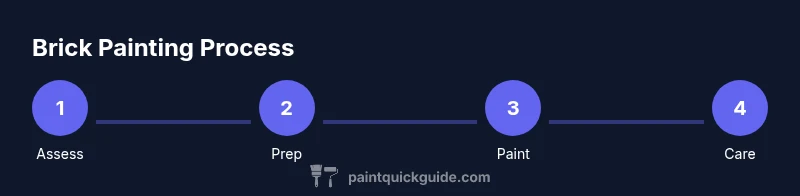
- Assess moisture and surface conditions before painting.
- Use breathable primers and paints designed for masonry.
- Prep thoroughly to ensure long-lasting adhesion.
- Paint in suitable weather and follow cure times between coats.
- Plan for periodic maintenance and potential repaint cycles.