How big does a paint sample need to be
Discover how big a paint sample should be for wall, furniture, and automotive testing. Learn sizing principles, testing under lighting, and a repeatable workflow to confidently pick colors.


In practice, there is no one universal size for a paint sample. A practical rule of thumb is to use a patch that is large enough to cover a small test area and allow side-by-side comparison under your typical lighting. For walls, start with a patch that clearly shows depth, and adjust size upward if you’re testing multiple colors or finishes. The goal is to mimic real conditions without wasting product.
Why sample size matters
Paint color decisions are visual judgments that hinge on how light interacts with pigment, finish, and surface texture. A swatch that is too small can hide undertones, sheen differences, or texture effects, leading to color decisions you’ll regret once the entire wall is coated. According to PaintQuickGuide, the size of your paint sample significantly influences how accurately you can compare options and how confident you feel with the final choice. A properly sized sample lets you observe color depth, reflectivity, and texture in a realistic patch on the surface you’ll actually paint. Keep your test area representative of the final project: same wall, same lighting, similar texture, and the same finish. This alignment reduces surprises later and speeds up the decision process.
Factors that influence sample size
Several variables affect how large a sample should be: lighting conditions (natural vs artificial), the surface texture (smooth vs rough), the color family (light neutrals vs rich reds), and the finish (matte vs gloss). Larger patches reveal undertones and color shifts more reliably, especially on textured walls where light catches nooks and grooves differently. If you are testing bold or dark colors, you may want a larger swatch to see how depth changes when viewed at different angles. Conversely, for quick family-color decisions in a single room, a modest patch can be sufficient. The key is to choose a size that can be re-evaluated under multiple lighting scenarios without exhausting resources or creating unmanageable mess.
Selecting sample size for walls and surfaces
For interior walls, start with a patch that’s clearly visible yet still practical to manage. A patch should cover enough surface area to allow quick side-by-side comparisons with adjacent colors or finishes, and it should be placed in a representative spot where lighting mirrors typical conditions. If you’re evaluating multiple colors, consider outlining several adjacent patches with painter’s tape to keep the test area organized. When testing on furniture or cabinets, patches should be large enough to show finish effects (sheen, depth, and texture) but still portable enough to avoid staining unrelated surfaces.
Finishes, textures, and color depth
Finish plays a pivotal role in perceived color. A swatch in matte paint can look lighter than the same color in gloss, and textures can amplify subtle undertones. A larger sample helps you compare how the color behaves on your chosen finish in a real-world context. If texture is a concern (e.g., popcorn ceilings or textured plaster), apply the test patch on a similarly textured area to prevent misinterpretation. Consider testing both near-field and far-field views to capture color saturation at typical viewing distances.
Lighting: how it changes perception
Lighting dramatically affects color perception. Natural daylight reveals true color, while incandescent and LED lighting can shift hues toward warmer or cooler tones. A larger sample is especially valuable when you want to observe how color shifts across times of day or under different bulbs. Take notes on how each swatch looks in morning, afternoon, and evening light. If possible, photograph patches under your lighting setups to compare side-by-side.
How to apply and cure samples correctly
Prepare a clean, flat testing surface and outline the patch with painter’s tape for clean edges. Apply thin, even coats using the same technique you’ll use on the final surface: brush, roller, or sprayer as appropriate. Allow sufficient drying time per the product’s label, and avoid stacking coats in the same demo area to prevent color buildup. Keep the area dust-free while the patch cures to prevent texture anomalies from touching dust or fibers.
Documenting results and comparing options
Create a simple color log: record the color name or code, finish, lighting condition, and your initial impression. Take clear notes on undertones, depth, and sheen. Use a simple grid to compare each swatch across lighting scenarios and against adjacent colors. Photograph the patches under each lighting condition to build a visual reference library you can revisit later. A consistent documentation workflow helps prevent late-stage changes and misinterpretations.
Common mistakes to avoid
Don’t rely on a single patch in a single lighting condition. Avoid applying patches to pristine walls or surfaces that would not resemble the final project. Never judge color from a tiny chip alone; color shifts can be subtle and easily misread without a full patch. Also, don’t forget to test both the color family and multiple finishes if you’re unsure how a hue will translate to the finished surface. Finally, avoid mixing colors directly on the wall; use clean patches to prevent cross-contamination of hues.
When to use bigger patches and how to reuse samples
If you’re deciding between several colors in bold environments or high-contrast spaces, enlarging the patch helps you capture depth and tonal shifts. For long-term projects, consider sealing patches after drying to preserve the true finish for longer comparison windows. Reuse patches by labeling each swatch with color codes and the lighting conditions tested; store them in a cool, dry place to prevent fading or moisture damage. This approach saves time on large projects and keeps your color analysis organized.
Practical workflow to finalize a color decision
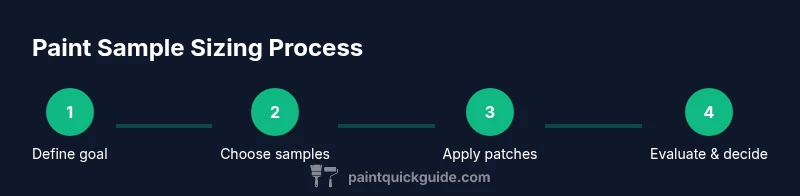
Adopt a repeatable process: choose a color family, gather 3–5 color options, size patches to a testable area, apply under controlled conditions, observe under natural and artificial light, document outcomes, and select a final color. Validate the final choice by painting a larger test area and revisiting after a day or two to ensure the color stabilizes under the space’s lighting. This workflow reduces risk and builds confidence before committing to a full room or project.
Tools & Materials
- Paint samples or tester pots(Multiple colors in the finishes you plan to compare; collect at least 3–5 options.)
- Painter's tape(Outline test patches for clean edges and easy comparison.)
- Brushes and/or small rollers(Use clean tools; apply thin, even coats similar to final technique.)
- Drop cloths or newspaper(Protect surfaces and floors from spills.)
- Ruler or measuring tape(Help size patches consistently and align multiple swatches.)
- Cleaning supplies (wipes, mild cleaner)(Prep surfaces and clean up spills quickly.)
- Notebook or color log(Record lighting conditions, observations, and final choices.)
- Camera or smartphone for photos(Capture patches under each lighting condition for comparison.)
Steps
Estimated time: 60-90 minutes
- 1
Define color goal
Identify the color family and desired finish. Note lighting in the space and how it will influence perception. This sets the foundation for choosing which colors to test and under what conditions.
Tip: Write down your goals before you pick colors to stay focused. - 2
Prepare the testing surface
Clean the surface and create a flat, smooth area where you’ll apply the swatches. Use tape to delineate patches so edges remain crisp during evaluation.
Tip: Avoid applying to textured areas that won’t resemble the final surface. - 3
Outline and layout patches
Mark several test patches side by side with equal spacing. Label each patch with color codes and intended finish.
Tip: Keep the layout simple to prevent confusion during evaluation. - 4
Apply color patches
Apply thin, even coats of each color, using identical technique for every patch. Maintain consistent coat thickness to ensure a fair comparison.
Tip: Let coats dry per product directions before comparison. - 5
Dry and observe under lighting
Allow patches to dry fully. Compare under natural daylight and under your room’s artificial lights to detect shifts.
Tip: Take photos at each stage to document changes. - 6
Document findings
Record impressions, note undertones, and compare hues side by side. Add notes on sheen and depth for each option.
Tip: Create a simple scoring rubric to quantify impressions. - 7
Narrow to final candidates
Shortlist the best options and re-test the top picks in a larger patch if needed. Confirm the color works with adjacent surfaces.
Tip: Test in a second area with the same lighting for confirmation. - 8
Finalize and prepare for full application
Choose the winner and plan a rollout for larger areas. Prepare materials and plan for final prep and priming if required.
Tip: Order extra paint for touch-ups; color matching may require a bit more material.
Your Questions Answered
What size should a paint sample be?
There isn’t a universal size. Aim for a patch large enough to cover a small test area and allow fair comparison under your lighting. This helps ensure your final choice translates well to the full surface.
There isn't a universal size. Aim for a patch large enough to cover a small test area and allow fair comparison under your lighting.
Can tester pots be used for wall testing?
Yes, tester pots are useful for comparing colors, but you should apply coats consistently and let them dry fully. Compare under the space’s lighting to avoid misinterpretation.
Yes, tester pots work, but apply coats evenly and let them dry. Compare under your space’s lighting.
How long should samples dry before evaluation?
Wait until patches are fully dry and cured according to the product label before evaluating. Drying times vary by product and humidity.
Wait until patches are fully dry and cured before evaluating; drying times vary by product.
Should I test colors in multiple rooms?
Test colors in rooms with similar lighting and use cases to ensure consistency. If lighting differs between rooms, you may see color shifts that influence your choice.
Test colors in rooms with similar lighting to stay consistent. If lighting differs, you might see shifts.
How many lighting conditions should I check?
Test under natural daylight and the room’s artificial lighting. This helps reveal how the color performs under typical usage conditions.
Test under natural daylight and the room’s artificial lighting to see color performance.
Watch Video
Quick Summary
- Choose patches large enough to reveal color and finish differences clearly.
- Test under multiple lighting conditions for reliable results.
- Document impressions systematically to avoid memory bias.
- Compare textures and sheens, not just hue.
- Plan a repeatable workflow to finalize color confidently.