Can You Paint If It Freezes at Night? A Practical Cold Weather Guide
Learn how to paint when night temperatures drop. This practical guide covers coatings, prep, temperature and humidity control, and safe curing for home, car finishes, or crafts with PaintQuickGuide.


Can you paint if it freezes at night? Yes, but only with careful planning and the right products. Cold-weather painting relies on substrate temperature, moisture control, and proper curing times to avoid adhesion problems, color hazing, or premature failure. This guide explains when cold-weather painting is workable, which coatings to choose, and how to manage dew, humidity, and safety for home, auto refinishing, and hobby projects, with practical steps you can follow.
Can You Paint If It Freezes at Night?
Can you paint if it freezes at night? Yes, it is possible under the right conditions. The key is to control temperature, moisture, and product choice so that the coating cures properly instead of failing or hazing. According to PaintQuickGuide, success hinges on aligning substrate temperature with the product's minimums, keeping surfaces dry, and allowing adequate cure time. When nights are chilly, attention to dew point and ventilation becomes as important as the color you choose. This section lays out practical rules for home exterior, interior accents, and car refinishing projects, with safety reminders and a clear plan to avoid common cold-weather pitfalls.
text
Tools & Materials
- Digital thermometer with surface probe(Reads substrate temperature; aim to stay at or above the product minimum; place away from direct heat sources)
- Hygrometer / dew point meter(Tracks ambient humidity and dew point to avoid condensation on the film)
- Portable space heater or heat lamps(Electric preferred for indoor use; ensure safe clearance and ventilation)
- Dehumidifier(Reduces ambient moisture to speed film formation)
- Painter's plastic sheeting and drop cloths(Protect surrounding surfaces and create a controlled work area)
- Cold-weather paint (and primer)(Label must indicate minimum application temperature; follow instructions)
- Rollers, brushes, and trays(Choose tools compatible with your paint type; keep brushes warm if possible)
- Primer suitable for cold application(Helps adhesion on cold substrates; check compatibility with topcoat)
- Stir sticks and measuring cups(Maintain proper paint consistency; avoid adding cold water or additives unless specified)
- Ladder or scaffold with non-slip feet(Stable access in damp or icy conditions)
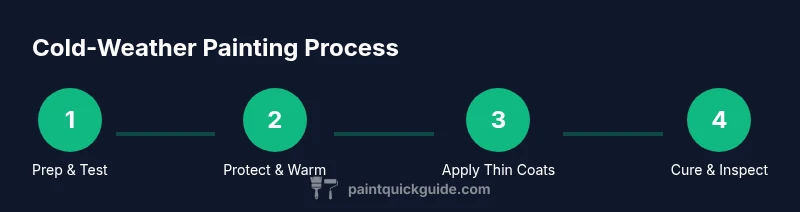
Steps
Estimated time: 2-6 hours
- 1
Verify weather and substrate temperature
Check the forecast and take real-time substrate temperatures with a digital thermometer. Ensure the surface is dry and above the paint’s minimum application temperature per label. If temperatures swing, postpone until conditions stabilize.
Tip: If the surface is near dew point, wait for clear drying conditions or gently warm the area with a heater from a safe distance. - 2
Protect the project area
Cover adjacent surfaces with painter’s plastic and tarps. Create a semi-enclosed microclimate to reduce rapid cooling and protect from wind and moisture. Secure edges to prevent peeling or flapping.
Tip: Use weather-resistant tape to seal edges; ensure airflow is controlled, not blocked, to avoid hazardous buildup. - 3
Prepare and dry the surface
Clean the surface to remove dust, oils, and frost. Rinse if needed and dry thoroughly. If frost is present, remove it completely before proceeding. A dry surface improves adhesion in cold weather.
Tip: If you cannot fully dry, postpone until surface dries naturally or use a warm air source from a safe distance. - 4
Warm the surface safely
Gently raise surface temperature using a portable heater or heat lamp, aiming for a stable, higher-than-minimum temperature without scorching the coating. Do not use open flame directly on the surface.
Tip: Maintain a consistent heat source and monitor temperature to prevent hot spots that cause film instability. - 5
Mix and condition the coating
Stir paint thoroughly and bring to a uniform temperature compatible with the product data sheet. Avoid adding cold water or thinners unless specified by the manufacturer. Check for contamination from old cans.
Tip: Work in small batches to prevent temperature drop and ensure consistent viscosity across coats. - 6
Apply thin coats
Apply multiple thin coats rather than a single heavy coat. Thin coats dry more evenly and resist moisture entrapment in cold air. Maintain a steady rhythm and avoid back-brushing over drying film.
Tip: Keep a light touch near edges to prevent roller splatter and ensure uniform film formation. - 7
Monitor curing conditions
After application, monitor for tackiness and odors. Keep humidity low and air flow steady to encourage film formation. Recoat only when the first coat has reached the specified dry-to-touch condition under cold conditions.
Tip: Use a dew point check during cure; if condensation forms, pause and reseal after conditions improve.
Your Questions Answered
Can you paint outdoors at night if it is freezing?
Outdoors at night is challenging due to humidity, dew, and rapid cooling. You may do it with proper microclimate control and cold-weather coatings, but it is not ideal for long-term durability. Use a contained, temperature-stable setup whenever possible.
Painting outdoors at night when it’s freezing is possible with the right conditions, but not ideal. Create a controlled warm environment and choose cold-weather products.
What is the minimum temperature for exterior paint?
Most exterior paints specify a minimum application temperature on the label; commonly this falls around cool to moderate temperatures, and you should always follow the data sheet for your specific product.
Check the paint label for the exact minimum temperature for exterior use, and follow the product’s data sheet.
Can I speed up curing when it’s cold?
You should not force curing with heat or fans that cause rapid drying, as this can trap moisture. Instead, control the environment, maintain stable temperatures, and allow the coating to cure naturally per label guidance.
Don’t rush curing in cold weather. Keep conditions stable and follow the product’s cure times.
Is automotive paint usable in cold weather?
Cold-weather automotive finishes exist, but they require strict adherence to the product’s temperature and humidity guidelines, as well as proper booth ventilation and controlled spray parameters.
Yes, but only with cold-weather automotive products and a controlled environment.
Should I prime before painting in cold weather?
Priming can be done if the surface is dry and above the minimum temperature specified by the primer label. In cold weather, the primer must dry fully before applying top coats.
Prime only when the surface is dry and above the product’s minimum temperature; allow full drying before top coats.
Watch Video
Quick Summary
- Always follow product label minimum temperatures.
- Keep surfaces dry and protect from dew and humidity.
- Use cold-weather paints and plan for longer cure times.
- Monitor dew point and temperature to prevent condensation.
- Schedule with weather windows to avoid night freezes.