How to Paint a Car: Practical DIY Guide
Learn to paint a car at home with a step-by-step DIY guide covering prep, safety, color choice, spraying technique, and finishing care. Practical tips, tools, and timelines from PaintQuickGuide for DIY enthusiasts.


You can paint a car at home by following a structured process: proper prep, a clean spray environment, and careful layering of primer, base color, and clear coat. The job takes several days and rewards patience, steady technique, and good ventilation. According to PaintQuickGuide, success hinges on surface prep, correct tools, and disciplined curing.
What you’re trying to achieve when you paint a car
If you’re wondering how easy or hard it is to achieve a showroom finish, this article helps clarify what you’ll gain and what to expect. The core goal of painting a car yourself is to create a durable, uniform surface that resists chips, stands up to UV exposure, and looks intentional rather than patchy. The most important facts to keep in mind are that environment, prep quality, and coat control determine the final result. For readers asking how is it to paint a car, the answer hinges on your willingness to invest in careful surface preparation, steady spray technique, and time for proper curing. PaintQuickGuide emphasizes that success begins with a plan you can repeat across coats and panels, not by rushing the finish.
- A well-prepared surface is non-negotiable.
- Consistent spray passes produce even color.
- Patience with cure times yields a durable, glossy result.
This project scales from a single panel refresh to a full car repaint, so tailor your expectations and budget accordingly.
Preparation, environment, and safety
Preparation is the backbone of a long-lasting paint job. Start with a clean, dust-free workspace—ideally a dedicated spray booth or a garage with controlled airflow. Temperature and humidity matter because they affect paint flow and cure. Establish a safe setup: remove passengers or items from the area, seal off adjacent rooms to prevent dust intrusion, and ensure you have a proper respirator and eye protection. Ventilation should minimize solvent buildup while maintaining stable drying times. According to PaintQuickGuide, the most common defects come from moisture, dust, or inconsistent air pressure. A well-ventilated space reduces these risks and helps you achieve a smoother finish. Remember to keep a dedicated cleanup zone to prevent cross-contamination between prep solvents and paint.
- Use a dedicated spray area with positive ventilation.
- Control temperature and humidity—prefer moderate conditions.
- Wear a respirator and eye protection at all times during spraying.
In this section you’ll also learn basic safety steps, like closing the paint can between uses and keeping a fire-safe, uncluttered environment.
Tools, materials, and workspace setup
Before you begin, assemble the essential tools and materials. A high-quality HVLP spray gun and a compatible compressor are the backbone of a smooth spray application. You’ll also need masking supplies, degreaser, wax-and-grease remover, sandpaper (progressing grits), tack cloths, and of course primer, base coat, and clear coat. For the workspace, set up masking film to protect trim and glass, a stable spray booth or makeshift enclosure, and a clean surface to mix paints. Keep a digital scale or measuring cups for consistent color mixing, and label all cans with the coat order. From PaintQuickGuide’s perspective, reliable tools and a clean surface drastically reduce defects and save time in the long run.
- Essential: HVLP spray gun, compressor, respirator, masking materials, solvents, primers, color coats, clear coats.
- Optional but helpful: moisture trap, drying racks, paint stand, and a tack cloth stash.
- Space planning: dedicate a flat, clean, vibration-free place for mixing and testing sprays.
Color selection, finishes, and technique
Color selection changes the perceived quality of the final job. Matte, satin, or high-gloss finishes each demand different preparation levels and polishing techniques. Metallics and pearlescents require additional color layers or intercoat clears to achieve depth. When applying base color, use light, even passes and keep your nozzle at a consistent distance from the surface. Practice on a test panel to dial in your spray pattern before committing to the car body. Then apply a clear coat in thin, repeat coats to build depth and protect the color. Between coats, allow adequate flash time and use tack cloths to remove dust specks. For a durable finish, wet-sand only after the clear coat has cured to the manufacturer’s recommended window, and buff with a fine compound for a glass-like shine.
- For metallics: spray flakes evenly and maintain a uniform pattern.
- For candies: layer color and clear to build depth, avoiding runs.
- Product tailors: match reducer and hardener to the chosen system and ambient conditions.
Color compatibility and proper drying enable long-lasting color stability and gloss. PaintQuickGuide notes that the best results come from controlled heat, humidity, and consistent technique across all panels.
Step-by-step overview: the core painting sequence
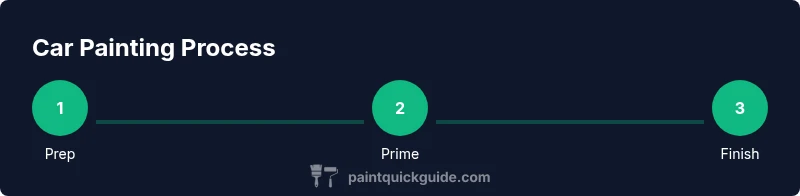
This section provides a concise roadmap you’ll reference as you work through the full process. The detailed steps are expanded in the dedicated STEP-BY-STEP block, but understanding the sequence helps you plan the project realistically. Start with workspace setup, masking, and surface prep. Move to primer, then guide coats, base color, and final clear coats. Finally, perform controlled curing, color sanding, and polishing. This approach helps minimize defects and ensures a consistent finish. The rest of the article dives into each stage with practical tips, expected timelines, and common pitfalls to avoid. Remember, the goal isn’t speed; it’s a durable, even appearance across every panel.
- Stage 1: Prep and mask
- Stage 2: Prime and sand
- Stage 3: Base color application
- Stage 4: Clear coat layering
- Stage 5: Cure, wet-sand, and buff
This overview aligns with the recommended workflow from PaintQuickGuide, designed to keep you organized and focused.
Finishing, curing, and maintenance
The final phase determines the long-term look and durability. After the last clear coat, allow the surface to cure in a controlled environment. Avoid dust or rapid temperature changes during the initial cure window. Once cured, you’ll often perform light color-sanding to remove micro-mists, followed by a final machine polish to restore gloss and remove swirl marks. Routine maintenance, including washing with pH-balanced cleaners and applying a dedicated wax or sealant, preserves the finish. Note that some paints require longer cure times for maximum hardness and UV resistance; always follow the manufacturer’s specs and your local climate conditions. A properly cured finish resists chipping and maintains color depth for years to come. In all, patience in the curing stage pays off with durable beauty that lasts.
- Avoid aggressive washing for a week after final coat.
- Use color-safe cleaning agents to protect the finish.
- Inspect for dust, runs, and micro-scratches and address promptly.
Common pitfalls, troubleshooting, and follow-up care
DIY car painting presents challenges that are avoidable with careful technique. Dust in the air, improper masking, or inconsistent spray pressure can ruin a panel. Runs and orange peel can occur from too-high viscosity or poor technique—adjust nozzle distance, air pressure, and spray speed. If you see dust specks, pause to wipe the surface with a clean tack cloth and re-spray affected areas after a brief flash. A thorough prep routine, including multiple quick passes rather than one heavy coat, reduces risk. After completion, store paints and reducer correctly to prevent skinning or thickening, and monitor environmental conditions for the first few days of cure. With practice, your results will improve across panels and projects.
- Keep a spare test panel for spray trials.
- Maintain a consistent spray technique across all coats.
- Revisit prep if you notice dust or uneven color.
Cost considerations and time frames (overview)
Pricing a DIY car paint job varies widely depending on the scope, quality of materials, and your workshop setup. A single panel refresh may cost less than a full-body repaint when you account for primer, color coats, clear coats, and consumables. Expect a multi-day timeline that includes prep, coats, and cure periods. While professional paint jobs carry higher upfront costs, DIY projects can reduce labor costs significantly if you already own some equipment. The overall investment depends on your goals: a basic color refresh with decent durability or a showroom-grade finish with top-tier color effects. Use a realistic schedule, budget for extra supplies, and don’t rush the steps that influence depth and gloss.
Tools & Materials
- HVLP spray gun(Select a model suitable for automotive base and clear coats; use a setup with a clean, stable air supply.)
- Air compressor(Ensure adequate CFM; a quieter, stable output reduces spray inconsistencies.)
- Respirator with organic vapor cartridges(Do not spray without proper respiratory protection.)
- Masking tape and masking film(Protect glass, trim, and surrounding panels from overspray.)
- Solvent and surface prep cleaners(Wax and grease remover helps ensure good primer adhesion.)
- Sandpaper and sanding blocks(Progress through grits (e.g., 400–600 for initial, 800–1200 for finishing).)
- Primer, base coat, and clear coat(Select compatible systems and reducers for your climate.)
- Tack cloths and microfiber rags(Eliminate dust between coats and during finishing.)
- Wax and grease remover(Use before priming to ensure optimal adhesion.)
- Throw-away covers or coveralls(Protect yourself and clothing from solvents and paint overspray.)
- Mixing cups and stir sticks(Accurate color mixing and batch consistency matter.)
- Tintable primers and color coats (optional for color depth)(Useful for achieving special effects or deep color.)
Steps
Estimated time: 2-4 days
- 1
Set up workspace and safety gear
Create a controlled, ventilated area and put on PPE. Verify lighting and air flow before starting. This foundational step prevents errors later.
Tip: Test spray on a sample panel to dial in your settings. - 2
Wash, degrease, and sand the surface
Thoroughly clean the surface to remove oils. Sand existing finishes to create a mechanical key for primer. Wipe again to remove dust.
Tip: Use progressive grits and never rush sanding; thin coats adhere best. - 3
Mask and protect surrounding areas
Mask edges, trim, glass, and adjacent panels. Use masking film on larger areas and ensure seals are tight to prevent drift.
Tip: Avoid gaps where dust can blow under masking; double-check corners. - 4
Apply primer and let it cure
Spray a light, even layer of primer and allow it to flash between passes. Build to a uniform film, avoiding heavy runs.
Tip: Multiple thin coats are better than one thick coat. - 5
Block-sand primer to smooth finish
Sand the primer flat with fine grit and wipe clean. This ensures an even base for color coats.
Tip: Keep sanding evenly; avoid digging into edges or raised areas. - 6
Apply base color in even passes
Lay down the color using steady, overlapping strokes. Maintain a consistent distance from the surface and avoid stopping mid-panel.
Tip: Do test passes on a panel first to calibrate speed and air flow. - 7
Apply clear coats in multiple thin layers
Clear coats protect color and add depth. Apply light coats with proper flash time, then finish with a final wet coat for gloss.
Tip: Keep the nozzle moving to minimize runs and sags. - 8
Cure, sand, and polish for final finish
Let the finish cure before any wet-sanding. Lightly sand micro-mist and buff to a showroom shine.
Tip: Use a fine polish and a clean pad to avoid swirl marks. - 9
Inspect and perform touch-ups as needed
Walk around the vehicle and inspect for runs, dust, or color inconsistencies. Address issues promptly with targeted spot sprays.
Tip: Don’t chase every speck immediately; plan a controlled recoat if needed.
Your Questions Answered
Do I need a professional spray booth to paint a car at home?
A dedicated, ventilated space is highly beneficial and significantly reduces dust and fumes. A professional booth is ideal, but a well-sealed garage with good airflow can work if safety and ventilation are managed.
A proper, ventilated space is highly beneficial, and a professional booth is ideal, but a well-sealed garage can work with careful safety and ventilation.
Can I paint over an existing clear coat?
Yes, but surface preparation is critical. Lightly scuff or sand the finish to create a mechanical grip, clean thoroughly, and apply a compatible primer before the new color.
Yes, but you must scuff and clean the surface and use a compatible primer before repainting.
How long does it take to cure after the final coat?
Curing times vary with temperature and humidity. Expect several days for full hardness and UV resistance; avoid washing or aggressive polishing until fully cured.
Cure times vary, but plan for several days before heavy washing or polishing.
Is DIY painting cost-effective?
DIY painting can be more affordable than a professional job, especially for a basic color refresh. Costs vary with materials and tools; plan for consumables and potential re-dos if weather or technique isn’t ideal.
DIY can save money, but costs depend on materials and any re-dos from mistakes.
What safety gear is essential?
A proper respirator, eye protection, gloves, and protective clothing are essential. Ensure good ventilation and follow solvent-handling guidelines.
You’ll need a respirator, eye protection, gloves, and protective clothing in a well-ventilated area.
Should I wet-sand between coats?
Wet-sanding between coats is common to remove dust and level the surface, especially before the final clear coat for a glassy finish.
Yes, wet-sanding between coats helps remove dust and smooth the final coat.
Watch Video
Quick Summary
- Begin with a clean, controlled workspace.
- Use multiple thin coats for even color and depth.
- Protect surfaces with careful masking and tack cloths.
- Allow proper cure between steps for durability.