What to Do When Paint Gets Hard: A Practical Guide
Learn practical steps to revive or safely remove hardening paint, with tips for home and auto projects, plus safety and disposal guidance from PaintQuickGuide.


You can decide quickly whether the paint can be revived, or if you should remove and start fresh. For latex, gently rewet and condition to restore spread; for oil-based, use the correct solvent and mix; if paint is past its life, discard safely. This PaintQuickGuide guide explains steps, safety, and prevention.
Why paint gets hard and what it means
Paint hardening happens when solvents evaporate and the binder dries, forming a stiff film that resists movement. Understanding what to do when paint gets hard helps you decide whether the coating can be revived or must be removed. According to PaintQuickGuide, diagnosing the paint type and the surface condition is the first step. If you’re dealing with a can of latex, the paint may become workable again with gentle rewetting and a conditioner designed for latex coatings. If the paint is oil-based, you’ll need a compatible solvent to loosen and restore flow. In contrast, paint that has fully cured on a surface typically cannot be revived and should be removed to achieve a smooth, durable finish. The goal of this guide is practical, hands-on guidance that homeowners and auto refinishing hobbyists can apply without specialized equipment. Plan your approach, ventilate the workspace, and keep tools clean. When deciding what to do, assess the job’s scope, your time, and whether mistakes can be corrected. The PaintQuickGuide team emphasizes patience and preparation as the foundation for every successful painting project.
Quick fixes for salvageable paint in a can
If the paint is still usable but thick or crusty around the rim, you may be able to revive it without buying new product. For latex paints, start by removing the lid, scraping off any crust, and stirring with a clean stir stick. Add a small amount of water or a latex conditioner and mix until the paint returns to a smooth, pourable consistency. For oil-based paints, use a compatible solvent and stir well; never mix latex and oil-based coatings in the same container. If the color matches and the texture improves, test a small sample on cardboard or scrap wood. Remember to vent the area and wear protective gear. If the paint resists thinning despite careful mixing, or if the can shows signs of spoilage like foul odor or separation, it’s safer to discard and recycle the can according to local guidelines. PaintQuickGuide notes that even salvageable cans should be used within a reasonable period after revival and stored with the lid fully sealed.
Dealing with dried-on wall surfaces
On walls or furniture where paint has dried, mechanical removal is often the best path. Begin by softening the film with warm water for latex coatings or a compatible solvent for oil-based finishes, applying in small sections. Use a plastic scraper to lift the edge, then switch to a fine-grit sanding sponge to feather the edges. For stubborn spots, apply a commercially available paint remover following the product directions, and always near adequate ventilation. After lifting the paint, wipe the surface clean and inspect for any remaining adhered film. If adhesion is poor or the surface shows staining or peeling, it’s wise to apply a primer to improve adhesion before repainting. Safety remains a priority; work slowly, protect nearby materials, and follow label instructions on any chemical products.
Restoring salvageable latex vs oil-based paints
Latex paints can sometimes be revived with water and conditioner, restoring spread and leveling ability, but the process depends on exposure and age. If successful, stir and test on a scrap surface before committing to a project. Oil-based paints respond differently; they often benefit from a dedicated solvent to restore flow, and the surface may require a longer dry time and proper ventilation. In both cases, ensure you are using the correct product for the paint type and that the container is clearly labeled to avoid cross-contamination. If the color has shifted or the texture remains uneven, consider starting fresh with a new can. PaintQuickGuide advises periodically checking can age and storage history to avoid repeating hardening issues in future projects.
Safe removal and disposal
When a paint can or project finishes with hard, unusable material, disposal must follow local regulations. Do not pour leftover paint down drains or onto soil, and never burn cans. For hazardous legacy coatings or if lead-based paint is suspected, contact local waste authorities for guidelines and routes to a designated facility. Keep solvents away from heat and flames, and store any rags or absorbents used during cleanup in a sealed metal container to prevent spontaneous combustion. Label and store clear containers separately to ease future disposal. Document the disposal method and keep receipts or certificates if required by your municipality. For ongoing projects, plan ahead and avoid storing mixed leftovers for long periods. The goal is to keep your home and environment safe while preventing unnecessary waste.
How to prevent paint from hardening in the future
Proper storage and handling reduce the chance of hardening. Always seal the lid tightly after use and store cans upright in a cool, dry place away from direct sunlight or heat sources. Use a clean, labeled stir stick and a dedicated can opener to minimize contamination. If a can has been opened but not used for a long period, seal the rim with plastic wrap or a tight-fitting lid to limit air exposure. Plan ahead for small touchups by transferring a portion to a separate, airtight container. For auto refinishing or workshops, store in a climate-controlled space and test often on scrap panels. PaintQuickGuide emphasizes that consistent storage, gentle rewetting for latex, and keeping solvents safely away from children are the best lines of defense against hardening.
What to do before repainting
Before you apply a fresh coat, prepare the surface properly. Clean thoroughly, repair any chips or cracks, and remove all dust. If the previous paint’s adhesion is questionable, apply a bonding primer before a topcoat. Sand glossy surfaces to create a mechanical key, wipe away dust, and ensure the area is dry. Choose the right sheen and finish for the space, and select a compatible primer and topcoat. Finally, test a small patch in an inconspicuous area to confirm color and texture. This careful preparation reduces the risk of reoccurring problems and ensures a smooth, durable finish.
Final checks and test swatches
Finish the process by applying a test swatch on a hidden area to evaluate color match, sheen, and adhesion. Allow adequate cure time and inspect for lap marks, brush strokes, or roller texture. If the test looks good, proceed with the main project in controlled sections. Keep a record of the products used and any adjustments you made for future projects. This final step ties the work together and gives you confidence that the result will be long-lasting and visually pleasing.
Tools & Materials
- Putty knife or plastic scraper(Edge scraping for dried paint; choose a flexible blade to avoid gouging)
- Heat source (heat gun on low) or hair dryer(Gently warm the paint to loosen the film; avoid overheating)
- Stir sticks and a clean mixing container(Use separate tools for each paint type to prevent cross-contamination)
- Water spray bottle(Moisture for latex paints to aid softening)
- Latex paint conditioner or approved wetting agent(Helps restore flow in salvage efforts)
- Compatible solvent or mineral spirits(Only for oil-based paints; use in a well-ventilated area)
- Paint stripper (chemical) or remover(Follow label directions; use with ventilation and PPE)
- PPE: safety goggles, nitrile gloves, respirator or mask(Protect skin, eyes, and lungs from chemicals)
- Drop cloths, rags, and plastic sheeting(Contain spills and protect surrounding surfaces)
- Sanding block or fine-grit sandpaper(Feather edges after scraping dried film)
Steps
Estimated time: 45-75 minutes
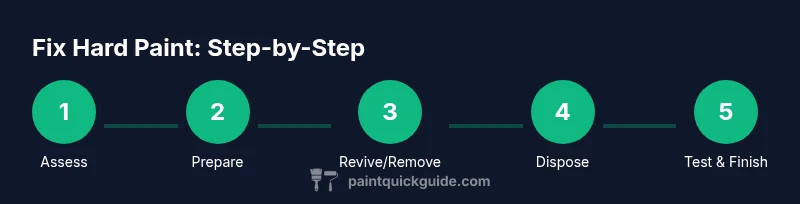
- 1
Assess paint type and condition
Identify whether the paint is latex or oil-based and evaluate if it is salvageable in its current form or if removal is more practical. Consider the project size and whether ventilation is available. This decision guides whether you salvage, patch, or start fresh.
Tip: Document the paint type before starting to avoid cross-contamination. - 2
Prepare the workspace and tools
Lay down drop cloths, organize tools, and set up ventilation. Gather cleaners, solvents, and safety gear so you can work efficiently without interruptions or safety compromises.
Tip: Keep a dedicated cleanup area to prevent spreading residue. - 3
If salvaging latex paint in a can
Remove the lid, scrape away crust, and stir with a clean stick. Add a small amount of water and a latex conditioner; mix until the texture loosens and becomes smooth. Test a small amount on scrap material before deciding to use it for a full project.
Tip: Test a fresh sample before applying to a surface to gauge coverage. - 4
If salvaging oil-based paint
Open a window, pour a small amount of a compatible solvent into a separate container, and stir well. Only use this solvent with oil-based coatings and never mix with latex in the same container. Check flow on a scrap piece to confirm performance.
Tip: Label containers clearly to avoid confusion between paint types. - 5
Handle dried-on surfaces
Warm the film gently or apply a compatible remover to the edge, then lift with a scraper. Move in small areas to prevent re-drying and sand lightly to feather edges before priming.
Tip: Work in small sections to keep control and minimize substrate damage. - 6
Decide on disposal if salvage isn’t possible
If the paint shows poor odor, heavy separation, or a stubborn, tacky feel, set aside for disposal following local guidelines. Do not pour down drains or onto soil. Prepare to take the container to a designated facility if required.
Tip: Check local regulations ahead of disposal to avoid penalties. - 7
Clean up and store properly
Wipe tools clean, seal opened cans tightly, and store in a cool, dry place. Label new or revived cans with date and paint type so you can track shelf life and reuse potential.
Tip: A well-sealed can reduces future hardening risk.
Your Questions Answered
What causes paint to harden after opening or during storage?
Paint hardening is mainly due to solvent loss and binder setting, which creates a stiff film that resists movement. Age, exposure to heat, and improper storage can accelerate this effect. The fix depends on paint type and whether the film can be softened or must be removed.
Paint hardening happens when solvents evaporate and the binder sets. The best approach depends on whether the paint is latex or oil-based.
Can dried latex paint be revived?
Yes, dried latex paint can often be revived with a small amount of water and a latex conditioner, then re-stirred until smooth. Test on a scrap surface before using on a project to ensure proper spread and color.
Dried latex paint can usually be revived with water and a conditioner. Always test first.
Is it safe to use solvents around children or pets?
Solvents should be used only in well-ventilated areas away from children and pets. Follow product labels, wear PPE, and store containers securely when not in use. If exposure concerns arise, pause project and ventilate longer.
Work in a ventilated space and keep solvents away from kids and pets.
How should I dispose of old or hardened paint?
Do not pour paint into drains or soil. Follow local regulations for disposal, especially for oil-based or legacy coatings. Contact your waste authority to find the nearest designated facility if needed.
Don’t pour paint out; use local disposal guidelines and facilities.
Do I need to prime after removing hard paint?
Yes, priming is often necessary after removing hard paint to improve adhesion and hide any imperfections. Choose a bonding primer suited to the surface and topcoat you plan to apply.
A bonding primer helps the new coat stick and look even.
What about lead-based paint safety?
Lead-based coatings require careful handling and disposal under local regulations. If you suspect lead paint, consult local guidelines or a professional service before any removal work.
Lead paint requires special handling; contact local authorities if suspected.
Watch Video
Quick Summary
- Assess paint type to choose salvage or removal.
- Revive latex with water and conditioner; oil-based with proper solvent.
- Use mechanical removal for dried-on layers to protect the substrate.
- Dispose of unusable paint safely and follow local guidelines.
- Store paint properly to prevent future hardening.