How to Paint Without Sanding: A Practical No-Sand Guide
Discover how to paint without sanding using deglossers, bonding primers, and no-sand topcoats. This step-by-step guide covers prep, priming, and finishing for walls, cabinets, and furniture with durable, professional results.


Goal: Learn how to paint without sanding by using surface prep methods like deglossing, bonding primers, and suitable topcoats. You’ll prep, prime, and paint with minimal dust and downtime. This approach works for walls and cabinets when you choose the right products and follow a clean workflow.
No-sand painting: when it makes sense
There are surfaces in homes and on furniture that respond exceptionally well to no-sand painting. By avoiding sanding, you reduce dust, protect delicate substrates, and complete projects more quickly—provided you select the right products and follow a disciplined prep routine. According to PaintQuickGuide, success hinges on surface compatibility, proper adhesion, and controlled application. This section helps you decide when skipping sanding is appropriate, identifies the best surface types, and outlines the mindset needed to achieve durable results on walls, cabinets, doors, and furniture without the mess of traditional sanding.
No-sand techniques aren’t universal. High-gloss doors or heavily glossy tiles, for example, can sometimes resist adhesion if prep isn’t thorough. The goal is to transform a surface so that primer can bite evenly and the finish adheres securely. When in doubt, test a small area first and adjust your approach for gloss level, material, and environmental conditions. PaintQuickGuide’s guidance emphasizes safety, patience, and clean tools to maximize adhesion and minimize repaints.
Surface prep without sanding: the basics
Skipping sanding begins with solid surface preparation. You’ll remove dust and oils, degloss slick surfaces, and establish a clean, receptive base for primer and paint. Start by cleaning the surface with a mild detergent or degreasing cleaner, then rinse and allow ample drying time. After cleaning, use a lint-free cloth to wipe away any residue. Deglossing is the next essential step: a chemical or mechanical deglosser lightly scuffs the surface to improve bonding without removing material. The aim is to roughen only the gloss, not the substrate. Once the surface is prepared, inspect for flaws and plan your primer strategy.
A clean, dry surface is non-negotiable. Any remaining wax, oil, or residue can compromise adhesion and lead to peeling later. Wipe down once more with a tack cloth before priming. If you’re working on furniture or cabinets, consider environmental factors such as humidity and temperature, which affect drying times and the final finish. The no-sand approach shines when you can consistently apply bonding primers and topcoats that level well and hide minor imperfections.
Deglossers, primers, and bonding agents
Deglossers are your first line of defense for non-destructive prep. They dissolve surface wax and oils and can be wiped away with a clean cloth. After deglossing, select a bonding primer designed for slick or glossy surfaces. Bonding primers improve adhesion and help the topcoat form a uniform film, reducing the chance of peel or gloss rebound later. In most cases, a high-adhesion primer is worth the extra step, especially on doors, trim, and cabinets.
Topcoat choices matter when you skip sanding. Use a high-quality latex enamel or acrylic-based finish formulated for adhesion on prepared surfaces. For cabinets, a durable alkyd or hybrid enamel can yield a more robust result, but ensure compatibility with your primer. Always follow the product’s drying times and recoat windows; missing these windows is a common cause of poor adhesion. Remember to ventilate well and wear appropriate PPE during all chemical applications.
Surfaces and prep specifics
Different substrates demand different prep approaches. On glossy paint, deglossing + bonding primer often suffices; on bare wood, a penetrating primer will help stabilization and coverage. For metal surfaces, ensure the primer contains rust-inhibition properties if there is any exposure to humidity. Drywall may show small imperfections; in no-sand scenarios, you can use a spackling paste or lightweight filler to address gaps before priming. For textured surfaces, apply primer evenly to improve film build and reduce the number of coats needed. Finally, always work with a wet edge, maintaining consistent brush or roller application to avoid lap marks.
Step-by-step no-sand approach for walls and cabinets
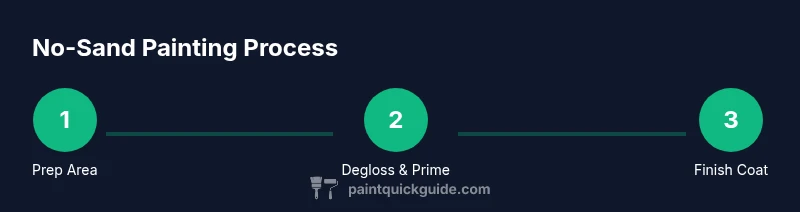
This section outlines a practical no-sand workflow you can adapt to most interiors and furniture, with emphasis on thorough prep and measured application. Begin by concealing adjacent areas with tape and drop cloths. Degloss the surface and wipe clean, then prime with a bonding primer in a single smooth coat. After the primer dries, apply the topcoat in thin, even layers, following manufacturer guidelines for drying times between coats. Finally, inspect the finish for any nibs or uneven spots and touch up as needed with minimal coats to preserve a flawless result.
Troubleshooting common issues
No-sand painting can fail if preparation is rushed or products are mismatched. Common issues include poor adhesion, visible roller marks, or topcoat pooling. Tackle adhesion problems by ensuring the surface is fully deglossed and primed with the correct bonding primer. To avoid roller marks, use high-quality tools, maintain a wet edge, and roll in consistent, overlapping strokes. If you notice pooling, back-roll lightly to even out the finish and avoid overloading the roller. Environment plays a role—keep humidity stable and doors/windows open for ventilation to help drying times align with product specs.
Cabinet refinishing without sanding: practical tips
Refinishing cabinets without sanding is one of the most common no-sand applications. Start with a thorough wipe-down to remove grease. Degloss, then apply a bonding primer designed for enamel adhesion. Use a primer with stain-blocking properties if you’re painting over wood with strong tannins. After priming, apply a color-coated topcoat in thin layers, allowing proper dry time between coats. For cabinet doors, consider wrapping or taping off hardware to minimize cleanup. The no-sand approach can deliver durable, smooth finishes when performed with patience and proper product selection.
Tools, safety, and maintenance considerations
No-sand painting relies on the right tools and a safe workspace. Gather lint-free cloths, high-adhesion primers, deglossers, topcoats, brushes, rollers, and painter’s tape. Work in a well-ventilated area and wear PPE as recommended by product labels. After completing the job, clean tools promptly and store leftovers in a sealed container. Maintenance involves gentle cleaning and touch-ups as needed to preserve the finish. Remember, the goal is a durable, evenly finished surface that resists scuffs and moisture without the dust and downtime of sanding.
Tools & Materials
- Deglosser or deglossing cleaner(Choose a product compatible with your surface; follow label for application.)
- Tack cloth(Lint-free to remove dust after prep.)
- High-adhesion bonding primer(Essential for slick/glossy surfaces and improved adhesion.)
- Topcoat / Finish (latex enamel or acrylic)(Select a finish appropriate for room, traffic, and durability needs.)
- Foam roller cover(Choose nap length based on surface texture.)
- Angled brush(Best for corners, trim, and tight spaces.)
- Painter's tape(Protect edges and create sharp paint lines.)
- Drop cloths(Protect floors and furniture from spills.)
- Nitrile gloves(Protect skin from chemicals and solvents.)
- Non-scratch scuff pad(Lightly scuff shiny surfaces if needed, optional for very smooth finishes.)
- Mild detergent or degreasing cleaner(For initial surface cleaning before deglossing.)
Steps
Estimated time: Total time: 3-7 hours
- 1
Prepare the area
Clear the space, remove hardware where possible, and lay drop cloths to catch drips. Cover adjacent surfaces with painter’s tape to protect them from accidental splashes. This step reduces cleanup later and ensures a clean finish.
Tip: Use a helper to move furniture and keep doors open for ventilation. - 2
Degloss and clean
Wipe the surface with a deglosser or degreasing cleaner to remove oils and waxes. Wait the recommended dwell time, then wipe again with a clean cloth. A properly deglossed surface improves primer adhesion.
Tip: Test a small area first to verify no staining or residue remains. - 3
Dust, rinse, and dry
Lightly dust any remaining particles, then wipe with a damp cloth and allow to dry completely. A dry surface prevents raising fibers that can show through the topcoat.
Tip: Do not rush this step; moisture can hinder adhesion. - 4
Prime with bonding primer
Apply one even coat of a bonding primer suitable for slick surfaces. Use long, smooth strokes and maintain a wet edge to avoid lap marks. Allow to dry according to the product label before painting.
Tip: If the surface is very slick, apply a second light coat rather than building thickness. - 5
Apply the topcoat
Finish with thin, even coats of your chosen topcoat. Roll in one direction, then lightly cross-roll to blend. Allow each coat to dry fully before applying the next.
Tip: Apply two coats for durability in high-traffic areas. - 6
Inspect and touch up
Check for missed spots, runs, or uneven coverage. Lightly sand (if needed) only the touched-up areas once dry, then recoat precisely. Final inspection ensures a uniform, professional look.
Tip: Keep a small amount of mixed paint aside for touch-ups.
Your Questions Answered
Can I skip sanding on glossy surfaces?
Yes, you can skip sanding on glossy surfaces if you thoroughly degloss and prime with a bonding primer. Ensure good adhesion by following product directions and allowing complete drying time between coats.
Yes. You can skip sanding on glossy surfaces by deglossing and using a bonding primer, then letting each coat dry fully before applying the next.
Will no-sand painting work on wood cabinets?
Yes, no-sand painting can work on cabinets when you clean, degloss, and apply a bonding primer before the topcoat. Use a durable enamel for cabinets and follow careful drying times.
Yes, cabinets can be finished no-sand with proper prep and a bonding primer before the finish.
What is the drying time between coats?
Drying times vary by product and environment. Always follow the manufacturer’s label for recoat windows and cure times to avoid peeling or uneven color.
Drying times depend on the product and room conditions; follow the label and allow ample cure time.
Is no-sand painting suitable for textured walls?
Textured walls can be painted without sanding if the texture is clean and the primer adheres well. You may need slightly more coats to achieve even color and coverage.
Textured walls can be painted without sanding if properly prepped and primed.
What surfaces should you avoid no-sand painting on?
Avoid no-sand painting on surfaces with peeling bindings, heavily damaged substrates, or areas with active moisture problems. In those cases, sanding or mechanical preparation may be necessary.
Avoid no-sand on peeling or damp areas; address substrate issues first.
Watch Video
Quick Summary
- Prepare thoroughly before painting, even when skipping sanding.
- Choose the right deglosser and bonding primer for best adhesion.
- Apply thin coats with proper drying times between layers.
- Inspect finishes and touch up carefully to avoid visible flaws.
- No-sand painting saves time when surfaces are properly prepped and products are compatible.