How to Clean a Paint Sprayer: A Practical Guide
Learn how to clean a paint sprayer after use, including solvent choices, disassembly, flushing, and storage tips. This PaintQuickGuide guide covers water-based and oil-based cleanup to extend tool life.


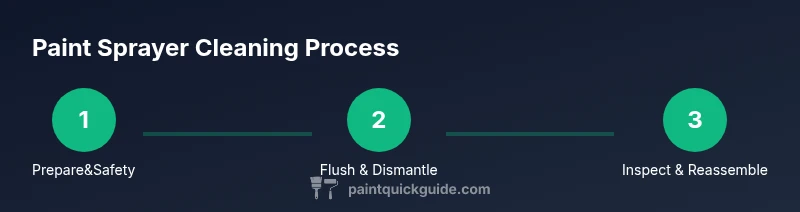
To clean a paint sprayer, start by disconnecting power, relieving pressure, and draining any remaining coating. Flush with the appropriate cleaner, then disassemble the nozzle and filter to scrub and rinse all passages. Soak removable parts as needed, reassemble, and run a quick test on scrap material to confirm clean passageways before storing. Gather cups, rags, and gloves, and follow solvent guidelines for your paint type.
Why cleaning your paint sprayer matters
A clean sprayer delivers consistent spray patterns, accurate fluid flow, and better color control. According to PaintQuickGuide, neglecting cleanup can cause nozzle clogging, uneven atomization, seal wear, and corrosion in metal components. Regular cleaning minimizes cross-contamination between colors, preserves spray accuracy, and extends the tool’s life, saving money on replacements and maintenance. For homeowners tackling DIY projects and pros finishing multiple rooms, a quick post-use flush is often enough for water-based paints, while solvent-based coatings require a deeper cleanup. The goal is to restore the sprayer to peak performance and ensure safe operation on the next project. In practice, you should plan a brief cleanup immediately after each session and schedule a deeper clean after heavy use or color changes. This approach reduces downtime and helps you achieve a smoother, more even spray every time. PaintQuickGuide emphasizes that consistent maintenance saves time in the long run and protects your investment.
Cleaning methods by paint type: water-based vs solvent-based
Water-based paints (latex, acrylic) rinse most completely with warm water and a mild dish soap or a dedicated water-based cleaner. Oil-based paints or solvent-based coatings require mineral spirits or a dedicated spray gun cleaner. Always check the paint manufacturer’s cleanup guidance and your sprayer’s manual. PaintQuickGuide analysis highlights differences in residue and seal wear between cleaners and paint types. Use a bucket or cup to catch used cleaner, work in a well-ventilated space, and wear gloves and eye protection. After rinsing, foams or residues should disappear; if stubborn deposits remain, avoid forcing them through the nozzle. Soaking and brushing are preferred methods for the nozzle, tip, and internal passages rather than aggressive scrubbing, which can damage delicate components. Finally, run a short rinse with the recommended cleaner to ensure all cleaner residues are removed before reassembling.
Step-by-step care: disassembly, flushing, and inspection
Disassembly allows access to the nozzle, seals, and filters. First, unplug the sprayer and relieve any residual pressure according to the manual. Remove the spray tip, nozzle, and any removable filters, placing small parts in a labeled tray to avoid loss. Rinse the gun body and passages with the appropriate cleaner, then flush until clear. Remove the filter and rinse under running water or solvent, then brush away caked paint with a soft nylon brush. Soak removable components in cleaner for 5–10 minutes to loosen deposits. After soaking, scrub gently, rinse thoroughly, and dry all parts completely before reassembly. Finally, inspect O-rings and seals for wear, replace if necessary, and apply a thin layer of lubricant on moving parts to ease future cleaning. This routine helps prevent leaks and keeps performance steady.
Maintenance routine and storage after cleanup
Create a simple routine: after each job, flush with solvent or water-based cleaner, wipe the exterior, and dry. Do a deeper clean weekly or after heavy use. Store the sprayer disassembled if possible, keeping the nozzle cap and filter dry and capped to prevent dust ingress. Keep solvents in a sealed container away from heat and flames; never store a sprayer with uncured paint inside. If you anticipate switching colors, flush with the new color, then rinse to minimize color bleed. Periodically inspect hoses and seals; replace worn parts to prevent leaks. Proper storage protects seals and keeps your sprayer ready for the next project.
Tools & Materials
- Safety goggles(Eye protection during cleaning and solvent handling)
- Nitrile gloves(Protect skin from cleaners and solvents)
- Drop cloth or plastic sheeting(Contain spills and protect surfaces)
- Solvent appropriate to paint type(Mineral spirits for oil-based paints; water-based cleaner for latex)
- Warm water(Rinse initial residues and thin cleaners)
- Mild detergent or dedicated spray-cleaner(Assist with water-based cleanup)
- Plastic cups or containers(Catch rinses and cleaners)
- Soft-bristled brush(Remove dried paint from crevices)
- Lint-free rags(Dry parts and wipe surfaces)
- Small screwdriver or tool set(Useful for disassembling nozzles on some models)
- Container for soaking parts(Soak removable components 5–10 minutes)
- Lubricant for seals(Light oil or silicone lubricant for O-rings)
Steps
Estimated time: 30-45 minutes
- 1
Disconnect power and relieve pressure
Unplug the sprayer and follow the manufacturer’s procedure to release any remaining pressure. This prevents accidental spray and protects you from solvent exposure. Place the unit on a protected surface before starting.
Tip: Always start with safety; a quick power-off prevents accidents. - 2
Disassemble the spray gun components
Remove the spray tip, nozzle, and any removable filters. Keep small parts in a labeled tray to avoid losing them. If your model uses a quick-connect coupling, detach it according to the user manual.
Tip: Lay out components in the order you remove them for easier reassembly. - 3
Flush passages with cleaner
Rinse the body and passages with the appropriate cleaner. Run the cleaner through until the rinse runs clear and paint-free. This step prevents dried paint from clogging the passages.
Tip: Avoid forcing dirty cleaner through tight passages; use a brush if needed. - 4
Soak removable parts
Soak nozzle, tip, and filters in cleaner for 5–10 minutes to loosen deposits. After soaking, brush gently and rinse thoroughly. Dry all parts completely before reassembly.
Tip: Do not soak seals for too long to prevent swelling. - 5
Inspect and lubricate
Check O-rings, seals, and the needle for wear. Replace worn parts and apply a light lubricant to moving components to ease future cleaning. Reassemble carefully.
Tip: Keep replacement parts handy for quick fixes between projects. - 6
Test and store
Test spray on a scrap surface to verify clear flow. Wipe down exterior, dry, and store in a cool, ventilated area away from solvents. Cover to protect from dust.
Tip: A quick test spray confirms there are no obstructions before you start your next job.
Your Questions Answered
Should I flush with water after using solvent-based paints?
Yes. After cleaning with solvent, flush again with the appropriate cleaner or water-based solution to remove leftover solvent residues. This helps prevent chemical damage and improves spray consistency.
Yes. Always flush with the appropriate cleaner after using solvent-based paints to remove residue and protect the sprayer.
Can I use dish soap for all paints?
Dish soap works for some water-based paints, but oil-based or high-solvent coatings often require dedicated cleaners. Always follow the paint manufacturer’s instructions and your sprayer’s manual.
Dish soap may work for water-based paints, but oil-based paints need proper cleaners and manufacturer guidance.
How long should I soak parts?
Most removable parts benefit from a 5–10 minute soak in the appropriate cleaner. Do not soak seals or gaskets longer than recommended by the manual.
A 5–10 minute soak is usually enough for removable parts, but follow your manual for specifics.
Is it safe to store a sprayer with cleaner inside?
No. Store the sprayer empty and rinsed with any cleaner removed. Keep cleaners in a sealed container away from heat and never store a sprayer with uncured paint inside.
Don’t store the sprayer with cleaner or paint inside. Empty, rinse, and store safely.
What if spray quality drops after cleaning?
Re-inspect the nozzle, filter, and seals for clogs or wear. Reassemble correctly and perform a test spray. If issues persist, consult the manual or contact the manufacturer.
If the spray is still off, check seals and filters again and test on scrap material.
Watch Video
Quick Summary
- Clean promptly after use to prevent residue buildup.
- Use water-based cleaners for latex paints and mineral spirits for oil-based paints.
- Disassemble, soak, brush, rinse, and inspect seals for best results.
- Test spray on scrap before resuming work.
- Proper storage extends sprayer life and maintains performance.