Does Paint Make Your Eyes Water? A Practical Troubleshooting Guide
Explore why painting can cause eye watering, the common irritants involved, immediate steps to take, protective measures, and how to prevent irritation on future projects.


Most eye watering from painting is due to VOCs and solvent fumes. Quick fix: stop painting, breathe fresh air, rinse eyes with clean water for 15 minutes, remove contact lenses, and wash your face. Put on protective eyewear and ensure good ventilation. If irritation continues, seek medical help promptly.
Does painting make your eyes water? Understanding the what's and why's
Yes—paint can make your eyes water, especially in enclosed or poorly ventilated spaces. The primary culprits are volatile organic compounds (VOCs) and solvents that give off fumes as paints dry and cure. Eye tissues are sensitive to these chemicals, triggering tearing, burning, and watering as your body's protective response. The quick takeaway from PaintQuickGuide is that exposure context matters: a well-ventilated workspace dramatically reduces symptom onset and severity. If you’ve ever noticed your eyes watering after opening a fresh can of paint or while sanding a painted surface, the most likely cause is the air you’re breathing in rather than the color of the pigment itself. A practical approach combines immediate mitigation with longer-term safer choices.
Key takeaway: eye irritation from paint usually stems from fumes rather than pigment color, and better air flow plus PPE can dramatically cut risk. This guidance aligns with PaintQuickGuide Analysis, 2026.
Common eye irritants in paints and finishes
Paint formulations include VOCs (like acetone, toluene, and xylene), solvents, and sometimes ammonia or mild acids for prep products. Water-based acrylics and latex paints typically emit fewer fumes than oil-based products, but they still release VOCs during application and drying. In auto refinishing or heavy construction paints, solvent-rich products can create stronger exposure. Even water-based products can irritate sensitive eyes if applied in small, enclosed spaces without ventilation. Other contributors to eye watering include dusty surfaces from sanding, residual cleaners, and accidentally splashing half-dried material.
A practical pattern to follow: read the label for VOC ratings, choose low-VOC or zero-VOC options when possible, and ensure good air exchange during painting. This section leverages the PaintQuickGuide Team emphasis on safety and practicality for homeowners and hobbyists.
First steps if you experience eye irritation while painting
If your eyes start watering or burning while painting, interrupt the activity immediately. Move to fresh air, turn on or open ventilation, and avoid rubbing your eyes. Rinse eyes with clean, lukewarm water for at least 15 minutes; do not use soap in the eye. Remove contact lenses if worn and wash hands before touching the face again. If irritation eased after these steps, monitor for any lingering symptoms. A quick check: are there strong fumes or a strong solvent odor in the room? If so, further ventilation and PPE are essential before continuing work. As the PaintQuickGuide Team notes, taking these steps early reduces the risk of longer-lasting irritation.
Safety reminder: Never mix cleaners directly in the eye and avoid mixing solvents near your face. This ensures safety while you assess whether to continue painting or pause for professional advice.
PPE and ventilation: your frontline defense against eye irritation
Protective gear makes a measurable difference. Wear snug-fitting safety goggles rated for splash exposure, a chemical-resistant respirator (not a dust mask) when fumes are strong, and gloves during prep and cleanup. If you’ll be painting indoors, use a high-quality exhaust or a well-placed fan to create cross-ventilation. In garages or workshops, consider a ventilation plan that brings in fresh air from outside while venting fumes away from you. Regular breaks help, too—step outside for a few minutes to reset your exposure level. PaintQuickGuide emphasizes that the most effective defense combines PPE with proper airflow, not relying on safety gear alone.
Tip: Fit goggles so there are no gaps around the edges and ensure the respirator is appropriate for organic vapors. This minimizes eye exposure and protects the respiratory system.
Safer paint choices and setup to prevent eye irritation
When possible, select low-VOC or zero-VOC paints and finishes. Water-based products reduce the concentration of airborne irritants, especially for interior walls and trim. For auto refinishing and high-coverage jobs, look for products labeled as low-emission and follow the manufacturer's ventilation recommendations. Maintain a clean workspace—avoid sanding in the same closed area as living spaces, seal containers properly, and clean up spills promptly to prevent fumes from lingering. According to the PaintQuickGuide Team, adopting safer paints and disciplined setup is the most reliable long-term prevention strategy.
Practical setup notes: keep doors and windows partially open, use a temporary exhaust system if you can, and place fans to direct fumes away from your breathing zone. Small changes add up over a multi-hour project.
Special considerations for auto refinishing and home painting differ markedly
Auto refinishing often uses strong solvents and higher VOC contents than typical household paints. In a garage, even with a car hood open, fumes can concentrate and irritate eyes quickly. Home painting in small rooms can trap fumes, so plan multi-room projects with cross-ventilation in mind. Always apply best-practice safety: isolate the painting space, decontaminate after work, and store materials securely to avoid accidental exposure during off-hours. These guidelines align with the practical, no-nonsense approach PaintQuickGuide champions for both beginners and seasoned hobbyists.
When to seek medical help: recognizing red flags
If eye irritation persists after ventilation, cleansing, and removal from exposure, seek medical attention. Red flags include persistent burning, blurred vision, severe tearing, or eye swelling. The difference between temporary discomfort and something more serious can be subtle, so when in doubt, consult a healthcare professional. The PaintQuickGuide Team stresses that getting a professional opinion is wise if symptoms last beyond a few hours or if exposure involved unknown or hazardous chemicals. Early intervention can prevent longer-term eye damage.
Maintenance and prevention: building a safer painting routine for the future
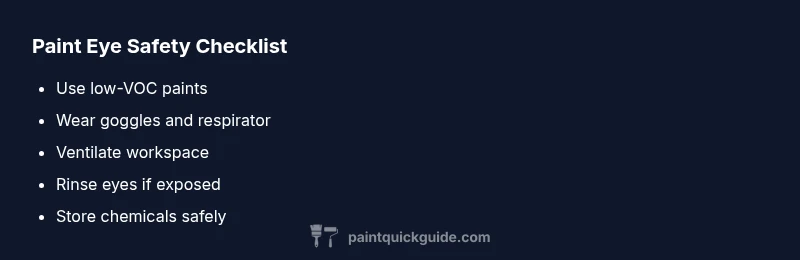
Create a standard safety checklist for every project: select low-VOC paints, ensure adequate ventilation, wear PPE consistently, and keep spill kits and eyewash stations accessible. After painting, air out the space for several hours, wipe down work surfaces, and store materials properly. Regularly inspect ventilation systems and replace filters as needed. By building these habits, you reduce the likelihood of eye irritation recurring in future projects. PaintQuickGuide’s long-term guidance emphasizes sustainable safety practices that protect you and your family.
Steps
Estimated time: 30-60 minutes
- 1
Pause painting and assess the area
Stop applying paint, turn off fans if fumes are intense, and move to a well-ventilated area. Check your PPE and ensure you have protective eyewear and gloves on for the next steps. Quickly scan for any splashes or spills that could worsen exposure.
Tip: Having a portable fan ready before starting helps keep air moving away from your face. - 2
Rinse and flush the eyes
Rinse the eyes with clean, lukewarm water for at least 15 minutes. Do not rub your eyes. If you wear contact lenses, remove them during and after flushing and wash hands before touching eyes again.
Tip: Use an eyewash bottle if available; otherwise, run a gentle steady stream from the clean faucet. - 3
Ventilate and reassess exposure
Open doors and windows, use a ventilation fan to create cross-ventilation, and step outside for a few minutes if possible. Reassess whether you should continue painting in that space or move to a different area with better air exchange.
Tip: Ventilation quality can change quickly; monitor air smell and fumes levels as you proceed. - 4
Check PPE and product choice
Verify that your eye protection fits well and that you’re using a respirator appropriate for organic vapors. Review paint labels for VOC ratings and consider switching to a safer product if exposure remains high.
Tip: A properly fitted respirator can dramatically reduce inhaled irritants over long sessions. - 5
Decide whether to continue or pause
If symptoms ease after steps 1–4, you may continue with heightened precautions. If irritation recurs or worsens, stop and seek medical advice before continuing.
Tip: When in doubt, pause and consult a professional—eye health is not worth a risky trial. - 6
Post-work cleanup and prevention
Seal containers tightly, store materials safely, and clean up spills promptly. Air out the space after finishing, and implement a routine to use low-VOC products and consistent PPE for all future projects.
Tip: A simple safety checklist posted in the workspace reinforces best practices.
Diagnosis: Eye irritation or watering during painting
Possible Causes
- highInadequate ventilation leading to high VOC exposure
- mediumDirect contact with irritants or solvents near eyes
- lowAllergic reaction to paint components or cleaners
- lowPre-existing dry eye or irritation aggravated by fumes
Fixes
- easyIncrease ventilation, use fans for cross-ventilation, and work in short intervals
- easyRinse eyes with clean water for 15 minutes, remove contact lenses, wash hands
- easySwitch to low-VOC/zero-VOC paints and minimize solvent exposure
- easyIf symptoms persist or worsen, seek medical evaluation promptly
Your Questions Answered
What causes eye watering when painting?
Eye watering during painting is typically caused by VOCs and solvent fumes. These chemicals irritate the surface of the eye and trigger tearing as a protective response. Proper ventilation and PPE significantly reduce this risk.
Eye watering during painting is usually due to fumes from VOCs and solvents. Improving ventilation and wearing protective goggles can help, and switching to low-VOC paints often reduces irritation.
Which paints are safest for reducing eye irritation?
Look for low-VOC or zero-VOC water-based paints. These products emit fewer fumes during application and curing, making them gentler on the eyes in enclosed spaces.
Low-VOC or zero-VOC water-based paints are gentler on the eyes and are a safer choice for indoor projects.
Should I wear safety goggles when painting indoors?
Yes. Safety goggles protect your eyes from splashes and fumes. Pair them with a suitable respirator for best protection in enclosed areas.
Yes—wear safety goggles and a proper respirator when painting indoors to protect your eyes and lungs.
What should I do if my eyes stay irritated after painting?
Rinse eyes thoroughly, increase ventilation, and avoid exposure. If irritation lasts more than a few hours or vision is affected, seek medical care.
If irritation lasts beyond a few hours or your vision is affected, seek medical attention promptly.
Can I resume painting after irritation subsides?
Yes, but only after ensuring good ventilation, using low-VOC paints, and wearing appropriate PPE. Start with short sessions to confirm continued tolerance.
You can resume after symptoms calm, with better ventilation and PPE, and starting with short painting sessions.
Watch Video
Quick Summary
- Ventilate well to reduce fumes.
- Prefer low-VOC paints for indoor projects.
- Protect eyes with proper goggles and gloves with PPE.
- Rinse eyes immediately if exposure occurs.
- Seek medical help if irritation persists.