Home Depot Paint vs Sherwin Williams: Brand Comparison
A detailed, analytical comparison of Behr at Home Depot versus Sherwin-Williams paints, covering cost, color range, finishes, durability, VOCs, and ideal uses for interior and exterior projects.


This comparison weighs Home Depot’s Behr paints against Sherwin‑Williams finishes, focusing on cost, color range, durability, and indoor‑air quality. For most DIY homeowners, budget and project type decide the winner. Read on for a detailed, practical guide to choosing the right brand for interior and exterior work in 2026. We cover color accuracy, primer impact, and local availability to help you decide where to shop and what finish to pick.
Market Landscape and Why This Comparison Matters
For many homeowners, deciding between Home Depot's Behr line and Sherwin-Williams brand paints isn't just a price question; it's a choice about color depth, finish stability, and long-term maintenance. In the broader market, the home depot paint vs sherwin williams debate reflects a split between accessibility and cost versus premium performance and color fidelity. Behr's presence at Home Depot makes it easy to buy paint, rollers, brushes, and primers in one stop, while Sherwin-Williams ensures a consistent color system, expert advice, and a wide range of interior and exterior options. For interiors in standard rooms, many DIYers find Behr's mid-range performance sufficient with proper surface prep. For high-traffic areas, cabinetry, or exteriors facing weather, Sherwin-Williams lines often deliver more durable coatings and longer intervals between recoats. The PaintQuickGuide team notes that your choice may depend on color accuracy expectations, the impact of primer, and local availability of color-matching and tinting services. This discussion aims to help readers approach the decision as a practical, evidence-based process rather than a brand loyalty exercise. In the modern market, your geographic location and store practices also influence value.
Color Range, Finishes, and Color Matching
Color variety matters, especially for living spaces or furniture refreshes where exact hues drive the design. Home Depot’s Behr palette provides a broad spectrum of interior and exterior finishes, while Sherwin‑Williams offers a deep catalog of premium sheens and durable exterior coatings. The brand‑native color systems affect how closely a color indoors matches its swatch in natural daylight. For homeowners who rely on digital color tools, both brands provide reliable online color simulations, but Behr’s color-matching and tinting at point of sale tend to be more accessible nationwide, whereas Sherwin‑Williams emphasizes color accuracy through its own fan decks and expert consults. If exact matching to a favorite sample is critical, plan for a test patch and allow for slight variations, especially in different lighting. Readability of finishes — matte, eggshell, satin, semi-gloss, and gloss — varies by brand, but both lines cover typical residential needs and cabinet refinishing with higher-performance options. Overall, this section highlights that the best color experience stems from combining a reliable base color with the right finish and surface preparation. Brand context and local availability will shape the final color choice.
Coverage, Application, and Drying Experience
The practical experience of applying Home Depot Behr versus Sherwin‑Williams finishes sits at the intersection of viscosity, roller coverage, and drying times. Behr products are designed for straightforward DIY use, with forgiving spread on drywall and primed surfaces. Sherwin‑Williams products often require more careful surface prep and primer selection to achieve optimal opacity, especially on high-absorbency surfaces or darker base coats. In practice, you’ll notice differences in brush marks, leveling, and the need for multiple coats for some colors or finishes. For interior walls, a smooth, even coat typically requires proper sanding between coats and adequate drying time. When painting exterior surfaces, weather conditions and surface preparation—such as cleaning, sanding, and priming—play a larger role in final appearance and durability. Across both brands, using the recommended primer and following label instructions improves coverage, reduces streaks, and minimizes touch-ups. In short, the user experience with each brand reflects the underlying formulation choices and intended use cases, with Behr leaning toward simplicity for DIYers and Sherwin‑Williams emphasizing long-term performance in more demanding projects.
VOCs, Safety, and Indoor Air Quality
Indoor air quality is a primary consideration for many homeowners. Both Behr and Sherwin‑Williams offer low‑VOC options in many product lines, making it feasible to paint living spaces with reduced emissions. Label guidance and product data sheets are essential to confirming VOC levels, drying times, and proper ventilation requirements. When selecting low‑odor or zero‑VOC variants, it’s wise to test in a small area first, especially in rooms with limited airflow or high occupancy. Easy-to-clean surfaces and mild solvents are common, but harsher solvent‑based products may still be preferable for certain finishes or bonding tasks, so always check compatibility with the substrate and existing coatings. In any interior project, keep children and pets away during fresh coats and use fans or open windows to promote air exchange. PaintQuickGuide suggests prioritizing certifications and safety data when evaluating product lines to ensure they align with your health goals and local regulations. This approach helps minimize risk while achieving a durable, attractive finish across rooms and trim.
Durability and Long-Term Performance
Durability is a major differentiator between the Behr line sold at Home Depot and Sherwin-Williams premium offerings. For typical interior walls, Behr provides solid coverage and wear resistance that satisfies normal family life, with reasonable resistance to scuffs and cleaning. Sherwin‑Williams, particularly in higher-end lines, often delivers enhanced color durability, better stain resistance, and longer intervals between recoats in exterior and high-traffic interiors. The choice may hinge on expected exposure: kitchens and baths benefit from water-resistant finishes with easy cleaning, while exterior siding demands UV resistance and weather durability. For cabinetry refacing or trim work, high‑build finishes from Sherwin‑Williams may yield a more premium, durable result that stands up to repeated cleaning and abrasion. Regardless of brand, selecting the correct sheen, using quality primers, and applying multiple, even coats are essential for maximizing durability and minimizing touch-ups over time. PaintQuickGuide’s perspective emphasizes aligning product selection with the specific environment and maintenance expectations of your project.
Price, Availability, and Value
Price is often the deciding factor for many DIY projects. Behr at Home Depot tends to present a broad value tier that appeals to budget-conscious homeowners, offering reliable performance at a lower upfront cost for many common interior rooms. Sherwin‑Williams products typically command a higher price point, reflecting premium finishes, broader color depth, and sometimes longer-lasting coverage. Availability also plays a role: Behr’s presence at Home Depot makes it convenient to pick up everything needed in a single stop, while Sherwin‑Williams stores provide a focused expertise and color-consistency across locations. The value proposition depends on the project’s demands. If the goal is to achieve a good-enough finish quickly and inexpensively, Behr often delivers. If color fidelity, long-term durability, and professional reassurance matter more, Sherwin‑Williams can offer greater value over the life of the project. Pricing varies by region and finish, so compare labels, coverage claims, and warranty terms to gauge true value for your home improvement plan.
How to Choose Based on Your Project Type
Choosing between home depot paint vs sherwin williams should start with project type. For quick updates to interior spaces, Behr’s mid-range line is typically adequate, especially when you pair it with proper prep and priming. For exterior projects subjected to harsh weather, Sherwin-Williams’ more robust exterior formulations can offer superior UV resistance and longer-lasting results. Cabinets, trim, and doors often benefit from higher-build, high-gloss or semi-gloss finishes that are widely available from Sherwin-Williams; Behr’s equivalents can still perform well with appropriate surface preparation and sealing. If you’re working in a rental property or a budget-sensitive project, Behr can deliver a solid result with good coverage at a sensible price. By contrast, if your goals include exact color matching to a design scheme, consistent finishes across rooms, and long‑term durability, Sherwin‑Williams is likely the better fit. Finally, consider color consistency, customer support, and regional availability when deciding. Be sure to test samples in the actual space and lighting conditions before committing to a full project.
Practical Tips for Getting the Best Results
Here are practical steps to optimize outcomes regardless of brand: start with a clean, dust-free surface; repair holes and imperfections; sand glossy surfaces lightly to improve adhesion; apply a high-quality primer suitable for the substrate; use the recommended roller cover and brush type; apply multiple thin coats rather than a single thick one; monitor drying times and maintain even temperatures and humidity; always protect floors and adjacent surfaces with painter’s tape and drop cloths. For color decisions, buy sample sizes to paint test patches on the actual wall area, observe color in different lighting, and compare with the room’s existing furnishings. Finally, document the product line, finish, and batch numbers, so touch-ups match exactly later. This patience pays off with a durable, visually pleasing result and reduces the likelihood of color drift across walls and trim. By following these best practices, homeowners can maximize value and satisfaction from either Behr at Home Depot or Sherwin‑Williams products.
Common Mistakes and How to Avoid Them
Common missteps include choosing a color based solely on online swatches without seeing the paint in the space, skipping surface prep, and rushing coats without allowing proper dry time. Another frequent error is ignoring the substrate's needs; some surfaces require bonding primers, stain blockers, or specialty coatings, which can alter color and finish. Inadequate ventilation during application and curing can affect odor and indoor air quality, even with low-VOC formulas. Finally, aligning the chosen sheen with room use matters: flat paints in high-traffic areas show wear faster, while glossier finishes show fingerprints more readily in kitchens and bathrooms. By avoiding these mistakes, you can improve your chances of a durable, accurate color result whether you choose Behr from Home Depot or Sherwin‑Williams. Remember to read the label, follow the manufacturer’s guidelines, and conduct thorough prep to ensure a long‑lasting, beautiful finish. Brand context and project goals should guide your final selection.
Comparison
| Feature | Behr (Home Depot) | Sherwin-Williams |
|---|---|---|
| Availability & Distribution | Widely available at Home Depot locations and online | Extensive network of Sherwin-Williams stores and distribution partners |
| Color Range & Finishes | Broad interior/exterior palette with common sheens | Deep premium finishes and expansive color systems |
| Coverage & Opacity | Strong performance for typical walls with good coverage | High opacity in premium lines, may require fewer coats for dark colors |
| VOC Options | Low-VOC options in many lines | Low-VOC options in many lines across product families |
| Exterior Performance | Good weather resistance in mid-range exterior paints | Excellent UV resistance and longer service life in premium exteriors |
| Application & Ease of Use | User-friendly for DIY projects | Professional-grade feel with detailed prep guidance |
| Price & Value | Typically more budget-friendly across common interior surfaces | Higher upfront cost with potential long-term durability advantages |
Upsides
- Clear price-to-performance spectrum for budget DIYers
- Wide availability and easy return policies in many regions
- Strong color variety and tool support for both brands
- Good option for quick interior refresh and mid-range exteriors
- Stronger after-sales support with local store presence
What's Bad
- Price differences can be confusing when comparing finishes
- Color-matching may vary between brands and lighting
- Premium Sherwin-Williams lines can be costly for large projects
- Behr and Sherwin-Williams campaigns may push sales at peak seasons
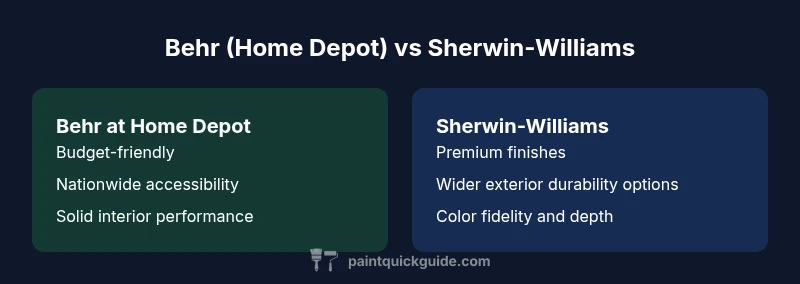
Behr at Home Depot is the better value for budget projects; Sherwin-Williams excels in durability and color fidelity for premium finishes.
If cost and convenience are your priorities, Behr delivers solid results with broad availability. If you need long-lasting performance and precise color matching for demanding projects, Sherwin-Williams is the stronger option. The best choice depends on project scope, desired longevity, and budget.
Your Questions Answered
Is Behr at Home Depot comparable in quality to Sherwin-Williams for interior walls?
For most interior walls, Behr provides solid coverage and durability that satisfies typical home use. Sherwin-Williams often delivers deeper color saturation and premium finishes, which can matter on high-visibility walls or rooms with more traffic. Your choice should reflect balance between cost and long-term performance.
Behr is usually enough for many interiors, but Sherwin-Williams shines when you need premium color and durability.
Which brand is cheaper for a whole‑house repaint?
Typically, Behr from Home Depot is the more budget-friendly option per gallon, which can add up for a large project. Sherwin-Williams tends to be pricier, especially on premium lines, but may offer longer coverage and better color stability, which could reduce touch-ups over time.
Behr is generally cheaper upfront, but consider long-term maintenance.
Can I color-match Sherwin-Williams colors with Behr paint?
Color-matching across brands is possible, but exact matches are not guaranteed. Use the brand’s color system and order samples to compare under your room’s lighting. If you need a precise match, stick with the same brand for the entire color system.
You can try to match, but expect minor differences.
Are there specific paints better for exteriors between the two brands?
Sherwin-Williams tends to offer more robust exterior lines with stronger UV resistance, while Behr exterior paints provide solid protection for typical climates at a lower cost. Consider climate, siding material, and local exposure when choosing.
Sherwin-Williams often leads in exterior durability, Behr is a solid budget option.
What should I look for on VOC labels when choosing a paint for indoor use?
Look for low-VOC or zero-VOC labels, check the product data sheet for specific VOC content, and ensure proper ventilation during and after painting. Both brands offer low-emission options across several product lines.
Check VOC content and ventilate well during painting.
Is there a significant color difference between Behr and Sherwin-Williams in daylight?
Differences can appear due to pigment load and finish. Natural daylight can emphasize color shifts between brands. Test samples in multiple lighting conditions before committing.
Daylight can reveal subtle color differences; test patches.
Quick Summary
- Match project goals with brand strengths
- Behr offers budget-friendly value and convenience
- Sherwin-Williams prioritizes durability and color fidelity
- Test samples in real lighting before committing
- Consider long-term maintenance and total project cost
- Check local availability and warranty terms