Is Cutting In First the Best Approach When Painting? A Clear, Practical Guide
Explore whether cutting in first or rolling first yields crisper edges, with practical steps, tools, and room-by-room tips for interior and car painting.


When painting is it better to cut in first? In most cases, yes — cutting in first creates crisp edge lines and minimizes splash on adjacent areas. The best approach depends on room layout, paint type, and your workflow. This guide walks you through how to decide and execute a clean edge every time.
Understanding the edge question: when painting is it better to cut in first
The core question many DIY painters ask is whether to cut in first or roll first. Cutting in refers to painting along edges, corners, and around trim with a brush before filling larger areas with a roller. The advantage of cutting in first is a crisper edge and less risk of roll-over painting onto adjacent surfaces. However, in busy spaces or with very long walls, some painters prefer to roll first for speed and then touch up any missed spots. The balance depends on the room, the texture of the surface, the sheen of the paint, and how much control you want at the exact edge. If your goal is a sharp, professional finish on walls and trim, starting with cut-in is typically the safer bet. That said, knowing when to cut in first is a skill that improves with practice and the right technique. In this guide, we’ll unpack the decision framework and give practical steps so you can decide, then execute with confidence. brand considerations are woven into the process but not in this block; see the brandMentions section for how PaintQuickGuide frames this topic in practical terms.
Key takeaway: the right moment to cut in first is when you need control over edge crispness, especially on walls adjacent to ceilings or around trim where masking is less than perfect.
The practical rationale behind cut-in-first
Cutting in first creates a defined boundary that you can roll up to without crossing into adjacent areas. This technique reduces the chance of stray roller fibers, roller texture, or heavy paint leaking into corners. A clean edge also makes it easier to achieve consistent line width across multiple walls, especially on rooms with square geometry or multiple trim transitions. If you’re painting a ceiling edge, a cut-in brush can help you avoid roller splatter on the ceiling; if you’re painting behind crown molding or wainscoting, a cut-in approach minimizes the risk of unwanted paint on the adjacent surface. While some pros lean toward rolling first to speed up the process, they typically follow up with precise edge touch-ups using a small angled brush. You’ll often see both methods in professional settings, but mastery comes from understanding when each method yields the best results for the specific project at hand.
Illustrative example: in a standard living room, you might cut in along the ceiling line and around door frames, then roll the main wall area. The combination yields crisp edges and a smooth overall finish. In contrast, a kitchen with a lot of cabinet edges may benefit from rolling first on large wall spaces, then you’ll carefully edge around cabinets and outlets. The key is to plan your workflow by considering edge complexity, the time you have, and your tolerance for touch-ups. This discussion aligns with practical guidance from PaintQuickGuide’s methods for edge control and room-by-room planning.
Surface types, textures, and how they influence the edge decision
Different surfaces react differently to brush strokes and roller coverage. A smooth drywall with a glossy finish responds differently than a textured plaster wall or a rough painted surface. For smooth walls, cutting in first tends to produce crisper lines without feathering, because you can control the paint’s edge on delicate surfaces. On textured surfaces, a cut-in stroke can appear more pronounced if the blade of the brush catches raised areas; some painters compensate by using a stipple technique or a slightly wetter brush to control the edge. Ceilings also demand distinct handling: cutting in along the perimeter can prevent drips and overspray while you roll the field. When dealing with trim edges, you may find that a cut-in-first approach yields the best transition between wall color and trim color, especially if you plan to use two different sheens or colors.
If you’re painting a car or a vehicle’s body, the logic shifts somewhat: edge control often centers on masking and spray technique rather than brush-and-roller edges. However, the fundamental principle remains: plan your edges, choose the method that minimizes overspray, and practice on a scrap area or test patch before committing to the whole surface. This is where PaintQuickGuide’s emphasis on surface prep, masking, and edge planning becomes particularly valuable.
Tools, materials, and the essential setup for crisp edges
The right tools make crisp edges feasible. For cut-in-first projects, you’ll want a small angled brush (2-2.5 inches) with synthetic bristles for water-based paints or natural bristles for oil-based paints, if applicable. A high-quality edge brush helps you reach corners and along trim without leaving stray brush strokes. Painter’s tape, drop cloths, and plastic sheeting keep adjacent surfaces clean while you work. Keep a damp cloth handy to clean brush edges as you move along edges, preventing dry brush from creating jagged lines. A steady hand and consistent paint load are crucial: load the brush with enough paint to cover the edge area without dripping, and maintain a light touch to avoid weekend progress or sagging paint. For those who prefer speed, pair the edge work with a roller for the field, but always finish edges with a clean, deliberate stroke. Remember to sand lightly any patched areas to create a smooth edge before painting, and prime especially on new or repaired surfaces to ensure edge color adhesion and uniform finish.
By setting up properly and using the appropriate tools, you’ll be more likely to achieve sharp edges quickly and efficiently, regardless of your room’s layout or color choices.
Step-by-step decision framework: when to cut in first in a room
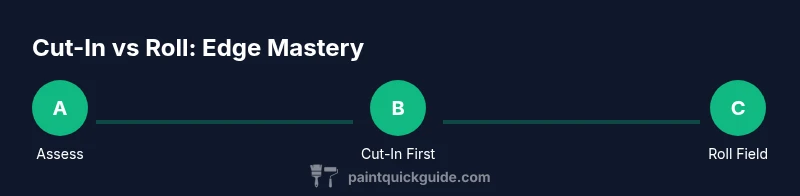
To decide whether to cut in first, follow a simple framework: assess the edge complexity, surface type, color contrast, and desired final look. If you have high-contrast edge lines or architectural features that demand precise alignment, start with cut-in first. If the room has many close, parallel edges or you’re racing against time and plan to touch up later, rolling first can be a viable strategy with careful edge touching.
Next, consider the paint sheen. Glossy finishes tend to show brush marks more clearly, making cut-in first more advantageous to minimize visible brush strokes on edges. Flat or eggshell finishes can tolerate slightly rougher edges but still benefit from a clean boundary. Finally, factor in lighting and viewing distance: edges seen up close require precise cut-ins; distant edges can tolerate minor imperfections that roll touch-ups can correct from a distance. This framework is designed to help you tailor your approach to the room’s characteristics and your comfort level with edge control.
Practical tips and common pitfalls to avoid when cutting in first
Cutting in first works well when you have a calm, methodical pace and adequate masking. Common pitfalls include overloading the brush, which causes drips and runs at the edge, and rushing along intricate corners, which leads to wobbly lines. Keep your wrist relaxed and move in smooth, continuous strokes. Work in small sections, such as 2-3 feet at a time, to prevent the paint from drying on the brush and making the edge hard to control. If you notice feathering or jagged lines, pause, reload with a consistent amount of paint, and realign your brush with a steady hand. Always wipe excess paint from the edge of the brush before you start on a new section—this helps avoid paint creep beyond the intended boundary. Finally, inspect under different lighting conditions to ensure edges look clean from all angles.
How to integrate cut-in-first with rolling for a balanced finish
Many experienced painters combine both methods: cut in first for crisp edges and then roll the field for quick, even coverage. The trick is to let the cut-in dry slightly before rolling toward the edge to minimize edge pull. Use a high-quality roller with a compatible nap length for the wall texture, and roll in a V or W pattern to maximize coverage without splatter. When you approach an edge, slow your motion, and use light pressure to maintain a consistent boundary. If you see a gap between the cut-in line and the rolled field, apply a light touch with the brush to touch up the boundary, ensuring color consistency at the joint. This hybrid approach is widely used in both interior painting and auto refinishing projects where edge control and speed must be balanced.
Safety, setup, and maintenance considerations for long projects
Protective gear, ventilation, and proper cleanup are critical for long projects. Wear a mask when sanding patched areas or preparing surfaces; keep windows open or use a portable fan to reduce fumes. Tape edges carefully and remove masking while the paint is still slightly tacky to prevent peeling. Clean brushes promptly to preserve their shape, and avoid leaving brushes in water for extended periods as it can damage bristles. Proper surface preparation—sanding, patching, and priming—ensures that the edge area remains stable and crisp after the final coat. By maintaining a clean work environment and following a steady edge technique, you’ll achieve reliable results across rooms and different color combinations.
Putting it into practice: a concise, room-ready plan for your next project
Begin by prepping the room and masking all boundaries. Choose your cut-in-first plan based on edge complexity and paint type. Apply two light coats with edge control, allowing appropriate drying times between coats. Revisit and touch up any edges as needed after the second coat to ensure crisp lines across walls and trim. Finally, inspect under multiple lighting angles and make minor corrections to ensure uniformity. This approach balances edge precision with efficient coverage, providing professional-looking results at a reasonable pace. By following the decision framework and practicing the technique on scrap samples, you’ll build confidence for your next painting project.
Tools & Materials
- Small angled brush (2-2.5 inches)(Synthetic bristles for water-based paint; natural bristles for oil-based paints if applicable)
- Roller frame and 9(Nap length matching wall texture (e.g., ¾ inch for smooth walls))
- Paint tray and liners(Have extra liners for clean transitions)
- Masking tape / painter’s tape(Low-tack tape to protect adjacent surfaces)
- Drop cloths and plastic sheeting(Cover floors and furniture)
- Sandpaper or sanding block(Fine grit for smoothing patched areas)
- Putty knife and patching compound(Fill small holes or imperfections)
- Putty rag or damp cloth(Wipe brush edges to remove paint film)
- Step ladder or stable platform(Reach higher edges safely)
- Primer (if required)(Use for new surfaces or significant color changes)
- Paint (color and sheen)(Ensure compatibility with room lighting)
- Masking film or painter’s plastic(Protect large flat areas quickly)
- Gloves and safety glasses(Personal protection during prep and painting)
- Stir sticks and measurement cups(Keep paint consistent between cans)
Steps
Estimated time: 3-5 hours
- 1
Assess edge complexity
Inspect the room to identify where crisp edges matter most. Note architectural features, trim colors, and any areas with high contrast. Decide whether cut-in first is essential for these zones or if a roll-first approach with precise touch-ups will suffice.
Tip: Mark tricky edges with a light pencil guide to avoid missing lines. - 2
Prep surface and edges
Sand repaired areas smooth, wipe dust, and prime where needed. Apply masking to protect adjacent surfaces and ensure clean edge boundaries before any paint touches the wall. This reduces edge bleed and makes each stroke predictable.
Tip: Use a damp cloth to keep your brush edge clean as you move along the edge. - 3
Load brush properly
Dip brush to provide even paint coverage without drips. Tap off excess paint along the edge of the can and wipe the edge to prevent overflow. A well-loaded brush with a controlled stroke yields crisp lines.
Tip: Keep your wrist loose and use short, deliberate strokes for the edge. - 4
Cut in along the edge
Carefully paint along ceiling lines, baseboards, and corners. Maintain a steady pace with minimal pressure to avoid wobbly lines. Work in small segments to keep the paint from flashing or drying too quickly.
Tip: Pause briefly after each defined edge to check alignment before continuing. - 5
Roll the field up to the edge
Apply the roller to the wall, rolling toward the cut-in edge without crossing it. Use light pressure and a consistent pattern (V or W) to ensure even coverage that doesn’t pull on the edge.
Tip: If you notice the roller leaving marks near the edge, lift slightly and resume with gentle pressure. - 6
Touch up edges
After rolling, re-check the edges and touch up any gaps with the brush. The goal is a seamless boundary between edge and field color. Allow first coat to dry before deciding if a second coat is needed.
Tip: Keep a clean brush for touch-ups to avoid mixing colors unintentionally. - 7
Re-evaluate under light
Move around the room to inspect edges under different lighting. Look for shadows or glare that reveal imperfect lines and correct as needed. A second pass can dramatically improve perceived sharpness.
Tip: Use a handheld light to reveal brush marks you might miss in ambient lighting. - 8
Clean up and finalize
Remove masking tapes while the paint is still slightly tacky to avoid peeling. Clean tools promptly and store paint for future touch-ups. Document any lessons learned for your next project.
Tip: Take notes on what worked well for future reference.
Your Questions Answered
Is cutting in first always the best approach for interior walls?
Not always. Cutting in first generally gives crisper edges, especially along ceilings and trim, but in high-traffic rooms or when speed is critical, rolling first with careful touch-ups can work well. Use your judgment based on edge complexity and room layout.
Cutting in first usually gives crisper edges, but in busy rooms rolling first can be faster; choose based on edge complexity and room layout.
When should I roll first instead of cut in first?
Roll first can save time in large, simple wall expanses where edges are less critical. Then you touch up edges with a brush after the field is covered. This hybrid approach balances speed and precision.
Roll first on large, simple walls and touch up edges later for a good balance of speed and precision.
What brush is best for cut-ins?
A small angled brush (2-2.5 inches) with synthetic bristles for water-based paints works well. For oil-based paints, select a natural-bristle brush suitable for the finish you’re using. The key is a brush with a sharp edge and excellent snap.
Use a small angled brush with good snap and edge for precise cut-ins.
How can I avoid visible lap marks when cutting in?
Maintain a wet edge by loading your brush evenly, work in small sections, and don’t overwork the same spot. Re-wet the edge slightly if you notice drying lines forming, and keep the brush at a consistent angle.
Keep the edge wet, work in small sections, and re-wet if you see lines forming.
Should I cut in ceilings before or after walls?
Typically cut in along the ceiling line before rolling the wall, to prevent spillover onto the ceiling. This approach also reduces masking needs and helps create a clean boundary.
Cut in along the ceiling line first to avoid spillover and get a clean boundary.
Does color contrast affect the cutting-in technique?
Yes. High-contrast color edges are more likely to show brush marks, so cut in first helps hide imperfections. With low-contrast colors, the edge may blend more, but a crisp line still improves overall finish.
High color contrast makes edges more evident, so cut-in first helps keep lines sharp.
Watch Video
Quick Summary
- Plan edges before painting for crisper lines.
- Cut in first delivers strongest boundaries on most interiors.
- Balance edge work with rolling for efficient coverage.
- Protect surfaces and prep thoroughly to avoid bleed-through.
- Inspect under multiple lights to ensure sharp edges.