What Size Paint Brush Is Best for Cutting In
Learn the ideal brush size for cutting in edges, plus loading, technique, and tips to achieve crisp, professional lines on walls, ceilings, and trim.


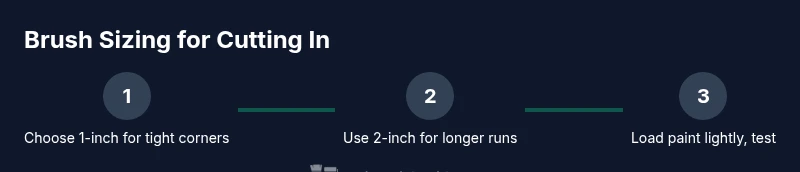
To master clean edges when painting walls or trim, the best size brush for cutting in is a small, angled brush—usually 1 to 2 inches. Start with a 1-inch sash for tight corners, then switch to a 2-inch brush for longer runs. The goal is control and light paint. According to PaintQuickGuide, practice on scrap before applying to walls.
Why the right brush size matters
Cutting in is the critical edge work that defines a painting project. While rollers cover broad areas, the crisp line between your painted surface and the adjacent area is what sells the professional look. The size of your brush directly governs control, paint load, and stroke accuracy. A brush that's too large can smear into the wrong zone; one that's too small can slow you down and increase wear on your wrist. When you ask, "what size paint brush is best for cutting in," the short answer is: start with a small angled brush for precision and adjust as you gain confidence. This choice affects not just edges, but the overall feel of the finished room. Practice on scraps, yes, but also refine your grip, wrist motion, and angle. A steady hand and a predictable brush will deliver more consistent lines, making your project appear more polished and durable over time.
From a workflow perspective, picking the right brush size reduces touch-ups and keeps the project moving. Even homeowners tackling interior walls benefit from understanding the balance between control and speed. This is where the PaintQuickGuide approach shines: it emphasizes practical, repeatable steps over guesswork. If you know you will work along baseboards, window frames, and ceiling lines, a small angled brush gives you maximum leverage in tight spots. The result is fewer drips and cleaner transitions that stand up to close inspection.
In the context of a home improvement budget, choosing the right brush size can save material and time. A single well-selected brush plus proper loading technique often eliminates the need for multiple passes or re-taping. As you read, keep the goal in mind: crisp, straight edges that require minimal correction later. This mindset will help you choose the right tool for cutting in and build confidence with each stroke.
noteArray0_1_2 glueing not allowed
noteArray1_2_placeholder
Tools & Materials
- 1-inch angled sash brush(Best for tight corners and precise lines; natural or synthetic bristles depending on paint type.)
- 2-inch angled brush(Primary tool for longer edge runs along ceilings and baseboards.)
- 1.5-inch angled brush(Nice middle-ground size for mid-wall lines and around fixtures.)
- 2.5-inch angled brush(Faster coverage on larger edge sections; use with light pressure.)
- Painter’s tape(Seal edges to minimize bleed; press firmly along the edge before painting.)
- Drop cloths or plastic sheeting(Protect floors and furniture from stray drips.)
- Paint tray and liners(Keep paint accessible and reduce mess; use liners for easy cleanup.)
- Stir stick and palette knife(Mix paint thoroughly and scrape excess from brush—avoid overloading.)
- Lint-free rags or towels(Wipe off excess paint and tidy up mistakes quickly.)
Steps
Estimated time: 20-30 minutes for a typical room edge; longer for high ceilings or intricate trim.
- 1
Prepare workspace and tape edges
Clear the area and lay down drop cloths. Apply painter’s tape along the edges you don’t want to paint, pressing firmly to minimize bleed. This first step reduces cleanup and gives you a clean reference line for the brush to follow.
Tip: Clean, dry surfaces ensure tape sticks well and edges stay sharp. - 2
Choose the right brush size
For most cutting-in tasks, start with a 1-inch angled brush for corners and tight spots. Have a 2-inch angled brush ready for longer edge runs. The goal is control without having to constantly reposition the brush.
Tip: If you’re unsure, begin with smaller edges and switch to larger brush for long runs. - 3
Load paint properly
Dip the brush lightly into the paint, then tap or wipe off excess on the side of the can or tray. A loaded brush should leave just a thin bead along the edge when you touch the wall, preventing drips and sags.
Tip: Avoid overloading; this is the most common cause of smears. - 4
Make initial edge strokes
Position the brush at a 45-degree angle to the wall, with the brush resting on the taped edge. Draw a light, continuous stroke along the boundary, guiding the paint away from the taped area.
Tip: Keep your wrist relaxed; use wrist action rather than arm swings for accuracy. - 5
Fill the edge with controlled passes
Continue along the edge in short, straight strokes, maintaining consistent pressure. Work in small sections, then blend outward slightly to eliminate hard stops at the tape.
Tip: Don’t rush—slow, deliberate strokes yield crisper lines. - 6
Balance edge work with nearby walls
After edging, carry paint onto adjacent planes with a lighter touch and longer strokes. This keeps a clean line while reducing abrupt color change at the boundary.
Tip: Switch to a larger brush when moving away from corners to speed up the process. - 7
Inspect and touch up
Pause to inspect the lines. If you see a hairline bleed or rough spot, feather the edge with a soft stroke or touch up with a slightly damp brush.
Tip: Address imperfections while the paint is still workable; once dry, touch-ups are harder. - 8
Clean and reset
Wipe brushes clean per paint type, reshuffle brushes for the next section, and recheck taped edges before removing tape. A calm, methodical finish earns the crisp look you want.
Tip: Label brushes for latex vs oil paints to prevent cross-contamination.
Your Questions Answered
What size brush should I use to cut in corners near ceilings?
For ceiling corners, a 1-inch angled brush is usually best because it gives you precision in tight spaces without overloading. You can switch to a 2-inch brush for nearby longer runs. Practice on a scrap area first to develop a consistent stroke.
Use a 1-inch angled brush for ceiling corners, then move to a larger brush for longer gaps.
Can I cut in with a 1-inch brush or do I need a 2-inch?
A 1-inch brush is ideal for tight corners, trim, and intricate details. A 2-inch brush speeds up edge work along longer spans like ceilings and baseboards. Most projects benefit from having both available.
Have both sizes ready—1-inch for tight spots, 2-inch for longer lines.
Is an angled sash brush better than a flat brush for cutting in?
Angled sash brushes provide better control and can reach tight corners more easily than flat brushes. Flat brushes can work for larger edge runs but often require more careful handling to avoid bleeding.
Angled brushes give you sharper edges in tight spaces.
Should I use painter’s tape when cutting in?
Painter’s tape helps create crisp lines by shielding adjacent surfaces. For best results, press the tape firmly and remove it while the paint is slightly tacky to prevent pulling.
Tape helps protect adjacent surfaces and keeps lines clean.
Do I need to use a roller after cutting in?
Yes. Cutting in creates crisp edges; using a roller fills the larger areas quickly. Start with edges and then roll to cover the field, keeping a light, even pressure.
Cut in first, then roll for the rest of the wall.
What’s the best way to prevent paint from bleeding under tape?
Apply the tape to a clean, dry surface and press down firmly. For strong bleed resistance, paint over the edge once or twice with the brush before removing the tape, then peel away slowly.
Make sure the tape is well-seated and apply paint lightly along the edge.
Watch Video
Quick Summary
- Choose a 1–2 inch angled brush for cutting in
- Load paint lightly and test on scrap
- Keep strokes short and steady for sharp edges
- Tape edges firmly and remove carefully after painting