What to Do When Acrylic Paint Dries Up: A Practical Revival Guide
Learn practical techniques to revive dried acrylic paint, revive brushes, and prevent waste with step-by-step revival methods, mediums, and storage tips.


By understanding why acrylic paint dries up and applying targeted revival methods, you can salvage most partially dry paints, refresh stiff brushes, and keep your project moving. This guide covers rehydrating pigments, adding appropriate mediums, and best practices to prevent future drying, helping homeowners and DIYers waste less and paint more.
What to do when acrylic paint dries up
According to PaintQuickGuide, acrylic paint dries quickly when exposed to air, especially on palettes and brushes. The PaintQuickGuide team found that even a thin film can become stiff, crumbly, or paste-like, making color mixing unreliable. But drying isn’t a verdict; with the right approach you can revive most paints and extend your color options. This section introduces practical revival strategies, showing you how to rehydrate, adjust viscosity with approved mediums, and protect your work between sessions. The goal is to minimize waste, preserve color integrity, and keep your project moving forward, whether you’re working in a home studio, garage setup, or classroom.
First, identify the severity: a skin on the surface is salvageable; a solid chunk is tougher; a completely dried tube with uneven consistency may be beyond revival. If you’re facing a dried blob on a palette, don’t panic—there are reliable steps to bring back workable paint. The ideas below are designed for typical home environments, using common supplies that DIYers already own. Expect to save pigment and enjoy smoother color transitions as you restart your session.
timeMsHiddenForAccessibilityFirstRender":null}
Why acrylic paint dries up on your palette and canvas
Acrylic paints dry primarily because water evaporates from the binder matrix, causing pigments to become concentrated and the binder to form a film. On palettes, warm rooms, direct sunlight, or thin mixtures accelerate drying, while thicker layers on canvases may cure unevenly if exposed to air too quickly. Humidity helps slow drying slightly, but temperature direction and airflow are the real drivers. From a practical standpoint, you’ll notice: (1) surface skin that’s easy to wet back, (2) a stiff, rubbery film that resists mixing, and (3) color shifts as pigments dry and re-wet unevenly. Understanding these cues helps you decide which revival method to try first. For home studios, maintaining a stable, slightly cool environment reduces the frequency of this issue over time.
You’ll also benefit from knowing how different formulations behave. Student-grade acrylics often dry faster than professional lines due to pigment load and binder chemistry. Heavy-body paints stay workable longer but require more medium to rebalance. If you’re working with white or light colors, drying is often more noticeable because of pigment loading and opacity. By recognizing these patterns, you’ll tailor your workflow to minimize waste and maximize color fidelity.
timeMsHiddenForAccessibilityFirstRender":null}
Quick fixes: rehydration, mediums, and retarders
When the paint has just started to skin, rehydration is usually enough. Start by adding a few drops of clean water or a dedicated acrylic medium to the surface, then mix with a palette knife until the paste loosens. If the color remains stiff, introduce a slow-drying medium or retardant designed for acrylics to extend working time without compromising adhesion. Always test a small amount before applying to your entire mix to avoid muddying colors.
For thicker blobs, scrape away the top film, re-wet the remaining paint, and remix with a medium to restore flow. Use a spray bottle to keep the surface slightly damp between mixing sessions; this prevents rapid drying while you work. If you’re reviving a tube you opened days ago, squeeze a small amount into a dirty palette and mix in a medium. This approach avoids contaminating your main color batches and keeps you from discarding good paint unnecessarily.
Practical tip: keep a dedicated bottle of acrylic retarder nearby. It slows the drying process in hot rooms and during long painting sessions. A typical recommendation is a few drops per gram of paint, adjusted by test swatches. Maintain consistent environmental conditions to make your revival efforts more predictable and reliable.
timeMsHiddenForAccessibilityFirstRender":null}
Salvaging dried paint on brushes and palettes
Brushes with dried paint require careful cleaning and reshaping to avoid engraving the bristles. Soak stiff brushes briefly in warm, soapy water to soften the dried film, then gently comb out the fibers with a brush comb or your fingers. Rinse thoroughly and reshape while damp. For palettes, use a plastic scraper to lift dried skins, then rehydrate the remaining paint with water and a small amount of medium as needed. Store brushes with bristles up to prevent warping.
If a color has completely dried into a hard mass, you can sometimes rescue the outer layer by shaving it away with a palette knife and rehydrating the inner core, but be prepared for inconsistent results. When reviving, work in thin layers and test on a scrap surface to ensure the pigment remains true to color. Visual references, like a quick diagram next to your workstation, can help you replicate the revival steps consistently.
timeMsHiddenForAccessibilityFirstRender":null}
Storage, sealing, and preventing future drying
The best defense against acrylic drying is airtight storage. Always seal jars and tubes between sessions, wipe the nozzle before resealing, and store containers upright in a cool, shaded area. For palettes, cover with plastic wrap or use a damp cloth to hold moisture between sessions. When transporting paints, keep them in a portable case with a sealable lid to minimize air exposure. Consider investing in airtight mixing cups or reusable glass jars for long-term storage of mixed colors—this reduces the number of open containers and keeps colors workable.
Additionally, label colors and dates on your containers. A simple log helps you track which mixes are most salvageable and which colors seem to degrade fastest. By implementing consistent storage practices and environmental controls, you’ll extend the life of acrylics and streamline your workflow across projects.
timeMsHiddenForAccessibilityFirstRender":null}
Practical workflow: when to revive vs start fresh
Reviving is worth it when a color still shows pigment and behaves similarly to its original hue after rehydration and medium adjustment. If a dried color remains streaky, separates, or refuses to rejoin the rest of your palette, discard the problematic portion and mix from fresh colors. For large projects, keep a core set of colors revived in advance and label them clearly to avoid cross-contamination with dried pigments. When reviving on a canvas, test a small patch first to confirm adhesion and drying times remain acceptable for layering.
In the long run, integrate a habit of cleaning brushes and jars after each session and sealing surfaces to minimize waste. A well-planned workflow reduces the frequency of reviving and increases the reliability of color matches over the course of a project. For complex pieces, consider a dedicated drying rack, a temperature-controlled space, and a routine that aligns with your painting schedule to maintain consistent results.
timeMsHiddenForAccessibilityFirstRender":null}
Authoritative sources
To deepen your understanding of acrylic chemistry and safe handling, consult established resources such as:
- https://www.britannica.com/art/acrylic-paint
- https://www.metmuseum.org/art/collection
- https://extension.oregonstate.edu/arts-crafts/arts-cupboards/painting-palette-care-and-storage
These sources provide foundational context on the medium, color behavior, and practical storage considerations that support the techniques outlined here.
Tools & Materials
- Water, clean and accessible(For rehydrating and rinsing brushes)
- Acrylic medium or flow improver(Use products designed for acrylics to adjust viscosity without breaking pigment integrity)
- Acrylic retarder(Slow-drying additive to extend open time on demands-rich sessions)
- Palette knife(Scrape, blend, and rehydrate paint on a palette)
- Spray bottle(Keep paints slightly damp between mixing sessions)
- Soft brush with synthetic hairs(Gently work material to reblend paints without introducing friction)
Steps
Estimated time: 60-90 minutes
- 1
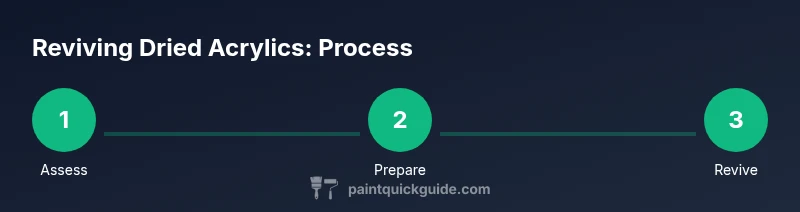
Assess the paint</n
Begin by inspecting the dried paint: is there a skin on the surface, a crumbly edge, or a solid chunk? Determine whether rehydration alone will work or if you need to remove the top layer and rehydrate the remainder. This initial check informs which revival path to take and prevents waste from attempting to revive hopeless masses.
Tip: Use a clean palette knife to test a tiny amount of surface paint—if it sticks to the knife, it’s salvageable. - 2
Prepare your surface
Set up a clean workspace and lay out a small amount of water, a medium, and a fresh color. If reviving on a canvas, mist the surface lightly with water using the spray bottle to maintain a workable glaze without saturating the layer.
Tip: Keep a damp cloth nearby to wipe accidental drips quickly. - 3
Rehydrate the paint
Add a few drops of water or a compatible acrylic medium to the paint, then mix with a palette knife until the paste regains a creamy, spreadable consistency. If it remains stiff, introduce a little retardant to extend open time without thinning color quality.
Tip: Always test the rehydrated color on a scrap surface before applying to your project. - 4
Adjust with a medium
Incorporate an appropriate acrylic medium or glazing liquid to restore flow and leveling. This helps the pigment rebind to the binder, preventing issues like cracking or color separation as the paint dries again.
Tip: Use small increments—you can always add more medium, but you can’t remove it once mixed in. - 5
Test and adapt
Paint a small patch on a test surface to verify color accuracy, drying time, and adhesion. If you’re happy with the result, continue with the revived paint across the project; if not, consider starting fresh with a close color match.
Tip: Document which revivals work best for each color family (warm/cool, neutrals, etc.). - 6
Store revived color
Cover the revived color with a damp cloth or lid to slow drying during your current session. When finished, transfer any leftover revived paint to a sealed container for longer-term storage.
Tip: Label containers with color name and revival date to track longevity. - 7
Care for brushes
Right after revival, clean brushes thoroughly with mild soap and water to prevent fibers from drying and stiffening. Reshape bristles and allow to dry flat or with the bristles pointing downward to prevent water from seeping into the ferrule.
Tip: Never let brushes rest with dried pigment in the ferrule; it reduces lifespan. - 8
Long-term prevention
For future sessions, maintain a stable environment, use airtight containers, and consider a dedicated drying rack. Regularly monitor paint cards to catch drying trends early and adjust your setup to keep colors workable longer.
Tip: Aim for a dedicated, cool, well-lit workspace to slow drying naturally.
Your Questions Answered
Can dried acrylic paint be revived after it has fully solidified in the tube or on a palette?
Yes, partially dried paint on a palette or on the surface can often be revived with rehydration and a compatible medium. However, a completely solid block in a tube or a very hard, cracked surface may be unrecoverable and should be replaced. Test small amounts first to determine viability.
Yes, you can often revive partially dried paint with water and a medium, but completely solid blocks may need replacement.
How long does reviving acrylic paint take?
Most revival steps take just a few minutes to rehydrate and blend, with additional time for testing and adjusting the flow. Full project revival might span a single session or across several days, depending on color choices and drying conditions.
Reviving usually happens quickly, but testing and adjusting can take longer depending on the project.
Which mediums help slow drying without compromising color?
Acrylic retarders or slow-drying mediums are designed to extend open time without significantly altering color when used in moderate amounts. Start small, then adjust based on testing results.
Retarders help keep colors workable longer; start with a little and test.
Is it safe to mix dried paint with fresh paint to extend a color?
Mixing dried pigment with fresh paint is sometimes possible after rehydration, but the result may be inconsistent in texture or pigment load. If color matches and texture is smooth, continue; otherwise start fresh to ensure uniformity.
You can mix dried with fresh paint if rehydration goes well, but be ready for some texture differences.
What should I do with brushes that have dried paint in the ferrule?
Soak brushes in warm, soapy water to soften the dried film, then gently comb out the hairs and reshape. Rinse and dry thoroughly to prevent bristle damage.
Soften with warm water and soap, then reshape and rinse.
When is it better to discard revived paint and start fresh?
If reviving yields persistent cracking, separation, or color drift after multiple attempts, it’s usually best to replace the color to preserve overall project quality.
If revival keeps failing, it’s usually smarter to replace that color.
Watch Video
Quick Summary
- Revive with careful rehydration and appropriate mediums
- Test patches before committing to your canvas
- Store revived colors properly to prevent re-drying
- Use retarders to extend open time during long sessions
- Keep brushes clean and properly resaturated between steps