Purple Hair Spray Paint: Safe Use & Techniques Guide
Safe, practical steps for purple hair spray paint: choose the right formula, apply in light coats, protect skin, and remove easily with tips from PaintQuickGuide.


Apply purple hair spray paint to achieve temporary color by using light coats, proper protection, and a clear setting spray for hold. Ensure you choose a cosmetic-grade formula, work in a ventilated space, and test on a strand before full application. This guide covers safety, product selection, application, removal, and maintenance for DIYers and hobbyists.
Understanding purple hair spray paint basics
Purple hair spray paint is a temporary cosmetic color delivered as an aerosol. It enables creative experimentation for events, photoshoots, or casual fashion days without committing to a permanent dye. The PaintQuickGuide team notes that cosmetic-grade formulas are designed to be easy to wash out and to minimize staining when used as directed. Shade selection matters: light purples show best on light or pre-lightened hair, while deep violets can add drama to darker bases. Start with a small strand test before committing to a full head, and be mindful that results vary with hair porosity and previous chemical treatments. For most users, the goal is an even, washout color rather than bold patches or splotches. In addition to choosing color, consider the finish (glossy versus satin) and the wear you expect from the product. Always read the label for allergen warnings and usage instructions, because safety comes first. By the end of this section, you’ll be ready to plan a practical, temporary purple look that cleans up easily at the end of the day.
Safety and skin/eye protection
Spray cosmetics can irritate skin and eyes if misused, and vapors can accumulate in poorly ventilated spaces. Work outdoors or in a well-ventilated room with a window or exhaust fan. Wear nitrile gloves to prevent staining, a protective cape or old clothing, and a face mask or respirator if you’re sensitive to fumes. Keep eyes well away from the spray stream and avoid prolonged exposure. Perform a patch test on a small hair strand or skin patch for 24 hours to check for irritation or an allergic reaction. Cover surfaces with drop cloths, towels, or plastic sheeting to prevent staining, and remove nearby jewelry that could catch overspray. If you have respiratory conditions or chemical sensitivities, consider safer alternatives or a shorter application session. The goal is to minimize exposure while achieving a clean, temporary result that washes out as planned.
Choosing the right product and color shade
Selecting the right purple shade and formula makes a big difference in final look and ease of removal. Look for cosmetic-grade sprays labeled for hair or body use, not generic craft sprays, which may contain harsh solvents or pigments not intended for skin contact. Read the ingredients list for skin-friendly solvents and fragrance levels; if you have sensitivities, choose fragrance-free options. Decide between a lighter lavender (for subtle hints) or a rich royal purple (for bold impact). The finish matters: some formulas dry to a shiny surface, others stay more matte. Test a tiny strand before full application, and consider how the color interacts with your base hair color and any existing dyes. If you plan to wear the color for a photo shoot or event, you may want a product with longer washout or a longer hold. PaintQuickGuide recommends prioritizing ease of removal and scalp comfort over sheer intensity.
Preparation and workspace setup
Before you spray, set up a dedicated, ventilated workspace. Lay down drop cloths, old towels, and a protective barrier around the area. Have a timer, mirror, and a comb or brush handy to section and blend. Wear gloves and a cape; remove jewelry; tie hair up or section it into manageable portions. Shake the can lightly according to the label, then test spray onto a scrap surface to gauge spray density and dispersion. If you’re applying color to long hair, plan multiple light passes rather than a single heavy application. This approach reduces the chance of drips and helps you build an even tone.
Application techniques: layering and coverage
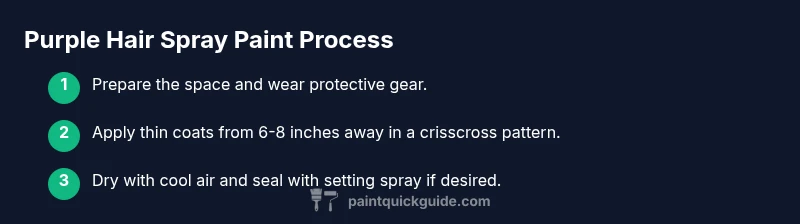
Start with a light mist, holding the can about 6-8 inches from the hair, and apply in thin, even coats. Use a cross-hatch or zigzag motion to prevent heavy buildup in one spot. Work section by section from roots to ends, pausing briefly to allow the color to settle before adding the next coat. Allow each pass to dry before applying another to avoid smears or runs. If you’re aiming for a specific shade, apply multiple light layers to reach the desired depth rather than a single saturated coat. After the final pass, comb through gently to blend lines and check for uneven spots.
Drying, sealing, and long-term hold
Let color dry completely before touching hair or applying heat. Use cool air from a hair dryer for a few minutes to set the color, then consider a light layer of setting spray or color-safe hairspray for longevity. Avoid rubbing hair against fabrics immediately after applying; let the color lock for a bit. For cosplay events or photoshoots, longer hold may be desired, but still follow the product’s label for safe use. When you’re done, ventilate the space to clear any residual fumes and wash hands thoroughly.
Removal, cleanup, and next-day care
To remove, wash with lukewarm water and a color-safe shampoo. Use a clarifying shampoo if color persists, but beware of drying effects on hair. For fabrics, treat stains promptly with stain remover and wash separately; color transfers can occur, so protect familiar fabrics during styling. Skin stains can usually be removed with makeup remover, micellar water, or cleansing oils. Condition hair after color removal to restore moisture and prevent tangling. If you plan a future color experiment, store any unused product in a cool, dry place and label it clearly.
Cost considerations and budget planning
The cost of purple hair spray paint depends on brand, volume, and the intended use. Look for reputable cosmetic-grade products and compare cost per ounce rather than just the upfront price. If you’re testing shades, consider a small starter kit or travel-size cans. Bundles that include a couple of colors can save money compared with purchasing single cans. Remember that higher price does not always guarantee better pigment or easier removal; read labels and reviews to find a balance between color payoff and washout convenience. Plan for disposable items like drop cloths and gloves when budgeting this project.
Expert tips from DIY pros
PaintQuickGuide’s team shares practical advice to maximize results and minimize mess. Always start with a strand test and work in light passes to build the color gradually. Protect surfaces and clothing, use a ventilated space, and avoid spray aimed at the face or scalp directly. Keep a damp cloth handy to quickly wipe off any accidental overspray on skin. For best results, document shade attempts by taking a photo under natural light and note which brands gave the most even coverage. The PaintQuickGuide team also emphasizes safety, recommending fragrance-free formulas for sensitive users and encouraging meticulous cleanup after each session. If you’re uncertain, consult a professional colorist for temporary options that maintain hair health. When in doubt, prioritize skin safety and product instructions above all.
Authority sources
- https://www.fda.gov/cosmetics/cosmetics-labeling
- https://www.osha.gov/ventilation
- https://www.cdc.gov/niosh/topics/chemical-safety/default.html
Tools & Materials
- Cosmetic-grade purple hair spray paint(Temporary color; verify fragrance and skin-safety on label)
- Protective cape or old clothing(Covers garments to catch overspray)
- Gloves (nitrile or latex)(Prevents staining and makes cleanup easier)
- Face mask or respirator(Reduces inhalation of fumes in less-ventilated spaces)
- Drop cloths or protective plastic sheeting(Protects surfaces from overspray)
- Hair-safe setting spray or clear sealant (optional)(Can help hold color longer; test compatibility with products)
- Comb or brush(For blending color edges between sections)
Steps
Estimated time: 60-90 minutes
- 1
Prepare workspace and gear
Position the area in a well-ventilated space, lay down drop cloths, and set up a mirror. Put on a cape and gloves, and have a comb handy. Briefly shake the can and do a small test spray on a scrap surface to gauge density.
Tip: Keep a damp cloth nearby to quickly blot any accidental overspray. - 2
Patch test and strand check
Select a discreet strand to test color payoff and check for irritation. Wait a few minutes for the spray to dry, then inspect the hue and texture against your natural hair tone.
Tip: If irritation occurs, stop and rinse and try a fragrance-free option or a different brand. - 3
Apply light coats in layers
Hold the can 6-8 inches away from hair and apply thin, even coats in a crisscross pattern. Avoid spraying directly on the scalp. Allow each coat to dry before applying the next.
Tip: Apply multiple light passes for even color rather than one heavy spray. - 4
Blend and refine edges
Use a comb to blend the edges where color meets natural hair. Check for streaks and adjust with gentle, quick sprays if needed.
Tip: Work in natural light to better judge color uniformity. - 5
Drying and sealing
Dry hair with cool air to set color. If desired, apply a setting spray for hold and keep styling using low heat until color is entirely cured.
Tip: Avoid heat during initial curing to prevent color migration. - 6
Cleanup and aftercare
Wipe mis-sprayed areas with a damp cloth and wash hands thoroughly. Aftercare includes washing with a color-safe shampoo and conditioning to maintain hair health.
Tip: Document the shade and product for future touch-ups.
Your Questions Answered
Is purple hair spray paint safe for my scalp and hair?
Most cosmetic-grade sprays are designed for temporary use on hair and skin; patch testing is recommended; avoid eyes and broken skin.
Yes, if you use a cosmetic-grade product and patch test first.
How long does the color last?
Typically washes out within a few shampoos; wear depends on hair type and washing frequency.
It usually washes out after a few shampoos, depending on your hair.
Can I use purple spray on chemically treated hair?
Temporary sprays are generally safe but may interact with chemically treated hair; patch test and avoid heavy application on damaged hair.
Usually safe, but patch test first and use light coats on treated hair.
What should I do if the spray gets on clothes or fabrics?
Color sprays can stain fabrics; protect clothing, and treat fabrics quickly with stain remover and washing.
Stains can happen; protect fabrics and wash promptly.
Are there safer, more permanent alternatives to purple spray?
There are dyes and semi-permanent options if you want longer-lasting color, but sprays offer quick removal and less commitment.
Yes, but sprays are easier to remove and less permanent.
Watch Video
Quick Summary
- Prepare a ventilated space before spraying.
- Test color on a strand first.
- Apply in light coats for even coverage.
- Follow with a setting spray to hold.