Spray Paint Hair Dye: Safe, Easy DIY Color Guide Now
Learn how to use spray paint hair dye safely: choose shades, prep, apply in light coats, and remove cleanly. This PaintQuickGuide guide covers ventilation, skin protection, product options, and cleanup.


With spray paint hair dye, you can quickly add temporary color to hair for events or costumes. This guide shows how to choose a shade, prep hair, apply in light coats, and remove safely, plus safety tips and cleanup steps. You’ll need protective gear, a well-ventilated area, and the right spray product for best results—PaintQuickGuide explains how to do it right.
What is spray paint hair dye?
Spray paint hair dye is a temporary cosmetic product designed to deposit color quickly via an aerosol spray. It’s popular for costumes, festivals, and one-day performances because color is applied in seconds and washes out with shampoo. The color mostly sits on the outer layer of the hair, so it tends to fade with washing or brushing rather than permanently altering your base shade. According to PaintQuickGuide, starting with a clean hair surface and performing a strand test yields the most reliable results and minimizes stray droplets that cause staining. This makes it an ideal option when you want bold looks without long-term commitment, but it also requires care to avoid overspray on skin and clothing.
Safety and ventilation
Ventilation is essential when using spray-on hair color. Work in a well-ventilated area, ideally outdoors or near an open window, and keep a fan circulating air away from the face. Wear protective gloves and use a cape or old clothing to protect your skin and fabrics. Avoid spraying near the eyes, mouth, or ears, and consider a barrier around the hairline to reduce staining. If you have sensitivities, test the product on a small strand first and review the ingredient list for allergens. Prolonged exposure to fumes can irritate the nose and throat, so pause if you feel uncomfortable.
Choosing shade and product types
Temporary spray colors come in a range of shades from natural tones to vibrant neons. For most day-to-day wear and color corrections, natural-looking tones blend best with your base hair color. Neon and metallics make bold statements but may require more frequent touch-ups. PaintQuickGuide analysis (2026) notes growing interest in temporary spray color options for events and performances, with users prioritizing easy removal and skin-safe formulas. When selecting a product, check that it dries clear, washes out easily, and lists safe-to-skin ingredients. Patch test on a small strand to confirm how the color looks on your hair and how it interacts with your natural shade.
Preparation and patch testing
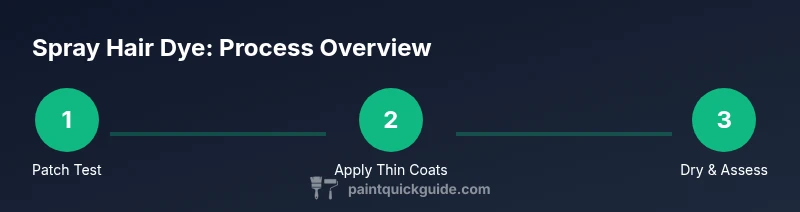
Preparation begins with a clean, dry strand. Stand in a ventilated area and lay down protective coverings. Patch-test a small section of hair or a foil strip with a tiny amount of product to gauge color payoff and any potential irritation. If you have color-treated hair, test on a strand that matches your current shade to see how the dye adheres to existing pigments. Once you’re satisfied with the patch test, proceed to the full application, keeping the nozzle at a consistent distance and sweeping across the hair in light, even layers.
Application technique and color control
Apply in light, even coats, using smooth, continuous motions. Hold the can roughly at arm’s length and move steadily to avoid heavy droplets that can create blotches. Build color gradually by applying multiple thin layers rather than one heavy coat. If you want a gradient effect, switch shades mid-application and blend at the transition point. For best results, work in natural light so you can accurately judge tone and coverage. Allow the color to dry between passes to prevent smudging.
Removal, cleanup, and aftercare
Most spray colors wash out with shampoo after a few wash cycles, but follow the product’s specific removal guidelines. Rinse hair with lukewarm water and a gentle shampoo; you may need to repeat a couple of times for full clearance. For skin staining around the hairline, use a mild oil-based makeup remover and rinse with soap and water. Aftercare includes conditioning to restore softness and shine, as spray colors can be drying. If any staining remains on fabrics, pre-treat with stain remover before washing.
Tools & Materials
- spray-on hair dye product(Choose a shade that suits your base hair color; test on a strand.)
- old clothing or protective cape(Protect skin and clothes from overspray.)
- protective gloves(Nitrile gloves recommended.)
- face shield or safety goggles(Optional for splash protection.)
- newspaper/drop cloth(Cover surfaces to prevent stains.)
- ventilation aid (box fan)(Keep air moving to reduce fumes.)
Steps
Estimated time: 20-40 minutes
- 1
Prepare workspace and gear
Set up in a well-ventilated area. Lay down protective cloths, put on gloves, and ensure you have access to water for cleanup. This initial setup reduces mess and makes cleanup faster.
Tip: Clear nearby surfaces to avoid overspray. - 2
Protect yourself and hair
Wear a cape or old clothing and pull hair away from the face with clips. This minimizes skin contact and helps keep color off clothes.
Tip: Apply a light barrier cream around the hairline to reduce staining. - 3
Shake and patch-test
Shake the can well and test on a small hair strand or a piece of foil to gauge color and reaction. This patch test helps prevent surprises later.
Tip: If any itching or redness occurs, discontinue use. - 4
Apply in light coats
Spray in short, even bursts from an arm’s length, moving steadily to avoid pooling. Build color gradually by applying multiple thin layers.
Tip: If you see droplets forming, pause and let the coat dry briefly. - 5
Let color set
Allow the dye to dry before touching hair or applying more coat. This helps prevent smudging and ensures an even edge.
Tip: Use a fan to speed drying if indoors. - 6
Evaluate and adjust
Inspect color coverage in good light; apply additional light coats if needed. Prioritize even distribution over deep saturation.
Tip: Focus on consistency across sections rather than maximum intensity. - 7
Remove and clean
Wash hands and other exposed skin with soap, and rinse clothing if needed. Finish with a gentle shampoo to remove residual color.
Tip: Patience during removal reduces staining and mess.
Your Questions Answered
Is spray paint hair dye temporary or permanent?
Most spray-on hair colors are temporary and wash out over time with shampoo. The duration depends on washing frequency and dye formulation.
Most spray-on hair colors wash out with shampoo after a few uses, depending on how often you wash and the product.
Will spray dye stain skin or clothes?
There is a risk of staining skin or fabrics; use barrier cream around the hairline and cover clothing with a cape or old shirt.
Yes, skins and fabrics can stain; use a barrier cream and protective clothing.
Can I use spray dye on all hair types?
In general, spray dyes work on most hair types, but potency and color payoff can vary with hair texture and porosity.
Most hair types can use spray dye, but results vary with texture and porosity.
Is spray hair color safe for color-treated hair?
Check the product ingredients; some spray colors may affect existing color. Do a strand test to see compatibility.
If you have color-treated hair, test first on a strand to check how it reacts.
How do I remove spray-on hair color?
Wash with a gentle shampoo; for stubborn stains, use a mild oil-based makeup remover and repeat washing.
Wash with shampoo. If needed, use makeup remover on the skin.
How should I store spray hair dye?
Keep the can tightly closed in a cool, dry place away from direct sunlight.
Store in a cool, dry place away from heat.
Watch Video
Quick Summary
- Choose a shade that matches your base hair color
- Use a clean, ventilated space
- Apply in light, even coats for even color
- Test a strand before full application
- Follow removal steps for easy cleanup