Paint for Airbrush: A Practical Guide
A practical guide to paint for airbrush, covering types, thinning, surface prep, spraying technique, cleanup, safety, and cost considerations for hobbyists and professionals.


This guide helps you master paint for airbrush: choose the right type (acrylic, enamel, or lacquer), thin correctly for your nozzle, adjust viscosity, prepare surfaces, and clean up safely. It includes practical tips, tool setup, and step-by-step mixing ratios to suit hobby projects and automotive refinishing alike. You’ll find clear comparisons, warnings, and a printable checklist.
What paints work best with airbrush?
Paint for airbrush comes in several families, and your choice depends on the project, surface, and finish you want. The three most common are acrylic water-based paints, enamel-based paints, and lacquer finishes. Acrylics are widely used by hobbyists and model painters because they brush and spray easily, dry relatively quickly, and clean up with water. Enamels offer tougher, more resilient coatings and excellent leveling, but they require solvents and longer dry times. Lacquers cure to a hard, glassy film and can deliver superb detail and depth, but they demand strong ventilation and careful handling due to solvent exposure. According to PaintQuickGuide, acrylic paints are the most forgiving starting point for beginners, while enamel and lacquer families excel in automotive refinishing and fine art applications where durability matters.
Beyond type, consider pigment load, colorfastness, and the substrate you’re painting on. If you are spraying plastic models, acrylics are usually safe and flexible; for metal surfaces or automotive panels, you may reach for enamels or lacquers if you can manage the odor, cure time, and ventilation. Some brands offer "airbrush ready" lines that are pre-thinned for compatibility, while others require thinning or a dedicated reducer. Always check the manufacturer's recommendations for thinning ratios and drying times. This ensures consistent spray behavior and reduces defects like fisheye, orange peel, or pooling. The key is to test your chosen paint in a controlled scrap area before committing to the final piece.
Note: The PaintQuickGuide team emphasizes practicing on practice panels before moving to your actual project to build consistent spray rhythm and avoid wasting material.
Thinning and Viscosity: Getting the Right Flow
Thinning is the most critical factor in achieving a smooth, controllable spray with any airbrush. Start with the paint as provided and test spray on scrap material to observe how it atomizes. If the spray looks stringy or drags, it’s too thick; if it puddles or pools, it’s too thin. The goal is a creamy, milk-like consistency that behaves predictably at your chosen pressure. Different paint families require different reducers: water or a dedicated thinner for acrylics; enamel thinner for enamel paints; lacquer thinner for lacquers. Add reducers gradually in small increments, stirring gently to avoid bubbles. Always mix in a clean container and label each batch to prevent cross-contamination. Airbrush nozzles, needle sizes, and spray gaps influence how viscosity translates to spray quality, so adjust gradually and test often. A simple rule: spray in a steady plane, watch for lines or halos, and re-thin as needed to achieve even color without heavy application in a single pass.
Pro tip: use a dedicated thinning cup and a flat surface for testing viscosity by brushing a quick line; if it levels evenly, you’re ready to proceed.
Surface Prep and Material Compatibility
Preparation is the foundation of a durable, smooth airbrush finish. Begin by cleaning the surface to remove oils, dust, and fingerprints. For plastics, PVCs, or resin models, a light sanding with fine-grit paper (or a micro-mesh style) improves adhesion. For metals and automotive panels, apply a compatible primer or sealer and sand to create a uniform profile. Always test-fit your painted surface under controlled lighting before committing to the final piece, and mask off areas you don’t want to coat. Clean surfaces also prevent fisheye and exclusion of pigments. When working with wood, seal porous areas to prevent uneven absorption. If you switch paint types mid-project, clean the surface thoroughly to avoid cross-contamination and color bleed. Surface prep is the frictionless bridge between paint choice and a flawless finish.
Practical Comparisons: Acrylics vs Enamels vs Lacquers
Acrylics are water-based, easy to clean, fast-drying, and often forgiving for beginners; they tend to be slightly less durable than enamels but are safer for indoor use. Enamel paints cure with a harder film and can be excellent for models and automotive surfaces, but they require proper respirators and ventilation due to solvent exposure. Lacquers deliver superb hardness and edge definition and can dry rapidly, but they demand robust ventilation, exacting control, and safe disposal practices. When choosing, consider the substrate, required durability, working time, and your ventilation setup. For hobby projects and practice work, acrylics are usually the best starting point. For automotive refinishing or fine art finishes, enamels or lacquers may be preferable, provided you manage fumes and cleanup with care. PaintQuickGuide suggests balancing ease of use with long-term performance to match your skill level and project goals.
Tools, Setup, and Maintenance
A well-rounded airbrush setup includes a reliable air source, appropriate nozzles, and compatible cleaners. Start with a gravity-feed or siphon-feed airbrush in a size that suits the level of detail you want. Pair it with a moisture-trapping regulator on your compressor to prevent water droplets from spoiling the paint flow. Keep a selection of reducers and cleaners specific to your paint family, and have masking tools handy for crisp lines. Maintenance is simple: flush the nozzle with cleaner after sessions, dismantle and wash all parts regularly, and lubricate the drive train per the manufacturer’s instructions. Store your airbrush disassembled in a clean, dust-free case. Regular maintenance reduces clogging and extends the life of the nozzle and needle.
Safety, Ventilation, and Cleanup
Spray painting releases fumes and fine particulates, so ventilation is non-negotiable. Work in a well-ventilated area or use a spray booth with an effective exhaust. Wear a respirator rated for organic solvents when spraying enamel or lacquer products, and always use eye protection and gloves. Read and follow the Safety Data Sheets (SDS) for each product, especially regarding compatible thinners and cleanup solvents. After painting, flush the airbrush with the appropriate cleaner until the cup runs clear, then dismantle and wash every component. Dry thoroughly before reassembly. Proper disposal of waste and used solvents is essential; never pour leftovers down the drain, and follow local regulations.
Cost, Purchasing, and Where to Buy
Paint for airbrush projects falls into budget, mid-range, and premium categories. Hobby acrylics are usually affordable and available at craft stores, while enamels and lacquers designed for automotive applications tend to be pricier but offer longer working times and tougher finishes. Online retailers and local auto-body suppliers are common sources, and many brands provide starter sets that include reducers, cleaners, and multiple colors. When budgeting, factor in the cost of PPE, replacement needles, and maintenance supplies. If you are new to airbrushing, start with a modest, versatile setup and gradually expand your color range as you gain confidence. Compare brands based on pigment load, flow characteristics, and compatibility with your airbrush model.
AUTHORITY SOURCES
- OSHA: https://www.osha.gov
- CDC/NIOSH Respiratory Protection: https://www.cdc.gov/niosh/topics/respirators
- EPA Indoor Air Quality: https://www.epa.gov/iaq
Common Mistakes and Troubleshooting
Common mistakes include spraying too thick paint, overloading the cup with color, or using incompatible reducers. If you see orange peel or fisheye, re-check thinning ratios, spray distance, and surface prep. Always test on a spare panel before committing to the final piece. If the spray pattern is inconsistent, clean the nozzle, check the needle for burrs, and ensure the nozzle and cup seal properly. Weather and room humidity can affect drying times, so factor that into your layering schedule. Keep records of what worked for future projects and refine your technique over time.
Getting Started: Quick Checklist
- Decide on airbrush type and paint family (acrylic, enamel, lacquer).
- Prepare surfaces and masking; ensure clean, dust-free base.
- Set up air source and calibrate compressor with moisture trap.
- Thin paint to a smooth, sprayable viscosity and test spray.
- Apply multiple light passes, allow drying between layers, and evaluate finish.
- Clean, disassemble, and store equipment properly after use.
Tools & Materials
- Airbrush gun (gravity-feed or siphon-feed)(0.2–0.38 mm nozzle common for detail; choose based on project scale)
- Compressor with moisture trap(Stable output; consider a regulator to control pressure)
- Airbrush thinner/reducer appropriate to paint type(Use dedicated reducer for enamels or lacquers; water for acrylics)
- Airbrush paints (acrylics, enamels, lacquers)(Have at least one acrylic and one enamel/lacquer sample to compare behavior)
- Airbrush cleaner(Use brand-specific cleaner for each paint family)
- Masking materials (tape, liquid mask)(Crips lines and protect areas you don’t want painted)
- Personal protective equipment (respirator, gloves, eye protection)(Respirator rated for solvents; nitrile gloves; splash goggles)
- Scrap panels for testing(Use to dial in thinning and spray pattern before final work)
- Soft, lint-free cloths and isopropyl alcohol or appropriate cleaner(For quick wipe-downs and cleanup between colors)
Steps
Estimated time: 90-120 minutes
- 1
Select paint type and prep surface
Decide whether acrylic, enamel, or lacquer best suits your project and substrate. Clean the surface thoroughly, lightly sand if needed, and apply a compatible primer or sealer for adhesion. This upfront prep minimizes defects and improves color consistency across layers.
Tip: Test a small patch to ensure adhesion before full coverage. - 2
Set up the airbrush and test spray
Assemble the airbrush, connect it to the compressor, and check for leaks. Do a controlled test spray on a scrap panel to verify pattern, coverage, and consistency. Adjust the needle gap and pressure based on test results.
Tip: Keep the spray distance consistent (start around arm's length) for even results. - 3
Thin the paint to the right viscosity
Add reducer or thinner gradually and stir gently to avoid bubbles. Test by spraying on a scrap surface until the paint flows smoothly in a thin, even layer. Re-thin as needed to maintain atomization across passes.
Tip: Label batches to prevent cross-contamination between colors. - 4
Apply base coats with light passes
Spray in steady, overlapping passes, holding the gun at a consistent distance. Build color with multiple light coats rather than a single heavy layer to avoid runs and compare with a surface guide.
Tip: Keep your wrist relaxed to avoid heavy spraying and tracking. - 5
Inspect, adjust, and build the finish
Evaluate the surface under good lighting. If you see uneven gloss or texture, slightly adjust thinning or air pressure and apply an additional light pass. For metallics or candy tones, consider a clear coat after color is fully cured.
Tip: Mask edges precisely to ensure sharp boundaries between colors. - 6
Clean and store equipment
Flush the cup with compatible cleaner and dismantle the airbrush for a thorough wash. Dry all components completely before reassembly and store in a dust-free bag or case to prevent corrosion and clogs.
Tip: Never leave paint in the airbrush while not in use; clean promptly.
Your Questions Answered
What paint is best for airbrush?
Acrylics are beginner-friendly and easy to clean; enamels and lacquers offer durability and high gloss. Choose based on surface and ventilation needs.
Acrylics are great for beginners, with enamel and lacquer options for tougher surfaces. Pick based on your surface and ventilation needs.
Can I use water-based acrylics for detailed work?
Yes. Acrylics spray well at low viscosity and clean up with water. For fine lines, thin properly and test at your desired spray distance.
Yes, acrylics are suitable for detail work when properly thinned and tested.
Do I need a special compressor for airbrushing?
A small, quiet compressor with a moisture trap works for most hobby projects. A regulator helps keep consistent pressure.
A small compressor with a moisture trap generally suffices, and a regulator helps keep the spray steady.
How should I thin airbrush paint?
Thin gradually with the appropriate reducer, testing on scrap until the spray is smooth and consistent. Avoid over-thinning, which causes runny finishes.
Thin gradually and test on scrap until you get a smooth spray. Don’t over-thin.
What nozzle size is ideal for most projects?
Smaller nozzles are better for detail; larger ones cover more area quickly. Match the nozzle to the project scale and desired finish.
Detail work uses small nozzles; bigger nozzles cover larger areas fast.
How do I store paint between sessions?
Seal containers tightly and store upright in a cool, dry place. Label colors and keep thinners separate to avoid reactions.
Seal and store colors upright in a cool, dry place, and label everything clearly.
Watch Video
Quick Summary
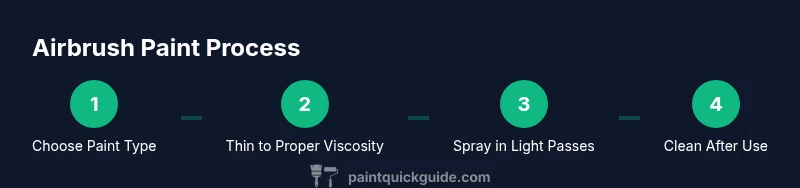
- Choose the right paint type for your project
- Thin to a smooth, atomized spray
- Prep surfaces thoroughly
- Test and adjust before full application
- Clean equipment promptly after use