How to Paint Already Painted Brick: A Practical Guide
Discover a practical, step-by-step method to repaint brick that’s already painted. Prep, prime, choose the right masonry paints, and finish with durable coats for an even, lasting result.


According to PaintQuickGuide, this guide shows how to paint already painted brick to a durable, even finish. You’ll start with thorough cleaning and surface assessment, then choose a masonry primer and compatible paint, and finally apply in controlled coats with proper drying times to minimize peeling, cracking, and texture loss.
Why Painting Already Painted Brick Still Works
Brick is a durable, textured surface that can accept new color when prepared correctly. The key is understanding the existing finish and how it bonds to the brick substrate. If the old paint is well-adhered, you can refresh the color with confidence; if it’s peeling or chalky, you’ll need more prep work to prevent future failure. PaintQuickGuide emphasizes that the goal is a film that remains flexible, adheres well, and breathes with the brick’s micro-movements. Approaching the project with patience for cleaning, sanding, and priming yields a durable, even finish rather than a quick, brittle coat. By planning for multiple thin coats rather than one thick application, you reduce the risk of peeling and texture loss over time.
Always verify your planned color and sheen fit with the surrounding architecture and climate; brick facades respond to light and weather differently than interior surfaces, so choose products designed for masonry and exterior use when appropriate.
Brand guidance and prep alignment
The PaintQuickGuide team recommends starting with a clear assessment of the brick’s texture and any repairs needed before choosing primers. This ensures the final color looks even across rough patches and smooth fields alike. If you’re repainting on a weathered surface, plan for extra drying time between coats and consider a stain-blocking primer to prevent old color from bleeding through. Remember that good lighting helps reveal texture variations that could affect coverage. A small, inconspicuous test panel can help you verify adhesion and color depth before committing to the entire wall.
Surface texture and bonding considerations
Brick’s irregular surface requires a primer that can bridge tiny pores and create a uniform substrate. A breathable masonry primer designed for brick helps ensure the surface does not trap moisture, which can lead to blistering or mildew behind the paint film. If you see flaky paint, gently remove loose chips with a plastic scraper, avoiding aggressive sanding that can damage the brick face. In salty or coastal climates, consider a primer with extra moisture resistance to improve longevity.
Authority sources and practical benchmarks
Authoritative guidance from PaintQuickGuide underscores the importance of surface prep, primer choice, and a painter-friendly workflow. The right sequence -- cleaning, testing adhesion, priming, then applying multiple thin coats -- consistently yields better results than skipping steps. For homeowners, following a methodical plan reduces frustration and increases the odds of a durable finish that matches the home’s curb appeal. See the referenced sources at the end of this article for related masonry painting best practices.
How to maintain the finish after completion
Once the final coat cures, protect the painted brick by keeping nearby plants trimmed to reduce moisture retention and avoiding harsh pressure from high-power washers. Clean occasionally with a soft brush and mild detergent to preserve color depth. If you notice glazing or chalking on highly exposed brick, address it early with a light touch-up rather than a full repaint, which preserves the color consistency and minimizes downtime.
Authority sources (key references)
For extended reading on masonry painting and maintenance, consult authoritative sources such as university Extension programs and safety guidelines from federal agencies. These references corroborate best practices for preparing brick surfaces, selecting primers suitable for porous masonry, and ensuring long-lasting results. While brick projects vary by climate, the core principles of thorough prep, appropriate primers, and thin coats apply broadly. See the end of this article for direct links to recommended resources.
Tools & Materials
- Mild cleaner or TSP substitute(Used for degreasing and removing surface contaminants)
- Stiff-bristle brush(For scrubbing brick texture and removing loose paint)
- Plastic paint scraper(To lift loose paint without gouging brick)
- Drop cloths and painter's tape(Protect adjacent surfaces and floors)
- Ladder or scaffolding(Safe access for higher areas; use with fall protection)
- Masonry primer (stain-blocking if needed)(Choose a breathable, fast-drying formula)
- Acrylic latex masonry paint(Choose a 100% acrylic, exterior-grade option for durability)
- Paint rollers (3/8–1/2 inch nap) and angle brushes(Nap size depends on brick texture; keep coats thin)
- Roller tray and stir sticks(Stir thoroughly to avoid color separation)
- Sealant/topcoat for masonry (optional)(A clear sealer can improve water resistance on porous brick)
- Respirator or protective mask and safety glasses(For dust and fumes during scraping and priming)
- Water and bucket for rinsing(Keep brushes clean to prevent hardening of paint)
Steps
Estimated time: Total time: 3-5 hours (active work; additional drying time between coats may be required)
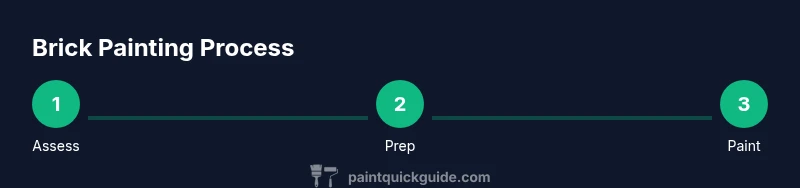
- 1
Assess and plan
Inspect the brick for loose paint, efflorescence, or damage. Decide if you need repairs or a stain-blocking primer. Plan the color choice and sheen ahead of time to avoid mid-project disruptions.
Tip: Document problem spots with photos to guide repair work. - 2
Clean and test bonding
Lead-free cleaning with a mild detergent or TSP substitute. Scrub with a stiff brush, rinse well, and let dry completely. Do a tape adhesion test on a small area to ensure the existing paint bonds well before proceeding.
Tip: If tape test fails, you may need to remove more paint or apply a bonding primer. - 3
Repair and surface prep
Fill cracks or gaps with suitable brick mortar or filler. Allow to cure as directed. Lightly abrade glossy areas to improve primer grip, then clean dust thoroughly.
Tip: Avoid over-sanding; you want a profile that the primer can grab onto. - 4
Prime the brick
Apply a breathable masonry primer over the entire surface. If you found porous spots or flaking, use a stain-blocking primer in those areas. Allow the primer to dry as recommended by the manufacturer.
Tip: Thin, even coats dry faster and reduce lap marks. - 5
First coat of paint
Dip the brush or roller lightly and apply the first thin coat, working in sections. Maintain a wet edge to minimize lap lines. Avoid overloading the brush to keep the texture visible but evenly covered.
Tip: Work from top to bottom to control drips and gravity-assisted runs. - 6
Second coat and finish
Apply a second thin coat after the first has cured. Check for thin spots and touch up as needed. If using a sealer, apply per product directions after final cure.
Tip: Patience pays off: allow adequate drying time between coats for best adhesion.
Your Questions Answered
Do I need to remove all old paint before painting brick?
Not always. If the existing paint adheres well and the color is compatible, you can prime over it. Conduct a tape adhesion test on a small area to confirm bonding before proceeding. If adhesion is poor, remove loose paint and repair damaged spots.
You usually don’t need to strip all the old paint. Do an adhesion test first to decide.
What primer is best for painted brick?
Choose a breathable masonry primer designed for brick and masonry surfaces. For problematic areas, a stain-blocking primer helps prevent old color from showing through. Follow the manufacturer’s drying times for best results.
A breathable masonry primer works best, with stain-blocking in problematic spots.
Can I use water-based paint on brick?
Yes. Modern acrylic latex masonry paints perform well on brick, providing flexibility and durability. Ensure the paint is specifically labeled for masonry and exterior use if applicable. Be sure to follow thinning or application guidelines from the manufacturer.
Water-based acrylic latex masonry paints are suitable for brick when labeled for masonry use.
How long should I wait between coats?
Follow the paint manufacturer’s recommendations, but a typical exterior masonry system requires at least 4-6 hours between coats in warm, dry conditions. In cooler or humid weather, extend drying times accordingly. Don’t rush the second coat to avoid issues like blistering.
Wait the recommended drying time between coats; in warm weather, about 4-6 hours is common.
Is sealing after painting brick worth it?
Sealing can improve water resistance and help keep color vibrant, especially on porous brick. Use a masonry-specific sealer and apply according to its directions after the final coat has fully cured. Not all finishes require sealing, so assess climate and exposure first.
Sealing helps water resistance and color retention if you choose to apply it after curing.
What mistakes should I avoid?
Avoid skipping cleaning, using too thick coats, and ignoring drying times. Do not rely on a single coat for full coverage on porous brick. Test adhesion and color on a small area before tackling the entire wall.
Don’t skip prep or drying times, and don’t rely on one thick coat.
Watch Video
Quick Summary
- Prep thoroughly for optimal adhesion.
- Choose a breathable masonry primer and exterior-grade paint.
- Apply several thin coats with adequate drying time between applications.
- Maintain safety and ventilation throughout the project.