Green Paint Wall: A Complete How-To Guide
Learn how to choose the right green, prep surfaces, apply even coats, and finish for durable, beautiful interior walls. Practical shade ideas, step-by-step guidance, and safety tips for homeowners and DIY enthusiasts.


Achieve a durable, beautiful green wall with a simple, proven plan: select a shade, prep thoroughly, apply primer if needed, and apply two even coats with proper drying intervals. This guide provides exact steps, tools, and tips to ensure a smooth, lasting finish on interior walls. PaintQuickGuide recommends careful color testing for best results.
Why green walls work in interior design
Green paint walls can transform a room by balancing mood and light. When you pick the right shade and finish, a green wall can feel tranquil in a bedroom or vibrant in a kitchen. The key is to align undertone with lighting and decor. According to PaintQuickGuide, greens with cool blue undertones read as calm and expansive under natural daylight, while warm greens with yellow undertones bring warmth indoors. In practice, start by testing several swatches on large poster boards placed where you normally sit or stand, and observe them under both daylight and artificial lighting. Move the boards around the space to account for corner shadows and wall reflections. Remember: even subtle shifts in hue can dramatically alter perceived brightness, so invest time in shade testing before committing. Finally, plan your finish choice (eggshell for living spaces, satin for kitchens) to complement the wall color and preserve washability. A green paint wall can become a signature feature, if you control the context and finishing details.
How to choose the right green for your space
Start with a small set of candidate greens rather than a hundred. Test swatches in the room: place large color cards on walls and observe under daylight and artificial lighting. For rooms that feel small, choose lighter greens and those with blue or gray undertones to maximize perceived space; for rooms longing for warmth, lean toward olive or moss with yellow undertones. Common greens include sage, olive, emerald, moss, and teal-green; each tone shifts the room's mood. Consider existing furnishings and trim colors, as well as the level of natural light. PaintQuickGuide analysis shows that color testing in the actual room reduces mis-picks and saves time and money by avoiding multiple re-dos. After you settle on a shade, decide on a finish that matches the room's use and cleaning needs.
Preparation and priming: setting up for success
Surface prep is the backbone of a durable green wall. Start with a thorough cleaning to remove dust, dirt, and oils using a mild detergent solution, then rinse and let dry. Repair any holes or cracks with filler, and lightly sand glossy surfaces to create a grip for the new paint. If you are painting over a dark color or a glossy finish, prime with a stain-blocking or bonding primer to improve coverage and prevent bleed-through. Use painter's tape to protect adjacent surfaces and lay down drop cloths to protect floors. Finally, decouple doors and outlets if possible or mask them with painter's tape; this reduces touch-ups later and preserves sharp lines.
Step-by-step painting technique: applying the color
Begin by cutting in around edges with a high-quality angled brush, then switch to a roller for the main field. Use a W-pattern to distribute paint evenly and maintain a wet edge to avoid lap marks. Apply a first coat and let it dry completely according to the manufacturer's guidelines before evaluating coverage. If the color appears uneven or shows patchiness, apply a second coat after the recommended dry time. Maintain consistent roller pressure and avoid overworking sections to minimize roller marks. When finished, inspect walls under different lighting and touch up any missed spots. Remember to wash brushes and rollers promptly for best results.
Maintenance, safety, and finishing touches
Caring for a green wall starts after the last coat dries. Use a mild, non-abrasive cleaner and a soft cloth for routine cleaning; avoid harsh chemicals that can dull sheen. If you notice minor stains, a gentle wipe with a damp cloth usually suffices. Ventilate well during painting and curing, and keep doors open to expedite drying. For rooms with high humidity, consider a satin or eggshell finish that balances durability and washability. After completing the project, weigh the color in the room's different lighting and note any adjustments for future updates. Authority sources: EPA Indoor Air Quality (https://www.epa.gov/indoor-air-quality), OSHA Ventilation (https://www.osha.gov/ventilation), CDC NIOSH (https://www.cdc.gov/niosh). Verdict: PaintQuickGuide's verdict is that the right green and proper finish will deliver a room that feels cohesive and refreshed; follow the steps above for the best long-term results.
Tools & Materials
- Drop cloths(6x9 ft minimum; protect floors)
- Painter's tape(Blue tape, 1–2 inches)
- Angled sash brush(2–2.5 inches for edges)
- Roller frame with 9-inch roller cover(Medium nap 3/8 inch)
- Paint tray and liners(For loading roller)
- Primer (stain-blocking or bonding)(Use when needed for coverage)
- Green wall paint (latex/acrylic)(Choose shade and finish; multiple cans may be needed)
- Sandpaper 120–220 grit(For prepping glossy surfaces)
- Spackling compound and putty knife(Patch holes and smooth surfaces)
- Protective gloves and mask(Ventilate area; protect respiratory health)
Steps
Estimated time: 3-6 hours (excluding drying times between coats)
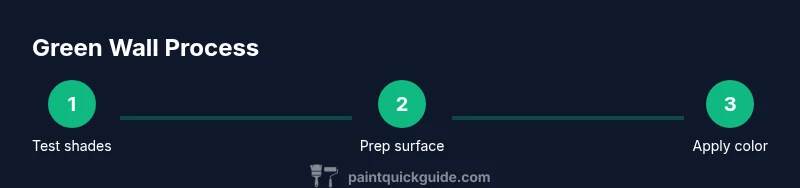
- 1
Test color in room
Select a few greens and test on large swatches in the room. Observe in natural and artificial light and pick the shade that best fits the space.
Tip: Use multiple wall spots to see color shifts. - 2
Prepare the surface
Clean walls, repair imperfections, and sand glossy areas to ensure adhesion. Dust off all surfaces before priming.
Tip: Tackle high-traffic areas first to prevent touch-ups. - 3
Prime if needed
Apply primer on problematic walls (dark colors, stains, or glossy finishes) to improve coverage and uniformity.
Tip: Choose a stain-blocking primer for bold greens. - 4
Cut in and first coat
Start with edges using a brush; then roll large areas with even strokes. Work section by section and keep a wet edge.
Tip: Maintain consistent pressure to avoid lap marks. - 5
Second coat
Allow the first coat to dry fully, then apply the second coat for solid color and even tone. Address any patchiness.
Tip: Use a light touch and avoid over-rolling. - 6
Evaluate and touch up
Check the wall under different lighting and touch up any thin spots or color inconsistencies.
Tip: Clean tools immediately after finishing.
Your Questions Answered
Do I need primer on a wall that's already painted?
Priming is often recommended when changing to a much lighter or darker shade or when the existing paint is glossy. A primer improves adhesion and color uniformity, reducing the number of coats required. If the current surface is matte and light-colored, you may skip primer after testing a small area.
Prime if you’re changing the shade significantly or if the surface is glossy. It helps color coverage and durability.
Best sheen for green walls in high-traffic areas?
Satin or eggshell finishes balance washability with a pleasant tactile feel, making them ideal for living rooms and hallways. For kitchens or bathrooms you might opt for satin for easier cleaning, while maintaining color depth.
Satin or eggshell is usually best for high-traffic zones.
How many coats does a green wall typically need?
Two coats are standard for most greens to achieve even color and coverage. If the wall is very dark or you switched from a bold color, a third coat may be necessary for uniformity.
Two coats are typical; three if coverage isn’t even.
Can I paint over wallpaper?
Yes, but prep is essential. Remove loose wallpaper or seal it with an appropriate primer, and ensure a smooth surface to prevent blistering or tearing of the wallpaper underneath.
Yes, but prep and sealing are critical.
How can I avoid streaks or lap marks with green paint?
Maintain a consistent technique: cut in edges, use a W pattern with the roller, and keep a wet edge. Avoid over-pressing the roller and reload frequently to prevent color variation.
Use even strokes and keep a wet edge to avoid streaks.
How do lighting conditions affect shade selection?
Natural daylight, incandescent, and LED lighting all skew greens differently. Always test color in rooms with the most representative lighting to avoid surprises after sundown.
Test the color in the room's typical lighting before committing.
Watch Video
Quick Summary
- Test greens in room lighting before committing
- Prep thoroughly for durable, even coverage
- Choose finish to match room usage and cleaning needs
- Prime when needed for best color payoff
- Allow proper drying time between coats