Free Paint by Numbers: A Practical Guide for Beginners
Discover free paint by numbers resources, pick beginner patterns, and complete projects without a kit. Practical tools, step-by-step guidance, and common pitfalls explained for confident learning.


Free paint by numbers refers to patterns with numbered sections that you color using paints, available at no cost from schools, libraries, and open-art sites. These resources let beginners practice composition, color matching, and brush control without purchasing a full kit. Print on paper or canvas and resize to fit your space.
What is free paint by numbers?
Free paint by numbers describes pattern templates with numbered regions you fill with color. These resources come at no cost from educators, libraries, and open-art communities, offering a low-pressure way to learn color theory and composition. According to PaintQuickGuide, free paint by numbers empowers beginners by removing cost barriers and providing structured patterns that guide brushwork and color choices. You can print these patterns on paper or on canvas and scale them to suit your display space. This approach preserves the joy of painting while reinforcing fundamental skills like edge control, layering, and color harmony.
For many learners, free patterns replace early investments in expensive kits, enabling experimentation with different palettes and subjects. You’ll gain confidence as you complete pieces and observe how small color decisions impact overall balance. Over time, you can graduate to more complex patterns or even craft your own number-based designs from photos or sketches.
Why people love free paint by numbers
Free paint by numbers appeals to a broad audience because it is accessible, inexpensive, and structured. Beginners can practice brush control and color matching without pressure to select colors, while hobbyists enjoy quick, satisfying results that fit into busy schedules. Families appreciate a shared activity with predictable outcomes, reducing frustration for kids and adults alike. PaintQuickGuide analysis shows that these free resources help learners build confidence with tangible results and minimal setup, making art approachable for a wider audience.
Where to find free patterns and resources
Free patterns typically live on educational portals, library digital collections, educational blogs, and open-source art communities. Look for printable PDFs labeled free for personal use, or patterns released under open licenses. When downloading, verify terms—to avoid misusing paid content or distributing patterns commercially—and respect attribution requirements if the source requests it. By sticking to clearly free resources, you can enjoy a steady stream of pattern variety while preserving ethical use.
If you’re using digital patterns, consider printing at a larger size to improve legibility and reduce strain on your eyes. You can also combine multiple pages to create a bigger composition that fits your wall space.
How to choose a pattern and color palette
Begin with patterns aimed at beginners, prioritizing large color blocks and simple shapes. Review the color map and decide whether you want to follow it or adapt colors to your preference. A practical method is to establish a simple palette rule: base color, a midtone, and a shade for depth. If the pattern lacks a color key, plan your palette in advance based on the numbers and their corresponding color families. For added flexibility, select a few extra accent colors to refresh the piece after the base layers dry.
Free resources often provide suggestions or sample palettes; if not, rely on a comfortable, harmonious scheme like analogous or complementary color relationships. This upfront planning reduces frustration during painting and improves overall cohesion of your final piece.
Setting up your workspace for free paint by numbers
Create a clean, well-lit workspace with a flat surface to prevent smudging. Secure the pattern to a sturdy board or use masking tape to keep it flat while you work. Organize your paints by number in a tray or small cups labeled with their corresponding numbers. Keep brushes within easy reach and have a dedicated water cup for rinsing. Paper towels or rags close at hand help manage spills and keep the surface tidy. If you are working with digital patterns, print at a size that keeps numbers legible and place the print under a clear protective sheet as you paint.
Step-by-step workflow overview
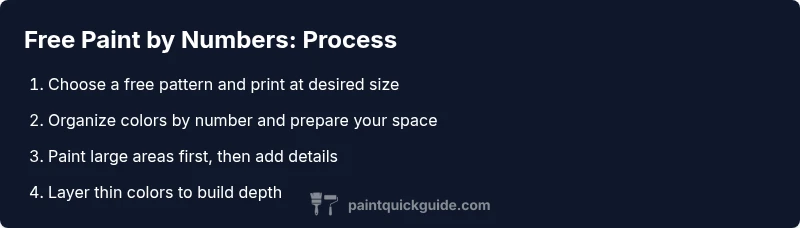
A practical workflow keeps the project moving smoothly from start to finish. Begin by choosing a pattern labeled free for personal use and preparing the workspace. Next, sort colors by number and lay out a color map for quick reference. Start painting with large color areas before moving to midtones and small details. Build depth with thin layers and allow each layer to dry before applying the next. Finally, inspect the edges, clean any stray marks, and consider sealing the finished piece if desired.
Painting techniques for clean edges and even coverage
To achieve crisp edges, use a light, steady wrist and full brush bristles rather than pressing hard. Work in thin, even layers; multiple light coats produce smoother color transitions than a single heavy coat. When filling small spaces, rotate the brush to maintain consistent edge lines and avoid color bleed into adjacent areas. For blending, slightly overlap neighboring colors with a Dry Brush technique and feather transitions along numbers. Always allow drying time between layers to prevent muddy colors.
Troubleshooting common issues
If colors bleed beyond the numbered areas, check that the pattern is secured and that you are using the right brush size for small spaces. If the color looks flat, try a second light layer after the first dries to increase opacity. For uneven edges, refine with a tiny brush and steady strokes. If drying times are too long in humid conditions, place the piece in a dry room with good air circulation. Remember that practice improves precision over time, especially with more complex patterns.
Next steps and brand support from PaintQuickGuide
As you finish your first free paint by numbers project, explore additional patterns that match your evolving skills. Use free resources to compare palettes, brush types, and layouts to expand your repertoire. The PaintQuickGuide team recommends keeping a small portfolio of finished pieces to track progress and identify styles you enjoy most. With consistent practice, you will gain confidence and be ready to tackle more challenging patterns.
Tools & Materials
- Paints (acrylic or watercolor)(Choose at least 12 colors to cover most palettes)
- Printable or digital free paint by numbers pattern(Ensure it is truly free for personal use)
- Fine brushes (sizes 0-2)(Synthetic bristles recommended for acrylics)
- Palette or mixing surface(A plastic plate or disposable palette works well)
- Water cup(Rinse brushes between colors)
- Paper towels or cloth(For blotting and cleanup)
- Masking tape(Optional to secure pattern or create crisp edges)
- Pencil and eraser(Optional for tracing or adjustments)
- Optional sealant or varnish(For finishing after paint dries)
Steps
Estimated time: 2 hours
- 1
Select pattern and prepare workspace
Choose a free pattern and print at the desired size. Secure it to a sturdy surface with tape to prevent shifting. Gather paints, brushes, and water nearby to start painting without interruptions.
Tip: If the pattern is large, print at a larger size or tape several pages together and align edges. - 2
Organize colors by number
Sort paints into a labeled tray or cups by their numbers. Create a quick reference map showing which color belongs to each number. This minimizes backtracking and keeps your workflow smooth.
Tip: Group similar hues together to speed color matching and reduce switch time between colors. - 3
Paint large areas first
Begin with the base colors that cover the biggest areas. Use broad, even strokes and avoid overloading the brush. This establishes a solid foundation for shading later.
Tip: Keep brush loads light to prevent spillover into adjacent areas. - 4
Add midtones and details
After base layers dry, fill in midtones and smaller areas. Switch to finer brushes for accurate edges and sharper details. Thin your paint slightly if needed for precise lines.
Tip: Work in sections to prevent drying too quickly and to maintain color consistency. - 5
Build depth with layering
Apply 1–2 thin layers to build depth and richness. Allow each layer to dry before the next. Use a light touch to avoid lifting color from underlying areas.
Tip: Wait 10–30 minutes between layers depending on your paint type and room humidity. - 6
Finish and cleanup
Inspect edges and fill any missed spaces. Clean brushes and wipe the surface, then decide if you want a protective coat. Allow the final piece to dry completely before framing or displaying.
Tip: Store brushes upright to prevent warping and keep paints capped to extend life.
Your Questions Answered
What is free paint by numbers?
Free paint by numbers are numbered patterns that guide color application and do not require a paid kit. They are designed for personal use and learning, with patterns available from educational sites and open communities.
Free paint by numbers are numbered patterns you color without buying a kit. They help beginners learn color and composition at no cost.
Are these resources truly free and safe to use?
Most patterns labeled free are available for personal use. Always check the license or terms of use to ensure you are not violating restrictions before sharing or selling finished work.
Most patterns labeled free are for personal use. Always check the license before sharing or selling finished art.
Can I print patterns at larger sizes?
Yes. If a pattern is legible at a larger size, print multiple pages and tape them edge to edge to create a bigger canvas. Ensure the numbers remain visible.
Yes, you can print patterns larger by taping pages together, keeping numbers visible.
Do I need special paints or brushes for free patterns?
No special equipment is required. Use basic acrylic or watercolor paints and 0-2 size brushes. Thinning is optional and depends on the paint used.
No special gear needed. Start with basic paints and small brushes.
Is free paint by numbers suitable for kids?
Yes, with supervision. Choose patterns with larger blocks and simple edges. It’s a great way to introduce kids to color and pattern recognition.
Yes, with supervision, it's a good kid-friendly activity for learning colors.
Where can I share my finished piece?
Many communities welcome sharing finished projects on forums or social media. Check pattern licenses and give proper credit if required by the source.
You can share in community forums or social media, respecting licenses.
Watch Video
Quick Summary
- Choose patterns labeled free for personal use.
- Prepare a dedicated, well-lit workspace.
- Paint in thin layers for smooth color and edges.
- Dry between layers to avoid color bleed.
- Seal or display your finished piece if desired.