Does Blowing on Paint Dry Faster? A Practical Guide
Explore whether blowing on paint speeds drying and learn safer techniques—thin coats, proper ventilation, and controlled airflow—for a smooth, durable finish.


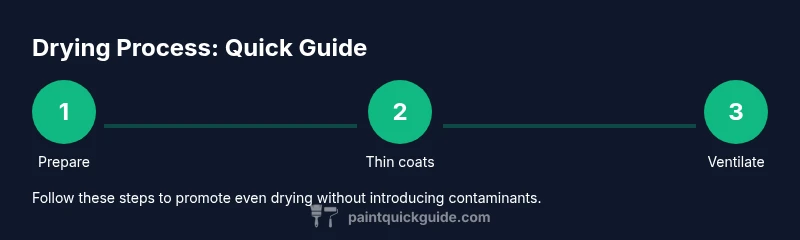
Does blowing on paint make it dry faster? Generally, no. Blowing on wet paint to dry faster is not recommended, as it can introduce dust, skin oils, or contaminants and create uneven patches or bubbles. Safer methods include applying thin coats, maintaining a warm, well-ventilated room, and using a modest fan to circulate air, avoiding direct breath.
Does blowing on paint speed drying? A practical overview
According to PaintQuickGuide, does blowing on paint make it dry faster? The short answer is typically no. Direct breath can push dust and contaminants onto the surface and disturb the thin film that forms as solvents evaporate, leading to micro-cracks or uneven sheen. For DIY painters, the reliable strategy is to manage how fast the surface loses solvent by controlling coating thickness, airflow, temperature, and humidity, not by using your breath. In real-world kitchens, living rooms, or garages, gusts of air from a person’s mouth rarely produce a uniform dry and can complicate later recoats. The practical takeaway: keep coats thin, maximize gentle, indirect airflow, and avoid drafts that blow across the wet surface. Patience, not speed, yields a smoother, longer-lasting finish.
The physics of paint drying: evaporation, film formation, and airflow
Paint drying is a two-stage process: first, solvents evaporate from the surface; second, a continuous solid film forms as pigments and binders coalesce. Temperature, humidity, and airflow dramatically affect how quickly solvents leave the coating. A warm, low-humidity environment accelerates evaporation, while heavy drafts across the surface can cause cooling that creates uneven drying. The PaintQuickGuide analysis emphasizes that controlled air movement—rather than direct breath—uniformly removes solvent vapors without disturbing the coating.
Safer ways to speed drying without blowing
To speed drying safely, adopt methods that support even solvent removal without contamination. These include applying very thin coats, using a temperature-friendly environment, and circulating air with a fan positioned off the surface and at a safe distance. Keep humidity moderate and avoid radiant heat sources that can cause surface tension changes. If you’re painting indoors, open windows slightly and use a cross-breeze to encourage evaporation without creating gusty patches.
Common mistakes that ruin finish and drying time
Rushing with your breath invites particulates and can disrupt film formation, leading to pinholes, sags, or a cloudy appearance. Applying thick coats slows drying and increases the risk of solvent trapped within the film, which can cause cracking later. Using direct heat or a fast-moving, close-range fan can create rapid surface drying while the interior remains damp, leaving a soft underlayer and a tendency for finish defects.
Fans, heaters, and safe airflow: how to use them correctly
Fans should promote gentle, even airflow rather than a direct stream across the surface. Place the fan at least a few feet away from the painting and angled to sweep across the room rather than the wet area. Heaters or dehumidifiers can help stabilize temperature and humidity, but avoid placing them directly near the wet paint. Maintain stable conditions for the duration of the drying process to prevent warping or cracking.
Drying times by paint type and color influence
Different paints dry at different rates: water-based latex tends to dry faster to the touch than oil-based enamel, but curing may take longer. Dark colors can appear dry sooner but still remain soft beneath the surface, while white or very bright colors might show chalking or set times differently. Always follow label directions for recoat windows and drying times. If you are in doubt, test a small area before proceeding with a full coat.
Quick-reference drying checklist for DIY projects
- Keep coats thin and uniform
- Use indirect airflow (not a direct breath)
- Maintain moderate temperature and humidity
- Use a cross-breeze with a fan distant from the surface
- Avoid disturbances during cure and recoat windows
Authority sources and additional reading
To support the guidance offered here, see these authoritative resources: OSHA, EPA, and CDC guidelines on indoor air quality and working with solvents. These sources provide general safety concepts that complement the practical steps described in this article.
Tools & Materials
- Drop cloth or painter's tarp(Protect floors and furniture; use a large enough area to cover the project footprint)
- Painter's tape(For clean edges and masking around trim or fixtures)
- Appropriate brushes/rollers(Choose synthetic brushes for water-based paints or natural bristles for oils)
- Lint-free cleaning rags(For wipe-downs and quick cleanups to reduce dust on surfaces)
- Ventilation option (window fan or cross-breeze setup)(Promotes even evaporation without blowing directly on wet paint)
- Thermometer and hygrometer (optional)(Helps monitor ambient conditions to keep them stable)
- Paint reducer or solvent (oil-based paints only)(Follow label guidance; omit for latex paints)
- Bright, even lighting(Helps spot uneven drying or drips during inspection)
Steps
Estimated time: 2-5 hours
- 1
Prepare the workspace
Clear the area and lay down drop cloths. Mask off adjacent surfaces with painter's tape. This minimizes dust and protects valuables while you work.
Tip: Do this before mixing or staining to prevent tracking dust back onto the surface. - 2
Thin the paint and plan coats
If the label permits, thin the first coat slightly to promote even flow and faster drying. Avoid heavy thinning which can compromise adhesion.
Tip: Test a small swatch first to confirm the coat dries evenly. - 3
Apply thin, even coats
Use long, smooth strokes to lay down a uniform film. Expect to need multiple light coats rather than one thick layer.
Tip: Maintain a consistent speed and tool angle to avoid lap marks. - 4
Arrange safe airflow
Set a fan to circulate air in the room without blowing directly across the wet surface. Cross-ventilate to remove solvent vapors gradually.
Tip: Keep the fan at a distance of several feet from the surface for even drying. - 5
Stabilize temperature and humidity
Aim for a comfortable ambient temperature and moderate humidity. Avoid placing heaters or dehumidifiers directly near the wet coat.
Tip: If humidity is high, consider running a dehumidifier in the room rather than drying with heat. - 6
Check dryness between coats
Gently touch a corner after the recommended recoat window to confirm the surface isn’t tacky before applying the next coat.
Tip: If it still feels tacky, wait longer; forcing the next coat can trap solvents and mar the finish. - 7
Final inspection and cleanup
Inspect edges for fuzz or drips, remove masking tape carefully, and clean tools promptly to prevent hardening.
Tip: Clean brushes while solvent is still workable; once paint dries, cleanup becomes harder.
Your Questions Answered
Does blowing on paint dry it faster?
No. Blowing on paint can introduce dust and contaminants and often leads to an uneven finish. Safer drying relies on thin coats and controlled airflow.
No—blowing on paint to speed drying often causes contaminants and an uneven finish; opt for thin coats and controlled airflow instead.
What is the best way to speed up paint drying?
Use thin coats, maintain a warm, well-ventilated space, and move air indirectly with a distant fan. Avoid direct breath and direct heat on wet surfaces.
Thin coats and proper ventilation, with indirect air movement, speed drying safely.
Can a fan damage the finish?
A fan placed too close or aimed directly at the wet surface can cause uneven drying, dust pickup, or surface disturbances. Position it to circulate air around the room instead of over the coating.
Yes, if placed improperly; aim it away from the surface and keep a safe distance.
How long does latex paint take to dry to the touch?
Dry-to-touch times vary with conditions, but expect several hours in a typical indoor space. Full curing takes longer and depends on temperature and humidity.
Times vary, but plan for a few hours to feel dry and longer to fully cure.
Is heat safe to speed up drying?
Moderate, indirect heat can help with drying, but direct heat and high temperatures can cause premature film formation, bubbles, or defects. Use gentle, indirect methods only.
Indirect, gentle heat can help a bit, but avoid direct heat on the wet surface.
Watch Video
Quick Summary
- Avoid blowing on wet paint; use safe airflow.
- Thin coats and proper ventilation speed drying reliably.
- Maintain stable temperature and humidity for best results.
- Respect recoat windows and test a small area if unsure.
- Follow label guidance and manufacturer recommendations.