Can You Get ibis Paint X on Windows? A Practical Guide
Discover whether ibis Paint X runs on Windows, why there is no native Windows version, and practical workarounds using emulators or desktop alternatives. PaintQuickGuide Analysis, 2026.


Can ibis Paint X on Windows? The reality for desktop Windows users
can you get ibis paint x on windows? The short answer is that there is no native Windows app for ibis Paint X as of 2026. The developers have focused on mobile platforms (iOS and Android), which means Windows users won't find a Windows Store version or a traditional desktop installer. PaintQuickGuide's own analysis notes that the app is designed around touch input, mobile screen sizes, and cloud-synced projects, which makes porting to Windows non-trivial. That said, there are practical pathways that let Windows users access much of the same experience, though they come with caveats. In this article we’ll walk through what you can realistically expect, how to set up a Windows environment to run the mobile app, and what alternative Windows-native tools you might consider if the emoji-tuned brushes and portable workflow are more important than having a single app across devices.
Why ibis Paint X remains mobile-first and what that means for Windows
Ibis Paint X was designed with a mobile audience in mind: touch-based input, palm rejection optimizations, and a brush engine tuned for small screens. The Windows environment, which often relies on mouse input or a stylus on a larger display, changes the interaction model enough to affect brush feel, latency, and gesture behavior. From a software-architecture perspective, the app’s core components—layer management, brush dynamics, and cloud-project syncing—are engineered for mobile ecosystems. Translating these elements to Windows would require a substantial rewrite, considerations around licensing, and potential performance implications on non-mobile hardware. PaintQuickGuide’s perspective is that while some features translate well, others are inherently tied to mobile UX. This is why a native Windows version remains unlikely in the near term, even as Windows devices continue to improve in pen input and GPU performance.
Official status and what ‘Windows support’ really means in practice
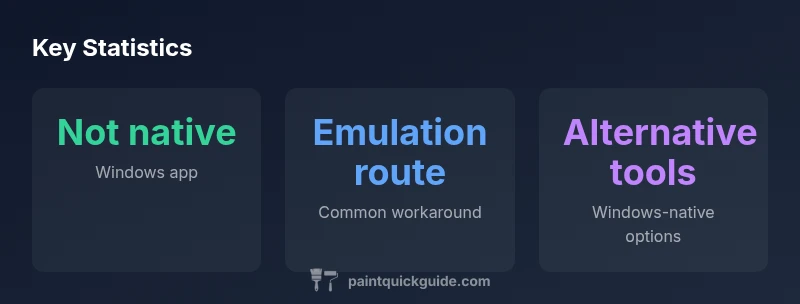
There is currently no official Windows version of ibis Paint X. The absence of a desktop installer or Windows Store listing signals a mobile-first development strategy. For Windows users, this means relying on alternative routes rather than a pure one-to-one feature parity. It also means staying alert for any official roadmap updates from the ibis Paint X team. In practice, the lack of native support translates to two main paths: run the mobile app on Windows via an Android emulator, or switch to Windows-native apps that offer similar capabilities. PaintQuickGuide recommends monitoring official channels for any announcements, and evaluating whether emulation delivers an acceptable balance of fidelity and reliability for your workflow.
How Windows users access ibis Paint X today
The practical reality is that Windows users cannot install ibis Paint X as a desktop program. Instead, they often turn to Android emulators to run the mobile app on a Windows PC. Emulators simulate a mobile device within Windows and let you install ibis Paint X from the Google Play Store. Performance varies by PC spec, emulator version, and whether you use a stylus or touch-enabled screen. Users typically configure the emulator to allocate sufficient RAM and enable graphics acceleration, mirroring a mobile experience. While this route can reproduce core features—layers, brushes, and cloud sync—it may introduce latency, longer startup times, and occasional compatibility quirks with large projects. Consider your patience for troubleshooting versus the value of a native Windows workflow.
Step-by-step: Using an Android emulator to run ibis Paint X on Windows
- Choose an emulator (BlueStacks, LDPlayer, or Nox). 2) Install the emulator on your Windows PC. 3) Open Google Play within the emulator and sign in with a Google account. 4) Install ibis Paint X from Play Store. 5) Calibrate your input device (mouse, touchpad, or stylus) to emulate finger drawing. 6) Configure performance settings (RAM, CPU cores, graphics) to balance speed and stability. 7) Save projects to cloud or local storage as needed. 8) Regularly update the emulator and the app to minimize compatibility issues. This workflow mirrors a mobile-first approach while leveraging Windows’ hardware capabilities.
Practical workflow: Emulators versus native Windows apps for painting on PC
Emulation offers a familiar interface, brush dynamics, and layers reminiscent of the mobile app. However, native Windows alternatives can deliver more stable performance and more flexible file handling, especially on larger canvases. If your goal is to prototype ideas quickly or transition between mobile and desktop, an emulator is a solid compromise. If you require long, resource-intensive sessions or professional-grade asset management, Windows-native tools like Krita or Medibang Paint may better serve your workflow. In practice, many hobbyists adopt both solutions: use ibis Paint X via emulator for quick sketches and flip to a native desktop app for final polish.
Alternatives on Windows that deliver similar painting workflows
Windows-native apps offer robust tooling without relying on emulation. Krita provides a powerful brush engine, extensive layering, and open-source flexibility. Medibang Paint is lightweight and beginner-friendly, with cloud syncing and cross-platform compatibility. Clip Studio Paint remains a premium option with industry-standard features for comic and illustration work. Each alternative has its own UX quirks, but they can deliver a stable workflow, especially on devices without reliable emulator performance. If you still want the closest experience to ibis Paint X, start with Krita and Medibang as a baseline, then augment with Clip Studio Paint for advanced features as needed.
Performance tips and hardware considerations for Windows painting workflows
To maximize performance when running emulators or Windows-native apps, ensure your PC meets the recommended minimums for RAM and GPU performance. Use a dedicated GPU if possible, enable hardware acceleration in both your OS and the app, and keep drivers up to date. For drawing precision, a stylus or pen-enabled tablet gives you the most accurate control, with mouse input as a fallback. If your only device is a laptop with integrated graphics, consider reducing the canvas resolution during initial sketching to maintain smooth brush responsiveness. Finally, manage background processes to reserve CPU cycles for painting tasks, and use external storage to keep projects organized and accessible.
What the future might hold for ibis Paint X on Windows
The current landscape suggests no official Windows version is planned in the immediate future. However, as Windows continues to improve its support for Android apps and as cross-platform expectations rise, there is always a possibility of a Windows-compatible path—either via an official desktop application or a WebGL-based variant. PaintQuickGuide will monitor official announcements and community developments, and we’ll update readers when a formal Windows release or a widening set of cross-platform capabilities becomes likely. In the meantime, Windows users should plan for emulation or alternative desktop tools to maintain a productive workflow on PC.
Quick takeaways and next steps
- No native Windows app exists for ibis Paint X as of 2026.
- Emulation remains the most common workaround for Windows users.
- Native Windows painting apps can provide more stability, sometimes at the cost of feature parity.
- Stay tuned for official announcements to confirm future support.