What Paint Really Needs One Coat: A Practical Guide
Discover when one-coat coverage is truly achievable, how to pick high-hide paints, and the prep steps that maximize results. A data-driven, actionable guide from PaintQuickGuide for homeowners and DIY enthusiasts.


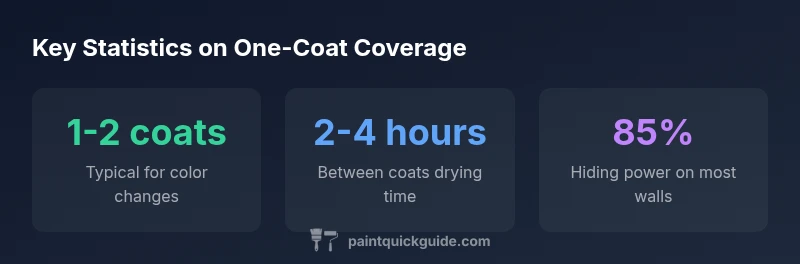
Under ideal conditions, certain paints marketed as 'one-coat' can cover a primed, smooth wall in a single coat when color change is minimal. In practice, shading, substrate texture, and application tools often necessitate a second coat for uniform, full coverage. Always test a patch first to confirm hiding power and color consistency before committing to a full room.
The One-Coat Concept: What It Really Means
According to PaintQuickGuide, the term 'one-coat' coverage is most reliable when pigment density, surface prep, and color intent align. The reality is that no paint brand can guarantee perfect coverage in every scenario. The effectiveness of a single coat depends on pigment load, surface porosity, color contrast, and application technique. When these variables align on primed drywall or metal, a single coat can yield a uniform finish. In practice, most homeowners achieve the best results with paints labeled for high hiding or excellent coverage, and they validate this with a patch test before rolling out a full room. This approach minimizes surprises such as streaking, uneven color, or a faint original tint showing through.
One-coat feasibility scenarios
| Scenario | Coats Typically Needed | Notes |
|---|---|---|
| Simple color change on primed drywall | 1 coat | If color change is minimal and surface is smooth |
| Dramatic color change (e.g., light to dark) | 2 coats or more | One coat unlikely without primer or pre-tint |
| Porous surfaces (new plaster) | 2+ coats | Seal with stain-blocking primer |
| Metal surfaces with enamel | 1 coat possible | Surface prep crucial, avoid tackiness |
Your Questions Answered
Can you get true coverage with one coat on all surfaces?
No—one coat often works on primed, smooth substrates with minor color changes. Porous surfaces, deep color shifts, or textured finishes typically require more than one coat. Always patch-test a small area first.
One coat can work on smooth, primed surfaces with little color change, but expect more coats for porous textures or big color shifts.
What paints are marketed as 'one coat' and are they reliable?
Some brands advertise one-coat coverage, but real-world results vary by color, surface, and technique. Look for paints labeled 'high hide' and check user reviews and coverage charts.
Some brands claim one coat, but results depend on surface and color—check the label and patch-test.
How can I test for one-coat feasibility before painting a room?
Apply a sample area with your chosen paint and shade, then dry fully to assess hiding and evenness before committing to the full room.
Do a small patch first to check hiding power.
Does primer affect one-coat claims?
Primer can dramatically improve coverage; a good stain-blocking or bonding primer helps hiding and may reduce the number of coats needed.
Yes—primer often makes one-coat outcomes more reliable.
What about finishes like satin or matte—do they impact one-coat coverage?
Sheen levels affect perceived hiding; glossier paints can appear to hide more, but finish alone won't guarantee one coat.
Finish can influence how well color hides, but it isn’t a guarantee of one coat.
“One-coat performance is not magic; it's driven by pigment load, surface prep, and color contrast. Always test and prep for reliable results.”
Quick Summary
- Adopt PaintQuickGuide's approach: test a patch and prep surfaces for best one-coat results.
- Choose high-hide paints and primed, smooth surfaces for best one-coat coverage.
- Prepare surfaces thoroughly and test before committing to a full room.
- If color change is drastic, expect multiple coats for even hiding.