Sherwin Williams Blue Paint: Shades, Finishes, and Practical Guidance
Explore Sherwin Williams blue paint options for interiors, exteriors, and auto refinishing. Compare shades, finishes, coverage, and cost ranges with practical, expert guidance from PaintQuickGuide.


Sherwin Williams blue paint offers a broad range from deep navy to soft sky hues, ideal for interiors, exteriors, and auto refinishing. This guide covers color psychology, finish options, coverage expectations, and cost ranges to help homeowners and DIY enthusiasts pick the right shade and finish for your project. Whether you’re repainting a kitchen cabinet, a living room wall, or a car project, the right blue sets the mood.
Understanding the Sherwin Williams blue paint spectrum
The phrase sherwin williams blue paint covers a broad spectrum of hues, from deep navy to pale sky, each suited to different rooms, lighting conditions, and design aesthetics. The Sherwin Williams line is designed to respond to natural daylight and artificial lighting in distinct ways, so the same shade can appear cooler in one room and warmer in another. For homeowners evaluating blue options, it helps to start by identifying the mood you want: bold, calm, or airy. This section explains how undertones (green, gray, purple) influence perceived color and why light levels matter. By understanding how blue interacts with flooring, cabinetry, and trim, you can shortlist 3-5 candidate shades before testing swatches in your actual space. In practice, the right sherwin williams blue paint choice aligns with furniture tones, wall textures, and ceiling heights to create a cohesive feel rather than competing tones. The PaintQuickGuide team notes that swatch testing under both daylight and artificial light reduces the risk of color surprises after application.
How to select the right blue from Sherwin Williams
Selecting the right blue begins with identifying the primary lighting and the room’s function. For living areas with warm lighting, mid-tone blues with gray undertones tend to read more sophisticated than pure ice blues. If you’re brightening a small room, lighter blues with high reflectivity can create a sense of airiness without washing out the space. For exteriors or garages, deeper blues convey formality and durability, but you’ll want to consider the home’s overall color palette and the surrounding environment. A practical approach is to compile a short list of 3-5 blues and test them on large swatches at different times of day. The goal is to observe how each shade shifts with ambient light and adjacent colors—this avoids costly repaint cycles. PaintQuickGuide suggests recording impressions and checking how trim colors influence perceived hue.
Finish types and their impact on blue shades
Finish choice has a substantial impact on how blue appears and performs, particularly in high-traffic spaces. Flat or matte finishes absorb light and emphasize color depth, which works well for living rooms and ceilings where you want a soft, velvety appearance. Eggshell and satin finishes provide a gentle shine that enhances wall texture without glare, making them popular for bedrooms and hallways. Semi-gloss is more durable and easier to clean, a practical option for kitchens, bathrooms, and trim—but it can highlight surface imperfections. When choosing a Sherwin Williams blue, pair your color with the desired finish to balance maintenance needs, light reflection, and the room’s acoustics. Our guidance emphasizes testing multiple finishes in your lighting so you can see how finish translates color in real life.
Interior vs exterior: applying blue paint on different surfaces
Blue on interior walls often benefits from a lighter base with toned undertones to avoid overwhelming a space. On exterior surfaces, deeper blues can add architectural definition and curb appeal, but exposure to sun and weather will shift color over time. In exterior applications, consider the paint’s UV resistance and fade tolerance; blue shades with gray undertones tend to resist showing wear longer under direct sun. When planning, map color decisions to surface types (stucco, wood, siding) and orientation (north-facing vs. south-facing walls). Sherwin Williams offers color systems designed for both interior and exterior performance, and PaintQuickGuide advises selecting a blue hue that complements trim and roofing materials for a unified look across the property.
Preparation and application tips to avoid common blue-paint pitfalls
Preparation is half of a successful blue paint project. Start with thorough surface cleaning, repair any blemishes, and sand glossy areas to improve adhesion. Use a high-quality primer compatible with the chosen blue shade to ensure true color and uniform coverage. When applying, use consistent tool marks and maintain a wet edge to prevent lap marks, especially with mid-tone and darker blues. For ceilings or walls that might accumulate moisture, consider moisture-resistant primers and finishes. Temperature and humidity influence drying times, so follow manufacturer recommendations for recoat windows and curing. Finally, test the color in multiple lighting conditions before finalizing, as blues can shift noticeably with daylight and artificial lighting.
Cost, coverage, and durability: what homeowners should expect
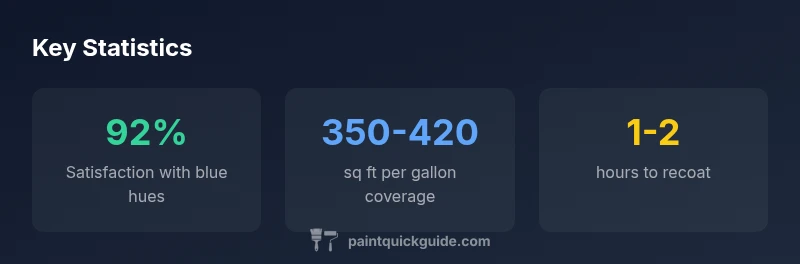
Understanding cost and coverage helps set realistic expectations for Sherwin Williams blue paint projects. Per-gallon pricing can vary by finish and line, but you can anticipate a typical range for quality interior or exterior coatings. Coverage is generally described in square feet per gallon, with higher-coverage formulas offering better value in large rooms. Durability depends on finish selection, with washable finishes preferred in high-traffic areas. For auto refinishing, blue paints are often part of specialty systems requiring clear coats and professional equipment; this typically incurs higher pricing and professional leveling considerations. PaintQuickGuide emphasizes validating expected coverage against wall surface conditions and calculating the number of coats needed to achieve the desired depth and evenness.
Practical pairing ideas: blues with neutrals and accents
Blue hues pair well with a spectrum of neutrals, from warm creams to cool grays. In living spaces, combine a pale sherwin williams blue paint with white trim and natural wood accents to create a serene, coastal-inspired palette. For modern interiors, opt for deeper blues against charcoal or navy accents, adding metallic finishes in décor to punctuate the color story. In kitchens, a light blue wall with white cabinetry creates a fresh, airy vibe, while blue island accents can serve as a bold focal point. On exteriors, test blues against the home’s brickwork or stone features to ensure a harmonious overall aesthetic. The key is to preview color swatches on multiple surfaces and consider the space’s natural light and intended mood.
Sherwin Williams blue paint options for common room types
| Shade family | Typical use | Finish options | Notes |
|---|---|---|---|
| Navy blues | Living rooms, accents | Eggshell, satin, semi-gloss | Classic, bold backdrop |
| Mid-tone blues | Kitchens, bedrooms | Eggshell, satin | Versatile and balanced |
| Pale blues | Bathrooms, nurseries | Flat, eggshell | Bright, airy feel |
Your Questions Answered
What is the best Sherwin Williams blue paint for living rooms?
The best Sherwin Williams blue for living rooms depends on lighting and furniture. Mid-tone blues with gray undertones often read as sophisticated and versatile, while lighter blues can create an open, airy feel. Test swatches in the room’s lighting and pair with neutrals to confirm depth and balance.
For living rooms, start with a mid-tone blue with gray undertones and test in your lighting to find the right balance.
How many coats are typically needed for blue paint?
Most blue paints in Sherwin Williams lines require two coats for even color and coverage, especially on unprimed surfaces or when moving from a lighter color. Priming can reduce the number of coats in some cases. Always follow the product’s label for best results.
Two coats are typical, but priming can cut down the number of coats needed.
Is Sherwin Williams blue paint good for exteriors?
Yes, many Sherwin Williams blue shades perform well outdoors, offering good fade resistance and weather durability when paired with appropriate exterior primers and finishes. Choose colors with UV resistance and consider the home’s exposure to sun and shade to maintain color integrity.
Blue exteriors can look great with the right UV-resistant finish and proper priming.
What finishes are available for Sherwin Williams blue paints?
Sherwin Williams blue paints come in finishes such as flat, eggshell, satin, semi-gloss, and high-gloss. The finish affects durability, cleanability, and light reflection, so select based on the room’s use and cleaning needs.
Blues come in flat, eggshell, satin, semi-gloss, and gloss—pick based on where you’re painting.
How should I choose blue for a small room?
In small rooms, opt for lighter blues with higher reflectivity to maximize perceived space. Pair with bright whites or warm neutrals to avoid a closed-in feeling and keep the space feeling open and inviting.
Go lighter blues with lots of light and pair with white trim.
What are common mistakes when painting with blue?
Common mistakes include choosing a shade without testing in the room’s light, ignoring undertones, and mismatching finishes. Also, neglecting proper surface prep or using inadequate primers can lead to color inconsistency and wear.
Test in lighting, check undertones, prep well, and pick matching finishes.
“Blue hues offer remarkable versatility when paired with the right neutrals and finishes, enabling homeowners to achieve calm, sophisticated palettes in any space.”
Quick Summary
- Test blues in legitimate lighting before committing
- Match undertones to room lighting for accuracy
- Choose a finish based on maintenance needs
- Consider exterior fade resistance for outdoor blues
- Pair blues with neutrals for balanced designs