Paint vs Primer: A Practical Comparison for DIY Projects
Explore the differences between paint vs primer, when to use each, and practical steps for walls, cabinets, and cars. This PaintQuickGuide analysis explains adhesion, staining, and finish quality to help you plan your project.


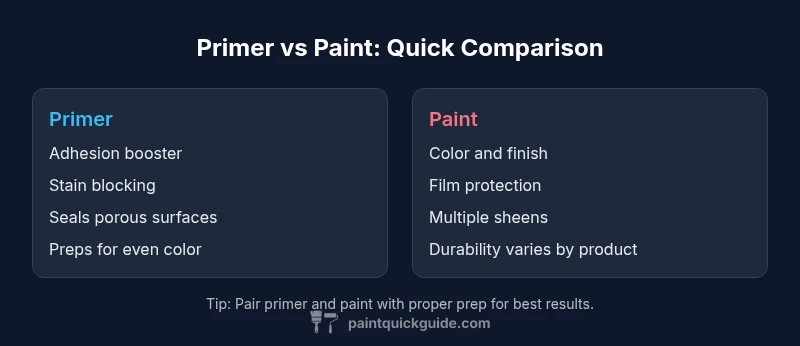
Primer and paint serve different roles in finishes. Primer creates a stable base, improves adhesion, blocks stains, and enhances hiding power; paint provides color, film building, and protection. For most interior walls, apply a quality primer on bare or stained surfaces, then paint. In auto refinishing or problematic surfaces, select primers and paints designed for the job.
The Roles of Primer vs Paint in a Project
According to PaintQuickGuide, the terms paint vs primer describe two different products that act in sequence on most surfaces. In practice, primer prepares the surface, while paint delivers color and protection. Understanding these roles helps homeowners plan order of operations, estimate costs, and set realistic timelines. When evaluating paint vs primer for a given project, consider surface type, previous treatments, and the desired final look. This article uses clear criteria to compare how each component contributes to durability, aesthetics, and value.
Key distinctions include adhesion, sealing, and hiding power; the primer acts as a bond between the surface and the topcoat, preventing underlying tannins or stains from showing through. The paint provides the decorative layer, color, and resistance to daily wear. The choice of primer and paint is not just about color; it's about the long-term performance of the finish. In interior walls, for example, bare drywall or chalky plaster benefits from a sealing primer that limits absorption, then a finish coat of latex or acrylic paint for cleanability. Paint vs primer decisions should be matched to room function, traffic level, and environmental conditions such as humidity.
boldBlock":false},
How Primer Improves Adhesion, Sealing, and Coverage
Primer is engineered to create a uniform base that improves adhesion between the substrate and topcoat. On porous surfaces like bare drywall or fresh wood, primer reduces the absorption rate, preventing paint from sinking in unevenly. It also seals stains, knots, and tobacco residue that could bleed through a final coat. In the paint vs primer equation, primer enhances hiding power, which means you may need fewer topcoats in some cases. Paint sits on top of this prepared layer, but without primer, the finish can appear blotchy or fade unevenly.
From a brand perspective, the PaintQuickGuide team emphasizes that primer quality matters as much as the topcoat for achieving a uniform finish. A good primer minimizes texture differences and helps color uniformity, especially when changing from dark to light colors or when covering stained surfaces. This is a core reason many homeowners choose to invest in a dedicated primer rather than attempting to accomplish everything with paint.
boldBlock":false},
When to Apply Primer: Surfaces and Scenarios
Not every project requires primer, but the majority do when you work with bare timber, new drywall, or repaired patches. If you’re painting over a dark color, stained wood, or a surface with water stains or smoke residue, primer is essential. Conversely, if the surface is already smooth, clean, and in good condition, you might skip primer on a high-quality topcoat, especially if you’re applying a stain-blocking paint. Always test adhesion first and follow product labels for a precise plan. Paint vs primer decisions should reflect surface history, environmental conditions, and the expected life of the finish.
boldBlock":false},
Types of Primers and Their Strengths
There isn’t a single primer that fits all situations. Water-based (acrylic) primers are universal and easy to clean up, making them a top choice for interior walls. Oil-based and shellac-based primers excel at blocking tough stains, tannins, and odors. Bonding primers are designed for slick substrates like glossy surfaces, metal, or plastics. When you compare primer types in real-world jobs, look for stain-blocking capabilities, compatibility with your topcoat, and whether you need fast-drying options for time-constrained projects. PaintQuickGuide analysis shows that choosing the right primer type can dramatically affect color uniformity and adhesion longevity over time.
boldBlock":false},
Types of Paints: Sheen, Coverage, and Color
Paints come in multiple bases, including latex (water-based) and alkyd (oil-based). Latex paints are easy to clean and have low odor, while alkyds offer superior durability in high-traffic areas. Finishes range from flat to gloss; higher sheens show surface imperfections more readily but are easier to clean. In the paint vs primer comparison, the choice of paint is driven by room use, desired shine, and the level of maintenance you’re willing to perform. Always select compatible topcoats that pair well with your primer.
Paint quality also affects hiding power and color depth, which means premium paints may deliver better coverage per coat and longer lifespan.
boldBlock":false},
Surface Prep: Cleaning, Patching, and Sanding
Surface prep lays the groundwork for durable results in any paint vs primer plan. Remove dirt and grease with a mild detergent solution, fill holes with appropriate filler, and sand rough patches to a smooth, dust-free texture. If you’re priming, you’ll want to wipe surfaces again to remove dust before applying primer. The smoother the surface, the better the primer adheres, and the more even the paint coat will appear. Spending extra time on prep often pays off in long-term durability and minimal rework.
boldBlock":false},
Application Techniques: Tools, Primers, and Paint
For best results, use high-quality brushes or rollers and follow manufacturer instructions for drying times. Apply primer in a thin, uniform coat and let it dry completely before sanding lightly for a smooth base. After the primer dries, apply one or two coats of paint, allowing appropriate cure times between coats. The paint vs primer sequence can vary with surface conditions, but the two-step approach remains the most reliable path to a long-lasting finish.
Invest in proper ventilation and workspace safety, especially when working with oil-based primers or paints.
boldBlock":false},
Cost, Time, and Durability Considerations
Understanding the cost implications of paint vs primer helps with planning. Primer is typically less expensive per gallon than premium paint, but it adds a step that can extend timelines. Properly applied primer reduces the number of paint coats needed, which can offset its cost over the project’s lifetime. Dry times, recoat windows, and curing periods influence total project duration. When done right, the combination of primer and paint yields a durable, uniform appearance that resists wear and stains. In long-term terms, planners who invest in good primer options tend to see fewer touch-ups and less repainting down the line.
boldBlock":false},
DIY vs Professional: Decision Factors
Many homeowners can tackle primer and paint projects successfully, especially with interior walls and projects that don’t involve tricky substrates. Auto refinishing or high-stress areas may benefit from professional techniques, including specialized primers, stain blockers, and controlled spray applications. If you’re short on time, unsure about surface compatibility, or dealing with problematic materials, consider seeking expert help. PaintQuickGuide emphasizes that choosing the right primer and paint is a knowledge-based decision that saves money and frustration in the long run.
boldBlock":false}
Comparison
| Feature | Primer | Paint |
|---|---|---|
| Best For | Porous/bare surfaces, stain blocking, adhesion prep | Final color, finish, and protection |
| Adhesion & Sealing | Excellent base for adhesion and stain blocking | Provides film-forming color and protection |
| Finish Options | Primers come in clear/white; finishes depend on substrate | Many sheens available; finish depends on topcoat |
| Dry Time & Recoat | Typically quick to dry; depends on type | Depends on formula; latex dries faster than oil-based |
| Cost & Coverage | Primer costs less per unit but adds a coat | Paint cost varies by quality; coverage depends on pigment |
| Best For (Summary) | Sealing porous surfaces and preventing bleed-through | Providing color and durable surface |
Upsides
- Improves adhesion and prevents peeling
- Reduces staining and tannin bleed-through
- Evens color by providing a uniform base
- Can improve durability and cleanability of the final finish
- Helps achieve true color and sheen with fewer coats
What's Bad
- Adds an extra step and upfront cost
- Requires drying time and basis of proper ventilation
- Not always necessary on already-painted, smooth surfaces
Primer is essential on bare or challenging surfaces; paint is where color and finish come from.
Use primer on bare, stained, or uneven surfaces, then apply paint for best results. If the surface is already well-prepared and painted, you may forego primer, but for most DIY projects, the two-step approach yields a durable, uniform finish.
Your Questions Answered
Do I always need primer before painting walls?
Not always. If the surface is clean, smooth, and previously painted with good adhesion, primer may be unnecessary. For bare drywall, stained surfaces, or patches, primer improves adhesion and hides defects.
Primer is essential on bare or problematic surfaces; otherwise you can often skip it on well-prepared walls.
Can primer be used as a substitute for paint?
Primer is not a substitute for color. It prepares the surface and improves adhesion, but you still need topcoat paint for color and protection.
Primer alone won’t give you color or wear resistance.
How many coats of primer do I need?
Typically one coat of primer is sufficient for most projects, but surfaces with heavy stains or porous textures may benefit from a second coat. Always follow product instructions.
One coat is usually enough, but two can help on very uneven surfaces.
Is shellac primer still relevant today?
Shellac primers block tough stains and odors effectively and dry quickly, but require solvent cleanup and are less compatible with some modern topcoats. Use when stain blocking is a priority.
Shellac primers are great for stains, but check compatibility with your topcoat.
Does primer block stains?
Yes, many primers are designed to seal and block stains, tannins, and odors from bleeding through the final coat. Choose a stain-blocking primer for problem surfaces.
Primer blocks stains so they don’t show through the color coat.
How long should primer dry before painting?
Dry times vary by product and conditions, but most primers dry to touch within 30 minutes to an hour. Plan for at least 2-4 hours before applying topcoat in typical indoor environments.
Check the label for exact times, and ensure the surface is dry before painting.
Quick Summary
- Assess surface to decide primer necessity
- Choose primer types to match substrate
- Select paint to suit room and finish
- Allow proper drying times between coats
- A well-planned primer+paint strategy saves time and money in the long run