High Gloss Paint vs Semi Gloss: An Analytical Comparison
A thorough, analytical comparison of high gloss paint vs semi gloss, covering shine, durability, maintenance, and best-use scenarios for walls, trim, and cabinets.


When deciding between high gloss paint vs semi gloss, you trade maximum shine and hard-wearing durability for brighter reflections and greater surface reveal. High gloss offers superior cleanability and resistance, but shows brush marks and any surface flaws, making prep crucial. Semi-gloss balances durability with a more forgiving sheen, making it the practical default for most interiors; reserve high gloss for trim, cabinets, and feature surfaces where you want a bold highlight.
Understanding high gloss paint vs semi gloss: definitions and basics
The phrase high gloss paint vs semi gloss captures two ends of the sheen spectrum. High gloss finishes provide the brightest reflection and a glass-like surface, while semi gloss offers a noticeable but softer shine. The choice influences color perception, light distribution, and perceived room size. In practical terms, you must consider lighting, traffic, and cleaning needs, because the differences between high gloss paint vs semi gloss are not just cosmetic. This section explains how each finish behaves under real-world conditions and why most homeowners lean toward semi-gloss as a versatile default. A key note for searchers: the term high gloss paint vs semi gloss is not about brand alone but about the level of sheen and its impact on surface appearance and maintenance over time.
Visual impact: sheen, reflection, and color under different lighting
Sheen level dramatically changes how color reads in daylight and artificial lighting. High gloss reflects much more light, which can intensify color saturation yet exaggerate surface flaws. Semi-gloss reflects less light, offering a more even appearance and reducing glare. When evaluating the decision between high gloss paint vs semi gloss, consider room orientation, window size, and typical usage. A small swatch may look dramatically different on a test board than on a full wall in bright sun, so test in place before painting.
Durability, washability, and maintenance expectations
Durability and washability are often the deciding factors between high gloss paint vs semi gloss. In general, high gloss provides superior scrubbing resistance and stain resistance, making it ideal for kitchens, bathrooms, and doors that get heavy use. Semi-gloss also performs well on surfaces that require frequent cleaning, but it isn’t as abrasion resistant as high gloss. This gap can be noticeable over time in high-traffic zones. Maintenance frequency and cleaning methods should align with the finish you choose, and homeowners should prepare for occasional touch-ups in areas with more traffic.
Preparation, priming, and application techniques
The strongest predictor of successful outcomes with any finish is surface preparation. With high gloss paint vs semi gloss, meticulous sanding, filling, and priming reduce the risk of cracking or peeling and minimize brush marks. Use a stain-blocking primer on leaky walls or knots, and a high-quality brush for cutting in to avoid lap marks. For high gloss, feathering and long, smooth strokes help maintain a uniform surface, while semi-gloss tolerates slightly shorter, steadier strokes. Temperature and humidity control during application also influence drying times and final appearance.
Room-by-room guidance: where each finish shines (and where it does not)
High gloss paint vs semi gloss offers different advantages depending on use. Cabinets, trim, and accent features benefit from high gloss due to exceptional durability and a striking finish, while walls in living rooms, bedrooms, and hallways typically perform better with semi-gloss for a balanced look and easier maintenance. Bathrooms and kitchens can take either finish if moisture exposure is managed with appropriate primers and sealants. Lighting, texture, and the overall design concept should guide the final decision.
Substrate readiness, primers, and compatible topcoats
Substrate matters as much as the sheen. For high gloss, a perfectly smooth surface is essential since any imperfection will be highly visible. A high-build primer aids adhesion and helps achieve a uniform look. Semi-gloss tolerates minor surface variations better but still benefits from a solid prep routine. Choosing the right base (oil or waterborne) and ensuring compatibility with primers, topcoats, and sealants is critical. Always follow manufacturer recommendations to ensure long-term performance.
Cost, coverage, and long-term value considerations
Cost considerations for high gloss paint vs semi gloss go beyond per-gallon prices. Coverage, number of coats, and preparation requirements all influence the long-term value. High gloss typically demands more precise prep and may require more coats to achieve a flawless finish, which can increase upfront costs. Semi-gloss often delivers satisfactory coverage with fewer touch-ups, balancing initial investment with ongoing maintenance. When planning a project, estimate total costs by accounting for materials, time, and potential refinishing needs.
Environmental factors, VOCs, and brand variability
VOCs and environmental considerations vary by product line and base. Many high gloss and semi-gloss formulations now offer low-VOC or zero-VOC options, but performance characteristics may differ between brands. It is important to check product data sheets for recoat windows, ventilation requirements, and compatibility with primers and sealers. The choice between high gloss paint vs semi gloss is not solely about shine; it also involves safety, indoor air quality, and the long-term impact of your selections.
Decision framework: a practical checklist for choosing sheen
- Assess room function and traffic: high-gloss for high-use surfaces, semi-gloss for walls and lower-traffic areas. 2) Inspect surfaces: smooth substrates favor high gloss; textured or repaired surfaces may look better with semi-gloss. 3) Consider lighting: bright rooms with direct light can benefit from the brightness of high gloss, while softer lighting can be enhanced by semi-gloss. 4) Plan for maintenance: if frequent cleaning is expected, weigh washability. 5) Do a test swatch: compare the two finishes on small areas under typical lighting.
Common mistakes and troubleshooting: avoiding finish pitfalls
Common missteps include skipping primer, using the wrong nap roller, and applying coats too thickly. With high gloss, heavy coats increase the risk of cracking and uneven sheen. When testing between high gloss paint vs semi gloss, allow adequate drying time between coats and evaluate under natural light conditions to detect streaks or brush marks. If flaws appear, you may need deeper sanding or a re-prime followed by correct topcoats.
Comparison
| Feature | High Gloss | Semi-Gloss |
|---|---|---|
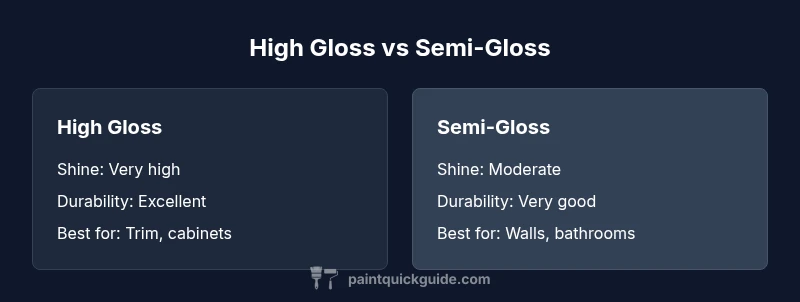
| Sheen level | Very high shine | Moderate shine |
| Durability / washability | Excellent | Very good |
| Ease of touch-up | Challenging; streaks may appear | Easier; hides touch-ups better |
| Imperfection visibility | Reveals surface flaws and brush marks | Hides minor flaws better |
| Best surfaces | Trim, doors, cabinets, accents | Walls, ceilings, trim in living spaces |
| Application difficulty | Requires precise technique and smooth prep | More forgiving with prep and tools |
| Maintenance frequency | Lower repaints, long-lasting | Moderate upkeep depending on use |
| Cost considerations | Higher upfront cost due to prep and coats | Moderate cost with fewer coats needed |
| Lighting impact | Very reflective; changes with light | Balanced reflectivity; muted glare |
Upsides
- Clear guidance helps prioritize finish based on room use and lighting
- Covers durability, maintenance, and aesthetic implications in one place
- Enables quick planning for walls, trim, and cabinets
- Highlights brand and product variability so readers choose wisely
What's Bad
- Variability across brands can blur finish differences
- Real-world results depend on prep, substrate, and technique
- Long-term maintenance costs depend on location and use
Semi-gloss is the practical default for most interiors, while high-gloss is best for highlight surfaces like trim and cabinetry.
For most rooms, semi-gloss delivers durability with a balanced shine and easier touch-ups. Reserve high gloss for accents where you want maximum reflectivity, provided you invest in thorough prep and precise application.
Your Questions Answered
What is the main difference between high gloss and semi-gloss finishes?
The main difference is the level of shine and surface visibility. High gloss provides the brightest reflection and strongest washability but can show brush marks and surface flaws. Semi-gloss offers good durability with a more forgiving appearance and easier touch-ups.
High gloss shines intensely and cleans well, but shows flaws; semi-gloss is a sturdier, more forgiving middle ground.
Is a high-gloss finish suitable for interior walls?
High-gloss interiors are possible but uncommon due to glare and glare; they work best for small accents or doors. For general walls, semi-gloss or satin often provides a more comfortable balance of light and texture.
Usually not on entire walls; save high gloss for accents.
Which surfaces benefit most from semi-gloss?
Semi-gloss shines enough to wipe clean but remains forgiving on walls, trims, kitchens, and bathrooms. It’s a versatile choice that balances durability with appearance, especially in moisture-prone areas.
Semi-gloss is a great default for many surfaces.
How do I apply high-gloss paint without visible brush marks?
Use proper surface preparation, high-quality primers, and thin, even coats with a high-quality brush or roller. Maintain a wet edge while working and avoid overworking the paint, which can create texture.
Prep well, use good tools, and work in thin coats.
Can I switch from high-gloss to semi-gloss without sanding?
A transition typically requires some sanding and priming to ensure adhesion and a uniform appearance. Skipping sanding can lead to peeling or uneven sheen over time.
Sanding and priming help you switch finishes reliably.
Quick Summary
- Assess room lighting to pick the appropriate sheen
- Prioritize surface preparation to unlock finish performance
- Choose semi-gloss for most walls and bright spaces
- Reserve high-gloss for trim, cabinetry, and focal surfaces
- Test swatches under natural light before committing