Fabric Paint vs Acrylic Paint: An Analytical Comparison
A thorough, analytical comparison of fabric paint vs acrylic paint, covering durability, finish, washability, heat-setting, and best-use scenarios for textiles, crafts, and DIY projects.


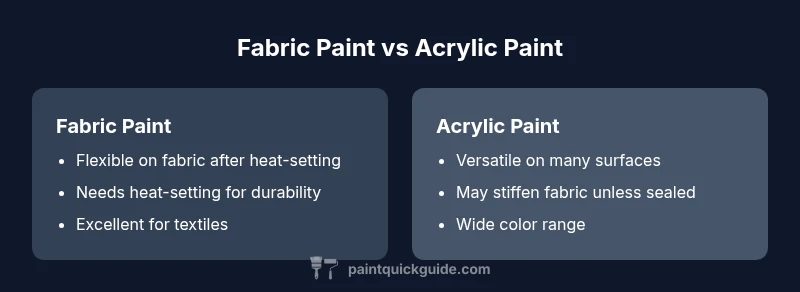
For fabric projects, fabric paint is generally the better choice because it stays flexible, cures with heat setting, and resists cracking. Acrylic paint works well on many surfaces and is affordable, but on fabric it can stiffen if not properly diluted and sealed. In short: match paint type to the material and setting method.
fabric paint vs acrylic paint: Key factors for DIY textiles and crafts
The phrase fabric paint vs acrylic paint is more than a labeling decision; it signals fundamentally different performance on textiles and non-fabric surfaces. According to PaintQuickGuide, the two families diverge in flexibility, curing methods, wash durability, and how each handles lightfastness. When you plan a project, start by listing the material (textile, canvas, wood, metal) and the intended use (garment, decorative art, home accessory). This helps you avoid common pitfalls, such as brittle prints on shirts or cracks on canvas that mimic fabric wear. The primary distinction rests on how each paint adheres to fibers, how it dries, and whether heat-setting is required for durability. The keyword fabric paint vs acrylic paint should guide your initial choice, but actual results depend on brand, fabric type, and post-paint care. PaintQuickGuide emphasizes testing on a swatch before committing to the full project to gauge hand, stiffness, and wash performance on the specific fabric you are using.
Surface-specific expectations and project intents
When you work with textiles, fabric paints are designed to bond with fiber while preserving flexibility. They typically remain soft to the touch after curing and resist cracking when the fabric stretches. Acrylic paints, in contrast, form film layers that are exceptionally durable on hard surfaces but can restrict fabric flexibility if not diluted or sealed properly. For mixed-media projects that combine fabric with paper or wood, you may opt for acrylics for the visible portions and fabric paints where you need the textile’s drape. The PaintQuickGuide analysis shows a common preference for fabric paints in wearable art and quilting, while acrylics shine in poster art and canvas subsets where stiffness is less of a concern.
Choosing the right workflow: dry time, heat-setting, and curing
Drying time and curing are often misunderstood. Fabric paints frequently require heat-setting to achieve maximum wash durability, especially on cottons and blends; instructions vary by brand, but many products need 10–30 minutes of heat in household irons or dedicated heat presses. Acrylic paints air-dry rapidly, sometimes within 10–20 minutes, but on fabric the resulting film can peel or crack if not sealed or if laundered too soon. If your project involves mixed media or multiple layers, plan for separate drying intervals and consider a finishing step that seals the surface without creating a stiff layer on fabric. The goal is a stable, flexible end product that retains color and texture through repeated use and washing.
Texture, glow, and color depth on different surfaces
Texture and finish differ notably between fabric paint and acrylic variants. Fabric paints are optimized for a soft hand; many formulations give a matte to satin finish that remains breathable on textiles. Acrylics tend toward a gloss or satin film that can be smooth on canvas or wood but may feel stiff on fabric. If you want a fabric appearance with a subtle sheen, you may choose a fabric paint with a satin finish or a clear fabric medium added to acrylic paint. The color depth on textiles can be equally vibrant, but it depends on pigment load, fabric type, and whether the paint is thinned with water or fabric mediums. Testing on a swatch will reveal how the color behaves under heat, wash cycles, and folding.
Color range, mixing, and longevity under sunlight
Brand choice influences the color palette you can access for fabric vs acrylic painting. Acrylics generally offer a broad range of pigments with strong lightfastness ratings, making them reliable for gallery-ready pieces. Fabric paints come in extensive textile-specific colors designed to bond with fibers and resist running, but the palette may be narrower than heavy-duty acrylic lines. For outdoor projects or items exposed to sunlight, you should compare lightfastness data across brands and consider UV-protective finishes. Mixing colors across the two families is generally discouraged unless you are using compatible mediums or test swatches, as layering a film-forming acrylic over a water-based fabric paint can alter adhesion and durability.
Cost, availability, and sustainability considerations
Cost per ounce and packaging formats differ. Fabric paints are often sold in larger textile-specific bottles or squeeze bottles with applicators, designed for long-term textile use. Acrylics are widely available across art stores and big-box retailers, frequently cheaper per ounce and more versatile for mixed-media art. If you work on a wardrobe project or a large textile piece, fabric paint may offer better wash durability and flexibility per dollar spent, but for quick references or single-surface art, acrylics can be more economical and accessible. Sustainability factors—such as solvent content, drying time, and washability—also influence long-term project costs and maintenance.
Practical recommendations and a quick-start checklist
To maximize success, start with a clean, prepped fabric surface (wash and dry as recommended by the paint brand). Use a fabric medium or slow-drying additive if you plan multiple layers or want a softer hand in acrylic-compatible workflows. Always follow heat-setting guidance for fabric paints, allowing ample cooling time before handling. For acrylics on fabric, seal with a fabric medium or specialized sealant that remains flexible. Keep a small swatch card to compare gloss, texture, and wash durability before proceeding with the full project.
Brand recommendations and testing protocol
No single answer fits every project. The PaintQuickGuide approach is to test multiple options on fabric swatches and document the results across criteria like hand feel, color fidelity, wash durability, and post-wash appearance. If you’re unsure, opting for a two-step plan—fabric paint for textile sections and acrylic for non-textile elements—often yields reliable results with good longevity and manageable workflow. The key is deliberate testing and conservative layering to avoid stiff, brittle finishes on fabric.
Comparison
| Feature | Fabric paint | Acrylic paint |
|---|---|---|
| Best For | Textile art, clothing, and crafts | General purpose art on multiple surfaces |
| Flexibility on fabric | High flexibility; soft hand when cured | May stiffen fabric unless diluted or finished with a fabric medium |
| Heat-setting requirement | Usually requires heat-setting for durability | Often air-dries; optional heat-setting for longevity |
| Drying time | Variable by brand; typically longer to cure textiles | Typically faster air-drying on non-textile surfaces |
| Finish/Texture | Soft matte to satin finish on fabrics | Glossy to satin film depending on brand and medium |
| Washability after setting | Good wash durability after heat-setting | Wash durability depends on sealants and fabric readiness |
| Colorfastness to light | Good to very good, depending on pigment | Excellent lightfastness for most hobby uses |
| Price range per oz | $0.50–$2.00 per oz (textile-focused formats) | $0.25–$1.50 per oz (general acrylic lines) |
| Ease of use | Designed for textiles; easy application with brushes or stamps | Very versatile; easy cleanup when wet, broader surface compatibility |
Upsides
- Stays flexible on fabric after setting
- Good colorfastness with proper heat setting
- Wide selection of textile-specific colors
- Relatively easy cleanup with water when wet
- Soft hand compared to stiff acrylic films on fabric
What's Bad
- Acrylic paints offer broader surface versatility
- Fabric paints can be pricier per ounce
- Some fabric paints require heat-setting and longer curing times
- Color mixing consistency can vary by brand
Fabric paint generally wins for textiles; acrylic paint wins on versatility
Choose fabric paint for textile projects when flexibility and wash durability matter most. Choose acrylic paint for mixed-media or non-fabric surfaces where broad color ranges and fast results are favored.
Your Questions Answered
Fabric vs acrylic?
Fabric paint is formulated for textiles, offering flexibility and wash durability after heat-setting. Acrylic paint is versatile for many surfaces but can stiffen fabric unless you use a fabric medium or proper sealing.
Fabric paints are best for textiles because they stay flexible after setting. Acrylics are versatile but can stiffen fabric unless you take steps like using a fabric medium.
Acrylic on fabric?
Yes, but you should dilute with water or use a fabric medium and seal the finish to preserve flexibility and wash durability. Expect a firmer hand than dedicated fabric paints.
Acrylics can be used on fabric, but you’ll typically need a fabric medium and possibly a sealant to keep the fabric soft and washable.
Heat-setting fabric paint?
Most fabric paints require heat-setting to maximize durability in washing and everyday wear. Follow the brand's instructions for temperature and time to avoid cracking or color loss.
Yes, heat-setting is usually required for fabric paints to make them durable in washing and use.
Washable after setting?
In general, fabric paints that have been properly heat-set wash well, though care instructions vary by brand. Acrylics may require sealing and careful laundering to maintain color and flexibility.
Fabric paints wash well after proper heat-setting, but always check the brand-specific care instructions.
DIY cost comparison?
Acrylics are often cheaper per ounce and widely available, while fabric paints can be pricier but may yield better long-term textile durability. Budget for medium and sealants as needed.
Acrylics are usually cheaper and easier to find; fabric paints cost more but can last longer on textiles when heat-set.
Mixing on fabric?
Careful layering is possible, but mixing across families can cause adhesion problems. Test swatches and plan layering steps to preserve flexibility and color fidelity.
Mixing acrylic and fabric paint on fabric is possible only with testing and careful planning to avoid adhesion issues.
Quick Summary
- Assess your project material before choosing paint type
- Heat-setting is a critical step for many fabric paints
- Test swatches to gauge hand, color, and wash behavior
- Consider long-term wear vs. immediate appearance
- Balance cost with needed durability and flexibility