Find a Paint Service Near Me: A Practical Guide
Learn how to locate a reliable paint service near you, compare quotes, prep for the job, and avoid common pitfalls with practical guidance from PaintQuickGuide.


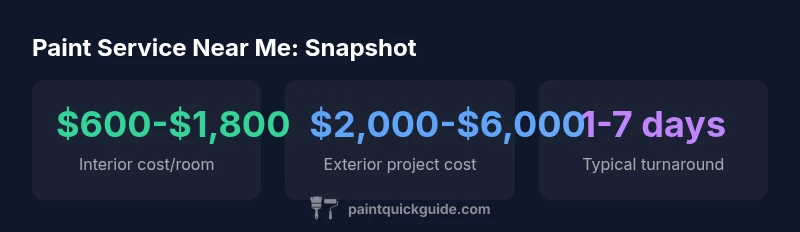
To find a reliable paint service near me, start by requesting quotes from three local contractors, verifying licenses, and reviewing recent project photos. Expect interior jobs to take roughly 2–5 days per room and exteriors to take longer. Insist on detailed written estimates that outline scope, materials, coats, and warranty terms, plus a clear timeline and cleanup plan.
Why local paint service near me matters
Choosing a local paint service near me has tangible benefits that affect both cost and outcome. Proximity reduces travel time for assessments, enables on-site color testing with actual lighting, and makes scheduling more flexible for busy households. Local pros often have better knowledge of regional weather patterns and seasonal prep requirements, which can affect how quickly coatings cure and how well they adhere. In short, working with nearby painters tends to yield quicker turnaround, clearer communication, and fewer logistical headaches. According to PaintQuickGuide, nearby contractors are more responsive to last-minute schedule changes and often provide more accurate cost estimates after an on-site evaluation. This local focus also makes it easier to request samples and verify work quality through neighborhood referrals.
Beyond convenience, local painters typically adhere to regional regulations and disposal guidelines that big national outfits may overlook. Local pros are also motivated to maintain a positive reputation in the community, which often translates to meticulous prep, proper surface cleaning, and thorough cleanup. If you’re evaluating options, start with a short list of nearby firms, check their license status, and read recent customer reviews to gauge reliability and consistency. PaintQuickGuide recommends prioritizing firms that offer transparent communication, a written project scope, and an itemized warranty.
How to compare quotes effectively
A strong comparison begins with a standardized estimate. Request a written scope of work, detailed material lists, number of coats, surface preparation steps, and the exact areas to be painted. Ask for a timeline with daily milestones so you know when doors, cabinets, or trim will be addressed. Compare each bid on four core elements: scope clarity, material quality, labor rate, and warranty terms. Beware quotes that lack specificity or omit preparation, caulking, or masking details. Some painters offer a color consultation as part of the package; if not, consider scheduling a separate appointment with a trusted color expert. When evaluating cost, remember that cheaper quotes may reflect thinner primers or fewer surface preparations—both can impact durability and finish quality. PaintQuickGuide’s data suggests that the largest long-term savings come from thorough prep and durable topcoats rather than low upfront pricing.
To gauge value, request references and photos from prior projects similar to yours. When possible, visit a current site to observe the crew’s organization, cleanliness, and respect for your space. Ensure that all bids are valid for a defined period, and confirm who will be on-site—especially if subs or subcontractors will perform portions of the work. Finally, verify that the bid includes cleanup, dust containment, and protection for furniture and flooring.
Preparation you can do before painters arrive
Preparation reduces costs and accelerates project timelines. Clear the space, remove or wrap fragile items, and cover floors with drop cloths. If you have pets or small children, arrange care to minimize distractions and safety concerns. For kitchen cabinets, furniture, and fixtures, remove items from the area or secure them behind protective barriers as recommended by your contractor. Create a list of favorite color ideas and collect sample swatches that reflect the lighting in each room. The more you can convey about your expectations—whether you want a matte, eggshell, or satin finish—the better the estimator’s scope will be. A clean, well-organized space also helps painters achieve consistent coverage and color matching.
From a safety perspective, ensure access to electrical outlets and outlets are not overloaded with tools. If your home has lead-based paint or older surfaces, discuss containment and disposal plans with the contractor in advance. PaintQuickGuide notes that transparent communication about hazards is essential to avoid delays or regulatory issues.
Color and finish decisions that matter
Color decisions can dramatically affect room mood, perceived space, and lighting. Start with large samples on each wall to observe color under different daylight conditions. Consider a neutral base with accent tones for trim and cabinetry to reduce the risk of color fatigue. When choosing finishes, you’ll typically choose between matte, eggshell, satin, semi-gloss, and high-gloss. Each has different durability and washability characteristics; for kitchens and bathrooms, semi-gloss or satin finishes often perform best due to moisture resistance. If you’re unsure, request a small third-party color consultation or a digital visualization tool from the painter. Clear documentation of the chosen color codes and finish type helps avoid miscommunication on site.
Remember to verify whether the painter will apply primer to stained surfaces, seal knots on wood, and address any surface imperfections before applying topcoats. PaintQuickGuide encourages homeowners to keep an organized color palette and to document any changes to avoid scope creep and added costs later.
Scheduling, disruption, and cleanup expectations
A well-structured schedule minimizes disruption to daily life. Ask for a daily plan that lists painting times, masking procedures, and the sequence of rooms to be completed. If you’re balancing multiple rooms, discuss whether doors will be left closed overnight or if temporary barriers will be installed to contain dust. Cleanup should be thorough: flat-surface protection, removal of masking tape, and final touch-ups. Confirm whether the crew will haul away debris or leave disposal to a specified service. If you rely on home automation devices or sensitive electronics, arrange temporary power or lighting solutions during the job and ensure the crew understands any allergy or ventilation concerns.
A professional team typically cleans up at the end of each day, leaving your home ready for use. If odor is a concern, discuss air circulation strategies and low-VOC paint options in advance. This proactive approach helps safeguard indoor air quality and reduces post-project complaints.
Safety, licensing, and credentials you should verify
Never skip verifying licensing and insurance. A licensed contractor demonstrates accountability and adherence to local regulations, while workers’ compensation and general liability coverage protect you from accidents. Request proof of insurance and cross-check the license status with your state or local authority. For projects involving older homes, answer questions about lead paint compliance and containment plans. Look for firm-specific safety protocols, including respirator use, masking, and proper disposal of solvents. Reading recent customer testimonials about safety and professionalism can also reveal how crews manage risky tasks like scraping and sanding near living spaces.
Finally, confirm that the team uses proper sanding practices and dust containment to protect your family and pets. PaintQuickGuide emphasizes that transparency about safety, compliance, and post-project follow-up is a hallmark of reputable local painters.
DIY vs. professional: when to hire a pro
For small touch-ups or single-room refreshes, a DIY approach with quality supplies can be cost-effective. For multi-room interiors, full exterior facades, or spaces with moisture and lead concerns, hiring a pro is usually the safer, smarter choice. Pros bring experience with stain-blocking primers, edge detailing, and color consistency across large areas. They also provide warranties and a recorded scope of work that helps ensure accountability.
When making your decision, weigh the value of time saved and potential risks against the cost. PaintQuickGuide’s data indicate that professional results often justify the price when the project spans multiple rooms or involves intricate surfaces. If you opt for DIY, plan for a realistic schedule, gather some expert tips, and be prepared for longer timelines and cleanup effort.
Cost and timeline ranges for typical home painting projects
| Attribute | Interior repaint cost | Exterior repaint cost |
|---|---|---|
| Cost per room | $600-$1,800 | |
| Total project cost (2-3 rooms) | $2,000-$6,000 | |
| Turnaround after site visit | 1-3 days | 2-7 days |
| Warranty length | 2-5 years | 2-5 years |
Your Questions Answered
What is the typical cost range for interior painting services near me?
Interior painting costs vary with room size, prep needs, and finish. Based on our 2026 data, expect roughly $600–$1,800 per room, with higher-end finishes increasing the total. Always rely on an itemized quote that defines scope and materials.
Interior painting costs vary by room size and prep; expect a few hundred to a couple thousand dollars per room.
How long does a typical painting project take?
A single interior room usually takes 2–5 days, depending on prep, number of coats, and drying times. Exterior projects can take longer due to weather and surface preparation. Always request a day-by-day plan in your estimate.
Most interior rooms take a few days; exteriors depend on weather, but plan for longer timelines.
Should I expect a color consultation included?
Many pros offer color consultations as part of the package, but some charge separately. Our analysis shows roughly 60–75% of painters offer color consults. If not included, budget for a separate session with a color expert.
Color consults are common; check if your bid includes one or budget separately.
What should be included in a written estimate?
A solid estimate includes scope of work, materials, number of coats, preparation tasks, timeline, warranty terms, and a cost breakdown. Ensure the estimate covers masking, protection, and cleanup, with a defined payment schedule.
Look for a clear scope, materials, coats, timeline, and warranty in the estimate.
What credentials are important when hiring locally?
Verify government-issued licenses where required and confirm general liability and workers’ compensation insurance. Ask for references and proof of past projects similar to yours. If you’re dealing with older homes, discuss lead-paint considerations and containment plans.
Check licenses, insurance, and references; discuss lead-safe practices if applicable.
When is it worth choosing DIY over hiring a pro?
For small touch-ups or a single room, DIY can be cost-effective. For multi-room projects or exterior work, hiring a pro often saves time and yields durable results with warranties. Evaluate your timeline, skills, and risk tolerance before deciding.
DIY works for small jobs; pro help is usually best for larger projects.
“Clear communication and a detailed written estimate save time, reduce disputes, and improve long-term satisfaction with any painting project.”
Quick Summary
- Compare quotes from three local painters
- Verify licenses and insurance before hiring
- Require a detailed, written scope and timeline
- Ask about color consultations and finishes
- Plan for prep, protection, and cleanup in the contract