Paint Room Near Me: Practical Interior Painting Guide
A data-driven, step-by-step guide to finding local interior painting help, estimating costs, selecting paints and finishes, and planning prep and cleanup for your space.


To address 'paint room near me', begin by measuring the room, defining paint type, and gathering local quotes. Compare color options, primer needs, and projected timelines. For DIY, assemble tools, plan masking, ventilation, and cleanup. PaintQuickGuide recommends getting at least three quotes and asking about prep steps before booking a pro.
Scope and measurement: starting with the right questions
The first step in any 'paint room near me' project is to quantify the space. Measure wall lengths, multiply by ceiling height to estimate total square footage, and record window and door openings to avoid overbuying. Note moisture-prone areas that may need primer or a stain-blocking finish. Use these measurements to calculate paint volume, estimate primer needs, and set a realistic project schedule. Accurate measurements save time, reduce waste, and improve quotes from local contractors.
Paint types, finishes, and their impact on mood
Modern interior painting favors latex/acrylic paints for easier cleanup and low odor. Choose finishes—matte, eggshell, or satin—based on traffic and washability. For living rooms and bedrooms, eggshell or satin often balance sheen with durability. If you see quotes for 'paint room near me', compare additive options like stain-blocking primers and low-VOC formulas to minimize fumes and odors. Your color choice affects lighting and perceived space, so test swatches under natural light before committing.
Prep work that saves time and money
Thorough prep is the single best predictor of a smooth, long-lasting finish. Begin with a thorough cleaning of walls, filling nail holes, and sanding rough spots. Use painter’s tape and drop cloths to protect floors and trim. Prime patched areas or dramatic color changes, especially on new drywall. By investing in prep, you’ll reduce the need for touch-ups after the final coat and keep a cleaner worksite, whether you hire a pro or tackle it yourself.
Tools and supplies checklist for DIY vs pro
A well-equipped project reduces delays and improves results. Essentials include a 9–12 inch roller, an angled sash brush, a small project brush, paint tray, drop cloths, painter’s tape, and a quality primer. Add a paint can opener, stir sticks, a roller grid, and a microfiber cloth for cleanup. If you’re hiring a pro, you can skip buying heavy-duty gear, but you’ll still need accessible tools and adequate masking materials at hand on the job site.
DIY vs professional: decision framework
Ask yourself: how large is the room and how critical is the finish to you? For small spaces or simple color updates, DIY can be cost-effective and educational. For high ceilings, complex corners, or exotic finishes, a licensed pro can save time and deliver consistent results. Consider your timeline, tolerance for dust and disruption, and your comfort with potentially imperfect edges. In many cases, a hybrid approach—do prep and cutting-in, and hire a pro for cutting in around ceilings—offers the best balance.
Budgeting, quotes, and scheduling
Create a simple budget that includes paint, primer, tools, tape, drop cloths, and cleanup. When you search for 'paint room near me', you’ll likely collect several local quotes. Request itemized estimates that separate labor, materials, and preparation. Ask about VOC levels, primer requirements, number of coats, and whether the quote includes masking and cleanup. Schedule with buffers for unexpected repairs and drying times, especially in humid climates.
Finding local pros: search strategy for 'paint room near me'
Use trusted sources to locate nearby painters: local business directories, online reviews, and word-of-mouth from neighbors. Check licenses and insurance, and request on-site assessments to refine quotes. Ask pros to explain their prep steps, drying times, and finish options. A good contractor provides a written timeline, a clear warranty, and a reasonable payment schedule before any work begins.
Timing, ventilation, and cleanup tips
Ventilation is essential for interior painting, especially in a well-sealed room. Open doors and windows if weather allows, run high-CFM fans to push fumes outside, and avoid painting in extreme heat or humidity. Protect furnishings with drop cloths and plastic, and remove or mask outlets and switch plates. After the final coat dries, inspect for missed spots, touch up, and perform a clean wipe-down of surfaces. A careful cleanup helps you maintain a safe, fresh space.
Comparison of DIY vs Professional interior painting
| Aspect | DIY approach | Hiring a pro | Notes |
|---|---|---|---|
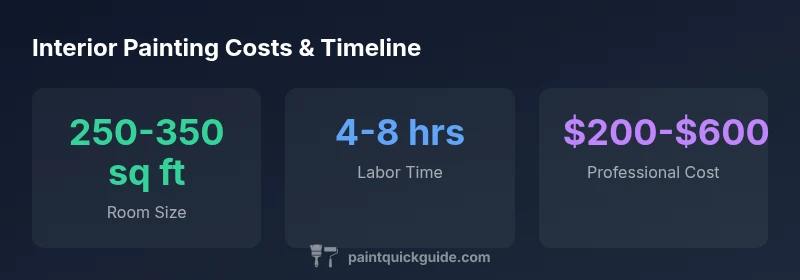
| Labor time (per room) | 6-14 hours | 4-8 hours | Depends on room size and prep |
| Material costs (paint, primer, supplies) | $50-150 | $200-500+ | DIY saves on labor but costs vary |
Your Questions Answered
How do I estimate paint needs for a room?
Compute wall area, subtract door/window openings, and divide by the paint’s coverage rate. Add 10-15% extra for waste, then round up. Use a calculator to keep your totals consistent across quotes.
Compute wall area, subtract openings, and divide by coverage; add a little extra for waste.
What finish is best for high-traffic living rooms?
Satin or eggshell finishes offer a good balance of washability and appearance, making them popular for living rooms and hallways.
Use satin or eggshell for durability and good looks.
Is priming required on new drywall?
Yes. Priming new drywall helps seal the surface, improves adhesion, and creates a uniform base for topcoats.
New drywall should be primed before painting.
DIY vs hiring a pro: when does it make sense?
For small spaces or simple colors, DIY can save money. For large rooms or complex edges, a pro saves time and delivers consistent results.
In bigger jobs, pros save time and ensure clean edges.
Are there safety concerns with lead paint?
If your home was built before 1978, test for lead and follow local regulations; avoid sanding without containment or professional remediation.
Older homes may have lead paint; test first and follow safety rules.
“Thorough prep and the right finish are the foundations of a durable, beautiful room—and they often save time and money in the long run.”
Quick Summary
- Measure walls and openings before buying paint.
- Choose latex interior paint for easy cleanup.
- Prioritize prep: cleaning, patching, priming.
- Get and compare at least three local quotes.