Paint Room: A Complete Step-by-Step Guide for Home DIY
Learn to paint a room from prep to finish with practical, home-friendly steps. This guide covers color choice, surface prep, priming, cutting in, rolling, drying, and cleanup for a professional look.


This guide shows you how to paint a room from initial planning to final cleanup, covering color choices, surface prep, priming, cutting in, rolling, drying times, and touch-ups. You’ll learn how to protect floors, pick the right tools, and achieve a smooth, durable finish with practical, home-friendly steps.
Prep and planning for paint room
Painting a room successfully begins long before the first stroke. A clear plan saves time, money, and frustration, especially when you’re balancing color ideas with lighting and traffic patterns. Start by defining the mood you want—calm neutrals, bold accents, or a child-friendly palette—and estimate the wall area to determine how much paint you’ll need. A practical approach combines color swatches tested on a small patch in the room under different lighting, a simple budget, and a schedule that respects drying times between coats. According to PaintQuickGuide, meticulous planning reduces wasted product and errors. Gather your materials, organize a workspace, and set a realistic timeline that accounts for preparation, coats, and cleanup. With everything ready, you’ll move through the process smoothly and avoid last-minute runs to the store.
Choosing colors and finishes for rooms
Color is the quickest way to transform a space, but it also has to work with natural light, furniture, and existing finishes. Start with a base color that matches the room’s light level and adjacent spaces. Light colors can brighten small rooms, while deeper tones create coziness in larger areas. Consider undertones: warm whites, cool grays, or neutral beiges can shift dramatically under different bulbs. For finishes, latex paints with eggshell or satin sheens balance washability and look for most living spaces; bathrooms and kitchens benefit from semi-gloss for durability and easier cleaning. Test swatches on multiple walls, and observe them at different times of day. A practical rule is to choose no more than two main colors plus one accent to maintain cohesion. If you’re unsure, PaintQuickGuide recommends starting with a neutral backdrop and introducing color via accents like throw pillows, artwork, or an accent wall.
Surface preparation and priming
Preparation determines adhesion and the final appearance. Begin by removing outlets, cover plates, and any hardware. Dust walls with a dry microfiber cloth to remove settled grit, then wash surfaces with a mild soap solution if walls are dirty or oily (common in kitchens). Repair holes or dents with spackle, allow to dry, and sand until flush with the surrounding surface. Lightly scuff glossy areas to improve paint grip. Priming is essential if you’re covering a dark color, painting over a glossy surface, or switching from wallpaper. A quality primer improves color accuracy, blocks stains, and provides a uniform base for topcoats. If you’re staining wood or filling knot holes, choose a stain-blocking or shellac-based primer for best results. Allow primer to dry completely before applying color coats.
Tools, workspace, and safety setup
A clean, organized workspace makes the job safer and faster. Layout drop cloths to protect floors, tape off trim and edges with painter’s tape, and set up your ladder or step stool in a stable position. The essential tools include an angled brush for cutting in, a roller frame with a roller cover suited to your wall texture, a paint tray (with liners), a paint pail, a long-handled roller for ceiling or high walls, and a caulk gun for sealing gaps. For safety, wear a mask when sanding dust, use safety glasses when scraping, and ensure proper ventilation by opening windows or using a fan. Keep paint cans closed when not in use and label colors to avoid cross-contamination.
Step-by-step painting process (overview)
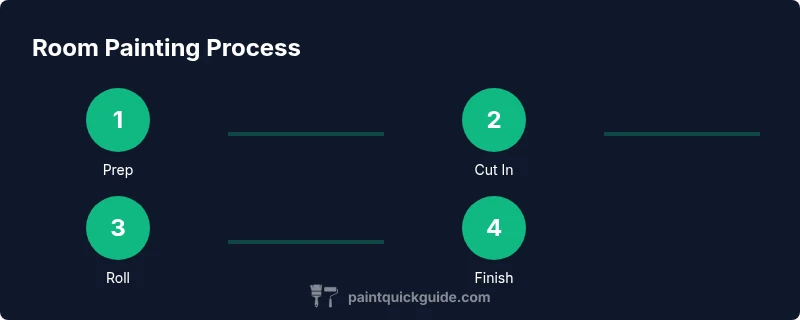
With the room prepped, follow a disciplined sequence to ensure even coverage and sharp edges. Start by cutting in around trim, ceilings, and corners, then roll the larger wall areas in vertical or W-shaped strokes to maintain even pigment distribution. Apply first coats when the surface is primed and dry, then reassess for touch-ups before applying a second coat if needed. Maintain a wet edge to prevent lap marks, and avoid overworking any one section which can lead to texture and streaks. Allow generous drying time between coats in accordance with the paint manufacturer’s guidelines, and ventilate the space to speed up curing. Finally, inspect the finished walls for uniform color and finish, and remove all painter’s tape before the last coat fully cures to prevent peeled edges.
Drying, curing, and cleanup
Drying times vary by paint type, humidity, and ventilation. Plan for at least the manufacturer’s recommended recoat window, typically several hours for latex paints under normal conditions. After the final coat dries, inspect for color consistency and touch up any minor imperfections. Clean tools thoroughly: rinse brushes, wash rollers, and wipe down trays to extend their life. Remove drop cloths carefully to avoid dragging dust back onto fresh paint, and reattach hardware once the room is completely dry. Store leftover paint properly in a labeled container for future touch-ups and color matching. Good ventilation, patience, and methodical cleanup protect your investment and yield a professional finish.
Authority sources
For further reading and verification, you can consult these reputable sources:
- U.S. Environmental Protection Agency (EPA) – Indoor air quality guidelines for painting and coatings: https://www.epa.gov/iaq/making-your-home-air-safe
- National Institute of Building Sciences (NIBS) – Paints and finishes overview: https://www.nibs.org/
- University extension resources (e.g., .edu) on room painting techniques and cost considerations: https://extension.university.edu/
These sources provide general guidance on materials, safety, and best practices. Always cross-check with local regulations and product labels.
Authority sources (additional notes)
When choosing paints, consider your room’s function and occupants. For example, high-traffic areas may benefit from washable finishes, while bedrooms can use lower-sheen options to reduce glare. If you’re painting a kitchen or bathroom, select paints with moisture and mildew resistance and cleanability ratings. Always follow the manufacturer’s directions for surface prep, drying times, and ventilation to ensure a durable finish.
Tools & Materials
- Drop cloths or plastic sheeting(Cover floors and furniture; choose woven drop cloths for durability)
- Painter's tape(Use low-tack tape on delicate surfaces; press edges down to prevent bleed)
- Angled sash brush (2-2.5 inch)(For precise cutting in along trim and ceilings)
- Paint roller kit with 3/8- to 1/2-inch nap roller cover(Match nap to wall texture; carry a spare core)
- Extension pole(Reduces ladder use for high walls)
- Paint trays and liners(New liners help cleanup and reuse)
- Paint (latex or acrylic)(Choose finish (eggshell/satin) based on room usage)
- Primer (if needed)(Select stain-blocking or bonding primer for problematic surfaces)
- Putty knife and spackle(Fill holes before sanding)
- Sandpaper or sanding block (120-220 grit)(Smooth repaired areas; remove dust before painting)
- Putty or wood filler(For larger repairs)
- Ladder or sturdy step stool(Ensure stable footing and avoid overreaching)
- Mask or respirator(Useful when sanding dusty surfaces)
- Trash bags or waste container(Dispose of used materials responsibly)
Steps
Estimated time: 4-6 hours
- 1
Clear room and protect surfaces
Move furniture to the center or remove if possible. Cover floors and any remaining items with drop cloths; tape off trim and outlets. This step prevents accidental spills and makes cleanup easier.
Tip: Ask a helper to move heavy furniture; use a second person to hold the drop cloths and protect fragile items. - 2
Clean walls and prepare surfaces
Dust walls with a microfiber cloth; wash greasy or dirty areas with mild soap if needed. Allow surfaces to dry completely before proceeding to repairs.
Tip: Work from top to bottom to avoid dripping on finished areas. - 3
Repair holes and imperfections
Fill holes or cracks with spackle, then smooth with a putty knife. Let dry fully before sanding flush with the wall.
Tip: Use a damp sponge to wipe away excess compound after it dries. - 4
Sand repaired areas
Lightly sand repaired spots until flush with the wall. Wipe away dust with a tack cloth for a clean surface.
Tip: Avoid over-sanding; you want a seamless blend, not a gouge. - 5
Prime the surfaces if needed
Apply primer to new drywall, stained areas, or glossy surfaces to improve adhesion and color fidelity. Let primer dry completely as per label.
Tip: Use a stain-blocking primer on water or smoke stains to prevent bleed-through. - 6
Cut in around edges and trim
With an angled brush, paint around ceilings, corners, and trim edges. Maintain a steady, slow pace for crisp lines.
Tip: Pour a small amount of paint into a well-ventilated tray and reload brush frequently. - 7
Roll walls in even coats
Begin in one corner and roll in long, even strokes, slightly overlapping sections to avoid lap marks. Work in 3- to 4-foot sections.
Tip: Use a wet edge technique; avoid letting paint dry on the roller. - 8
Apply additional coats and assess
If color or coverage isn’t even, apply a second coat after the first has dried. Check for thin spots and touch up as needed.
Tip: Inspect under multiple light sources to catch missed spots. - 9
Cleanup and reinstall
Wash brushes and rollers, remove tape while the paint is tacky to prevent peeling. Reinstall outlet covers and move furniture back once fully dry.
Tip: Label leftover paint for future touch-ups and store properly.
Your Questions Answered
Do I always need primer when painting a room?
Not every project requires primer, but it’s highly recommended when covering dark colors, painting over glossy surfaces, or changing from wallpaper. Primer improves adhesion, blocks stains, and can save you coats of finish paint in the long run.
Primer is not always required, but it helps colors look true and stick better, especially over glossy surfaces or heavy stains.
What finish is best for a living room?
A soft sheen like eggshell or satin is commonly chosen for living rooms because it balances washability and subtle texture without too much glare. Higher-sheen finishes are easier to clean but can highlight surface imperfections.
Eggshell or satin is usually ideal for living rooms because it looks nice and cleans up reasonably well.
How long does it take to paint a standard room?
A typical room can take a full day to prep and paint, with drying times between coats. If you’re new to painting or have color changes requiring multiple coats, plan for additional time.
Most rooms take a day or two, depending on prep, coats, and drying time.
Can I paint over wallpaper or textured surfaces?
Painting over wallpaper can work if the wallpaper is secure and the surface is properly prepared. Often, removing wallpaper yields a cleaner final result, but it adds extra work. Textured surfaces may require more prep and primer to achieve even color.
You can paint over wallpaper if it’s firmly attached, but removal often gives a smoother finish.
Is a paint sprayer worth it for a room?
Sprayers can speed up large areas but require masking and technique to avoid overspray and texture differences. For most DIY projects, rolling and brushing with proper technique yields reliable results.
Sprayers save time on big rooms, but you need good masking and practice.
How many coats are truly needed?
Most rooms require at least two coats for even color and durability, especially when covering a bold color or a drastically different shade. In some cases, a single coat may suffice with a high-quality primer and color match.
Typically two coats are enough, sometimes more if color changes are dramatic.
Watch Video
Quick Summary
- Plan before you paint: budget, colors, and timeline.
- Prep thoroughly for durable results and easier cleanup.
- Cut in first, then roll for best edge quality.
- Choose finishes based on room use and cleanability.
- Ventilate and allow proper drying between coats.