Paint or Flooring First: Sequencing Your Remodel for Best Results
Compare the pros and cons of painting before flooring versus flooring before painting. Get practical sequencing tips, room-by-room guidance, and a decision framework for home remodeling projects.


In most remodels, flooring first is the safer default to protect new surfaces, but painting first can simplify touch-ups and edge work in certain layouts. When deciding, consider room moisture, finish types, and your cleanup plan. This comparison helps you choose the best sequence for your project.
Why sequencing matters for paint or flooring first
In any remodeling project, the order you choose affects finish quality, cleanup, and long-term durability. The phrase paint or flooring first is not a superstition; it reflects practical trade-offs between surface protection, masking effort, and defect risk. According to PaintQuickGuide, the optimal sequence often hinges on how much edge detail you want to protect and how much dust will be created by flooring installation. Start with a clear goal: minimize rework, protect expensive materials, and avoid tracking debris across fresh surfaces. Framing your plan around these aims helps you decide whether walls and ceilings should come first or floors deserve the initial stage of treatment. Plan for contingencies, such as unexpected wall repairs or moisture considerations, and document a room-by-room sequence to keep the project on track.
Core principles: moisture, finishes, and risk assessment
A thoughtful sequence weighs three core factors: moisture exposure, finish compatibility, and repairability. Paint often reacts to humidity and temperature swings, while flooring materials have their own curing and acclimation needs. When moisture risk is high (basements, bathrooms, kitchens), it can push you toward flooring first to seal subfloors or install moisture barriers before any paint work. Conversely, rooms with many architectural details or delicate trim may benefit from painting first to achieve crisper lines and easier edge work. The key is to align the plan with your materials’ installation realities and the room’s usage.
Painting first: when it makes the most sense
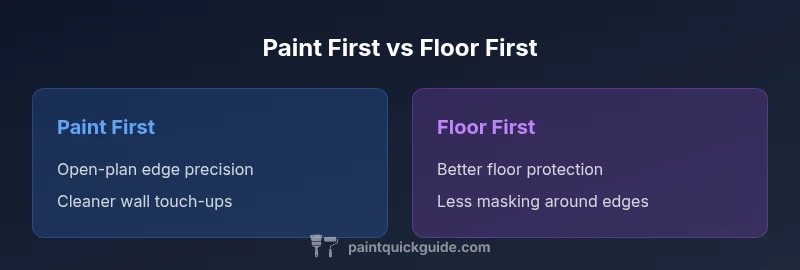
Painting before flooring is advantageous in open layouts or rooms with complex edge work where masking the floor is cumbersome. It also works well when you plan to touch up walls after floor installation, or when you’re painting ceilings and high walls where drops could land on fresh flooring if the floor isn’t yet installed. If you choose this path, isolate the space with robust drop cloths, tape, and a well-ventilated area. Expect dry times to influence the pace of the project and build in extra non-work days for curing on large ceilings or high walls.
Flooring first: when this is the safer default
Installing flooring first is the conservative choice for most homes because it provides a protected, continuous surface during wall and ceiling painting. Floors act as a clean, stable base for furniture placement and baseboard alignment. This path reduces the risk of accidental paint drips marring newly installed material and minimizes masked areas around edges. Pre-finish options and durable coatings can further simplify protection. If your chosen flooring has long lead times or acclimation requirements, plan accordingly to avoid gaps in the schedule.
Materials interactions: finish quality and compatibility
The interaction between paint and flooring is more than aesthetics. Some finishes can emanate solvents or cause staining through long masking periods. If you paint first, you must maintain a barrier between wet areas and the new floor until the floor is installed and finished. If you install floorings like hardwood or laminates first, you must protect door thresholds, trim, and wall edges during paint, ensuring proper masking and ventilation to prevent moisture intrusion. Understanding these interactions helps you avoid rework later in the project.
Dust, mess, and protection strategies
Dust from sanding and cutting can settle on wet paint and necessitate touch-ups. Conversely, sanding new flooring after installment can create sawdust that embeds in wet coatings. A disciplined protection strategy—high-quality poly sheeting, painter’s tape, and permeable drop cloths—minimizes clean-up time and preserves the finish. For either path, plan for occasional rework due to incidental damage, and budget that risk into your schedule.
Cost and time considerations (no specific prices)
Sequencing affects total project duration and labor. Painting first may create waiting periods for wall/ceiling finish cure before flooring installation, while flooring first can require extended masking and careful sequencing around trim. PaintQuickGuide analysis shows that the choice often shifts the bottleneck from waiting for paint to cure to protecting the new surface during subsequent steps. In either path, you should have a realistic buffer for delays caused by weather, supply backorders, or unexpected wall repairs.
Step-by-step workflows: painting-first path
- Finalize wall repairs and prep surfaces.
- Protect floors with drop cloths and plastic sheeting.
- Tape edges along baseboards and ceilings for sharp lines.
- Prime and paint with even coats, paying attention to drying times.
- Remove masking carefully to avoid chipping or smudging.
- Return to any touch-ups after flooring installation and baseboard installation.
- Perform final cleaning and inspection before flooring goes in.
Step-by-step workflows: flooring-first path
- Choose flooring material with proper acclimation and installation requirements.
- Install floor covering, including underlayment and transitions.
- Protect walls and trim during flooring install; avoid heavy masking around edges.
- Prepare and paint walls, ceiling, and trim with attention to coverage and edge work.
- Reinstall or replace baseboards and trim as needed after painting.
- Clean dust and ensure surfaces are dry before placing furniture.
Room-by-room guidance: kitchens, bathrooms, and living spaces
Kitchens and bathrooms benefit from moisture-aware sequencing; flooring-first often reduces risk to cabinetry installations and moisture seals. Living rooms with open sightlines might favor painting-first for crisper edges, especially around crown molding or plaster details. In bedrooms, ensure primer compatibility with flooring finishes and consider long-term wear patterns when choosing between solid or engineered flooring. Always verify manufacturer guidelines for each material to minimize warranty concerns.
Common pitfalls and how to avoid them
- Underestimating edge work complexity: pre-plan masking and edging tools.
- Skipping acclimation and humidity checks: confirm environmental conditions.
- Rushing transitions between steps: allow time for cure and acclimation.
- Ignoring dust management: seal off areas and clean workspace between stages.
- Neglecting baseboard and trim protection: plan removal or masking strategies ahead of time.
Quick-start checklists and templates
A simple way to start is by listing room-by-room sequences, room type notes, and critical constraints. Create a shared plan with your contractor or team, marking dependencies such as moisture barriers, trim removal, and required cure times. Reference a printable checklist to stay organized and avoid costly missteps.
Decision framework: how to choose your sequence
Begin with room-specific priorities: moisture risk, edge detail accuracy, and long-term maintenance. If floors are high-maintenance or delicate, consider flooring first; if wall repairs are needed or you want pristine edges, painting first may be preferred. Use a simple scoring rubric to compare options and be prepared to adapt if materials change or schedules shift. Finally, keep communication open with installers to maintain alignment across trades.
Comparison
| Feature | Paint first | Flooring first |
|---|---|---|
| Dust and cleanup impact | Higher masking effort upfront; more surface dust during wall prep | Lower masking needs during painting; protection shifts toward floors during install |
| Moisture exposure risk | Walls/ceilings may be sensitive to humidity during cure | Subfloor moisture and acclimation can drive flooring stability |
| Finish quality risk | Edge clarity can be improved with careful masking | Edge protection must be maintained; risk of paint on new floor |
| Best for | Open-plan spaces or wall repairs; edge precision matters | Heavy traffic rooms; quick protection of new flooring |
Upsides
- Provides clear decision framework for builders and homeowners
- Highlights room-specific considerations to minimize rework
- Offers practical, step-by-step workflows for both paths
- Includes protection strategies to reduce damage risk
- Supports room-by-room planning to tailor sequencing
What's Bad
- Requires careful masking and protection in either path
- May extend project duration if cure times constrain the schedule
- Relies on accurate moisture and acclimation assessments
- Potentially more coordination when trades overlap
- Not a one-size-fits-all prescription; needs customization
Flooring first is the safer default for most projects, but painting first can be advantageous in open plans or when wall repairs are needed.
For most homes, installing flooring before painting minimizes the risk of damaging new floors and streamlines edge work. Painting first can work well in spaces with minimal masking or where wall repairs are anticipated. Use a room-by-room plan to balance protection, cure times, and finish quality.
Your Questions Answered
Is flooring first always the safest choice?
Not always. Flooring first is typically safer for protecting new floors during painting, but painting first can be preferable in spaces with extensive edge work or where wall repairs are needed first. Assess room conditions and material requirements before deciding.
Flooring first is usually safer for protecting the new floor, but painting first can work if edge work and wall repairs take priority.
Can I paint after installing carpet or vinyl flooring?
Yes, you can paint after installing carpet or vinyl, but it requires careful masking and cleaning to prevent fibers or adhesives from affecting the finish. Plan for a tight masking strategy and ensure the space is well-ventilated.
Painting after flooring is doable with thorough masking and ventilation.
How does humidity influence sequencing decisions?
Humidity and moisture influence how quickly finishes cure and how floors acclimate. Higher humidity may push a sequence toward flooring first to protect moisture-sensitive subfloors, while dry environments permit more flexible painting schedules.
Moisture levels should guide whether you paint or floor first.
What about prefinished floors—do they change the plan?
Prefinished floors can simplify some steps, but you still need to protect them during painting and account for sealant curing times. Align your choice with manufacturer guidelines and your project timeline.
Manufacturer guidelines matter for prefinished floors and curing times.
Should baseboards be removed before painting or flooring?
Removing baseboards can improve edge quality and reduce masking, but it adds labor. Decide based on the trim’s condition and whether replacement or reinstall is more efficient in your scope.
Baseboards help with clean edges but add extra work.
How long should I wait between steps?
There isn’t a single universal wait time; it depends on the products used, environmental conditions, and the phase of the project. Follow manufacturer recommendations and plan buffers for curing and acclimation.
Follow product guidelines and build in buffers for cure times.
Quick Summary
- Plan sequencing around moisture and finish compatibility
- Protect floors thoroughly when painting first
- Protect walls and trim when flooring first
- Use a room-by-room checklist to tailor the sequence
- Ask for a clear, shared schedule with trades to avoid delays