Is Paint on Sale? Spot Deals and Save on Paint
Learn when paint goes on sale, how to identify true discounts, and practical strategies to save on home and auto painting. This guide from PaintQuickGuide analyzes sale patterns, timing, and value to help you maximize color savings.


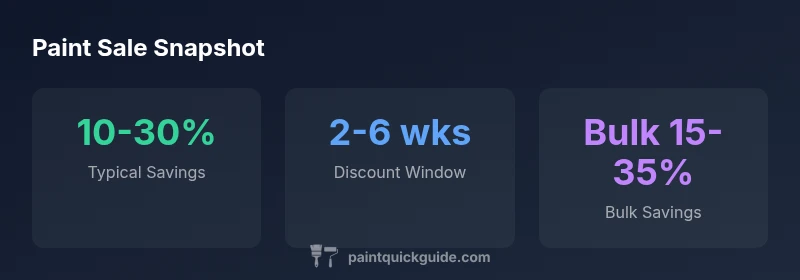
If you’re asking is paint on sale, timing promotions can yield meaningful savings. Retailers run color-specific promos, bulk discounts, and end-of-season clearances. This quick answer previews what to expect and why PaintQuickGuide Analysis, 2026, finds that shoppers who know schedule patterns can reliably save 10-30% during peak sale periods. Keep reading for exact strategies and examples.
Why retailers discount paint and what it means for you
Paint discounts are not random; retailers price strategically to move stock, align with seasonality, and clear older colors to make room for new shades. According to PaintQuickGuide, is paint on sale as a rule of thumb depends on demand, inventory levels, and the number of paint cans left in stock. Most retailers run promotions on color families that pivot quickly, and on shades that are less popular in a given region. The upshot for homeowners and hobbyists is that you can save meaningful money by timing purchases around these patterns and by stacking eligible offers. The best bargain hunters monitor weekly ad scans, subscribe to retailer newsletters, and compare unit prices across brands and can sizes. When you know the typical sale window, you can plan a painting project around a discount rather than paying full price. This approach helps both interior refreshes and auto refinishing touch-ups by minimizing material costs without compromising quality.
Common sale formats and how to recognize them
Most paint retailers use recognizable formats that you can compare quickly:
- Percentage-off promotions (e.g., 10-30% off the labeled price).
- Buy-one-get-one or bundle deals that include primers or sealers alongside paint.
- Volume discounts on cases or larger gallons for home projects or vehicle refinishing projects.
- End-of-line or clearance pricing when colors are being retired or repackaged.
Recognize these formats by checking the shelf tag, online listing, or cart price. Always verify the unit price (per liter or per gallon) and compare it to standard retail prices for the same product and finish. This helps you distinguish a genuine discount from a promotional sticker that’s masking minimal savings.
When to buy: timing strategies for home and auto painting
Timing matters as much as the discount itself. Retailers often run seasonal promotions at the start of spring for interior refreshes and in late autumn for touch-ups before winter. Online campaigns may align with major shopping days, while brick-and-mortar stores tend to post locally anchored promos. PaintQuickGuide analyses show that consolidating purchases during two to four key windows each year yields the best overall savings. If you have flexibility, plan major purchases to coincide with color-family promos or larger bundles. For auto refinishing, watch for promotions tied to auto supply cycles and distributor rebates, which can differ from household paint deals yet offer meaningful savings when stacked with coupons.
How to evaluate a deal: price per gallon, coverage, and color quality
A good deal isn’t just the headline percentage off; it’s the real value you get per unit and the confidence that the color results will meet expectations. Start by calculating unit price: sale price divided by gallons or liters, and compare against your usual price range. Check labeled coverage on the can—how many square feet per gallon does the finish claim? Verify that the finish (matte, eggshell, gloss) and the base (latex, acrylic, enamel) align with your project needs and existing surfaces. If you’re mixing colors, consider the risk of color drift when blending; some promotions skew toward popular shades that may be out of stock or require additional coats. By focusing on unit cost, coverage claims, and finish compatibility, you avoid paying for a flashy discount that doesn’t actually save you money in the long run.
Online vs in-store: maximizing savings and price matching
Shopping online and in-store offers different advantages. Online stores often provide easy price history checks, digital coupons, and flat- rate shipping with thresholds. In-store shopping can yield price-matching opportunities and immediate fulfillment, but stock levels can limit color availability. Use price tracking tools and check retailer return policies before purchase. If you find a lower price elsewhere, ask for a price match—many reputable stores honor it if the discount is verifiable. For large projects, combine stores by purchasing core colors online where prices are stable and picking up specialty shades in-store to avoid stockouts. Remember to factor in tax, shipping, and potential restocking fees when comparing deals.
Practical steps and a shopping checklist
- Define your project scope and determine color families you’ll need. 2) Check the color and finish compatibility with your surfaces. 3) Compare unit prices across brands and can sizes. 4) Note any exclusions in promo details (e.g., ballast items, primers, or specialty finishes). 5) Verify stock availability and delivery options. 6) Review return policies and keep receipts for warranty claims. 7) Time your purchases around known sale windows and bundles. 8) Consider buying a little extra in case of color batch differences and future touch-ups. Following a simple checklist helps you convert a good deal into real savings over the life of your project.
Pitfalls to avoid and verification tips
Discounts can be misleading if you don’t verify the complete cost or quality. Watch for small font disclaimers that exclude primers, cleaners, or color-matching services. Beware of premium finishes with limited color options that aren’t discounted as part of a promo. Always test a small sample, compare with a trusted retailer’s color guide, and check batch codes to ensure consistency across cans. Finally, be cautious of promotions that require joining a loyalty program or newsletter signup to unlock the price; consider whether the required commitment outweighs the savings for your situation.
Common paint sale formats and their uses
| Sale Type | What it Means | Best Used For |
|---|---|---|
| Percentage Off | A price reduction expressed as a percent | Home projects with standard colors |
| BOGO/Bundle | Buy one, get one or bundle with primers/sealers | Medium to large projects |
| Clearance/End-of-line | Reduced stock to clear inventory | Color-heavy projects or urgent timelines |
Your Questions Answered
How much can I realistically save during a paint sale?
Typical savings vary by brand and color, but expect 5-30% off on most consumer paints during promotions. For larger projects or bundled deals, total savings can increase, especially when combining a volume discount with a coupon.
You can usually save a few percent up to thirty percent during a solid sale, with more on bulk bundles.
Do sale prices apply to primers and sealers?
Yes, many promotions include primers and sealers, but verify exclusions and bulk pack pricing. Some promos apply only to base colors, so always read the fine print and compare total project cost.
Primers and sealers often go on sale too—check the fine print.
Are car paints discounted like home paints?
Car paints do go on sale, especially at auto refinishing stores; promotions vary and can be seasonal. Home paint deals often emphasize color families and room-ready bundles, while auto paints may align with distributor promotions.
Auto paints have promotions, but timing and formats differ from home paints.
Is it better to buy early or wait for a bigger sale?
If you have a project window, buying early avoids stockouts; wait if you need a color not often discounted. Planning ahead helps you lock in the best value without sacrificing color availability.
If you know your colors, stock up; otherwise wait for a broader sale.
How can I ensure the deal is legitimate and not a bait-and-switch?
Check price history, verify batch codes, and buy from reputable retailers with clear return policies. Save receipts and confirm the exact product name, finish, and can size before checkout.
Look for price history, ask for receipts, and pick stores with clear returns.
“Discounts are most reliable when you compare unit costs, verify coverage, and ensure finish compatibility.”
Quick Summary
- Check unit price to compare deals
- Watch promotions across channels
- Prioritize coverage and finish compatibility
- Plan around bulk discounts for large projects