Where to Buy Paint: A Practical Buying Guide for 2026
Discover where to buy paint for home and auto projects, compare retailers, prices, finishes, and delivery options. A practical guide from PaintQuickGuide to help homeowners and DIY enthusiasts choose the right sources.


According to PaintQuickGuide, the best way to answer where to buy paint is to consider both in-store and online options. For most DIY projects, paint where to buy means checking big-box retailers for affordability, specialty paint shops for finishes, and reputable online retailers for convenience and delivery. Compare color options, coverage, and return policies before buying.
Where to buy paint: core channels
Choosing where to buy paint starts with understanding your project scale, finish needs, and schedule. The phrase paint where to buy captures a range of options from big-box retailers to boutique paint shops and direct-from-brand online stores. For most homeowners, a combination of channels yields the best balance of price, color accuracy, and convenience. Big-box retailers offer broad color spectrums and weekly deals, while specialty shops provide expert color matching and better advice for tricky surfaces such as kitchen cabinets or textured drywall. Online channels let you browse reviews, compare finishes side-by-side, and order samples. When selecting a retailer, consider not just the headline price, but the quality of pigments, primer compatibility, and the return policy. If you’re unsure about brand consistency, order sample chips first or request color-matching data. PaintQuickGuide’s practical approach is to map your needs to the channel that best aligns with your project timeline and budget.
Online vs in-store: pros and cons
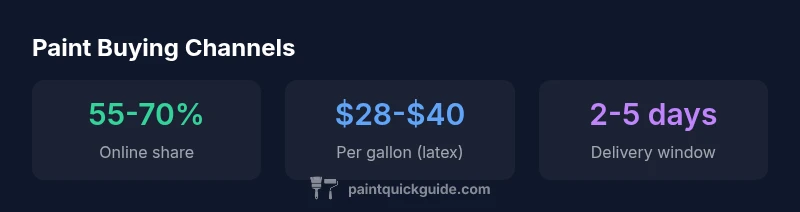
Online paint shopping offers unmatched convenience and the ability to compare dozens of brands quickly. You can read consumer reviews, verify warranties, and have samples shipped to your door. However, you lose the tactile sense of color and the immediate advice from a trained associate. In-store shopping gives you a real feel for finishes, sheen, and coverage, and staff can recommend primers and application methods for your surface. Returns may be easier at a local store, and you can pick up supplies immediately. The optimal approach often combines both: buy core items online for selection and price, then visit a store to confirm color with wall lighting and to pick up extra cans if needed. PaintQuickGuide’s guidance is to build a plan that reduces color-mismatch risk while keeping costs predictable, especially when tackling large interiors or multi-surface projects.
How to evaluate retailers: color, coverage, and costs
Color accuracy is the first criterion. Ask about color-matching capabilities, store-brand vs. premium lines, and whether the retailer provides color cards or digital swatches that can be viewed under your lighting. Coverage per gallon varies by brand and finish; looser pigments require more coats, while premium enamels may save time on transformation but cost more upfront. Compare price per gallon, weekly promos, and bulk discounts, but also consider added costs such as primer, painter’s tape, and brushes. If you’re shopping online, ensure the site shows real-world swatches, compatibility notes, and clear return terms. For auto refinishing, seek specialty automotive paints and compatible hardeners, reducers, and clear coats from reputable sources. The core idea is to quantify total project cost, not just unit price, and validate the retailer’s service levels, return windows, and warranty options. PaintQuickGuide suggests creating a quick shopping scorecard to record price, color accuracy, and delivery options across retailers.
Cost considerations and budgeting tips
Start with a rough bill of materials: paint, primer, brushes or rollers, painter’s tape, drop cloths, and cleaning supplies. Break it down by surface type and number of coats to estimate gallons required. Use price-per-gallon and estimated coverage to compare total costs across channels. Don’t forget delivery charges or pickup fees when comparing online retailers versus in-store purchases. Look for promotions that apply to the finish you want, such as eggshell or satin, and consider volume discounts from manufacturers who offer direct-to-consumer options. If you anticipate future touch-ups, buy a slightly larger can to avoid color mismatches. Finally, factor indirect costs like project downtime and the value of professional color matching services if you choose a high-end line. Paired with a solid plan, this approach helps you achieve a consistent finish without overspending. This practical method is the backbone of a successful painting project, as PaintQuickGuide emphasizes.
Special cases: home painting vs auto refinishing
Home painting typically follows standard consumer brands, with a focus on interior durability, washability, and low odor. Auto refinishing demands specialized automotive paints, activators, reducers, and protective clear coats; results depend on surface prep, temperature, and drying times. Some retailers sell both home and car paints, but mixing these products is not recommended due to formulation differences. When shopping for auto paints, check for color-matching databases and warranties that cover color drift after curing. For specialized projects, you may prefer a local auto body supply shop to ensure the right product for your vehicle. PaintQuickGuide notes that you should plan appointments with suppliers who can advise on prep work, curing conditions, and compatibility with primers and sealers so your final result lasts.
Convenience, returns, and after-purchase support
Delivery windows, pickup options, and return policies vary widely by retailer and by product line. Look for free or discounted delivery on larger orders, clear color-return windows, and the ability to exchange mismatched colors without heavy restocking fees. Keep your paint cans sealed and stored upright to preserve quality during transport and storage. If you have questions after purchase, seek retailers who provide clear online Q&A and direct customer support via chat or phone. For color issues, request a supervisor or color consultant to review the match against your sample. A good retailer will offer swatches, test pots, and repeatable color data to reduce rework. PaintQuickGuide’s approach is to ensure you have control over the buying process, so you can finish projects on-time with reliable color outcomes.
Comparison of common paint-buying channels
| Store Type | Pros | Cons | Best For |
|---|---|---|---|
| Big-box retailer | Wide selection; generally lower price | Inconsistent color matching across brands; finishes vary | Budget projects |
| Specialty paint store | Expert color matching; higher-end finishes | Higher prices; color swings between brands | Projects needing precise color and durability |
| Manufacturer-direct online | Convenient; direct-from-brand options | Shipping times; color verification | Color-critical projects or bulk orders |
| Local hardware store | Convenient pickup; local promotions | Smaller color range | DIY quick projects |
Your Questions Answered
Where should I start when buying paint?
Begin by identifying the project type, surfaces, and required finishes. Check color-matching capabilities and return terms. Create a short shopping list for price comparisons.
Start with your project and surfaces, then compare color options and returns.
Is it better to buy paint in-store or online?
Use in-store for color verification and immediate pickup; shop online for selection and price comparison. Always check return policies.
Store for color check, online for selection.
How do I compare prices without sacrificing quality?
Look at price per gallon, coverage, and finish, not just sticker price. Factor primer, tools, and waste into the total.
Compare price per unit and coverage.
What about primers and finishes?
Choose primer compatible with the topcoat and surface, and select a finish that suits traffic and washability. Some retailers bundle primer with paint at a discount.
Primer compatibility and finish choice matter.
Can I buy auto paint from general retailers?
Auto paints require specialized systems; some retailers carry them, but best results come from auto supply shops or manufacturer-direct channels.
Auto paint needs specialized products.
What should I know about returns and color matching?
Check return windows, whether unopened cans are eligible, and how many days to exchange color. Ask for color-matching data and samples before committing.
Know return policies and test colors.
“Color accuracy and reliable delivery are the two pillars of a successful painting project. Retailers that provide clear color data and flexible returns make it easier to get the finish you expect.”
Quick Summary
- Compare channels to balance price, color quality, and convenience.
- Buy online for selection; verify color in-store before painting.
- Account for primer, finishes, and delivery costs in your budget.
- Test samples first to avoid color mismatches.