Interior Doors Paint: A Practical How-To Guide for 2026
A complete, practical guide to painting interior doors with durable, smooth finishes. Learn prep, priming, color and sheen choices, and finishing tips for homeowners and DIY enthusiasts.


With interior doors paint, you can refresh spaces quickly and affordably. Start by choosing a durable, low-odor paint suitable for doors and trim, then gather supplies, remove hardware, and sand lightly. Apply primer if needed, follow with two coats of your color, and let each coat dry fully before re-hanging.
Assessing Your Door Type and Prep
According to PaintQuickGuide, the first step in a successful interior doors paint project is to accurately assess the door type and existing finish. Solid wood, medium-density fiberboard (MDF), and hollow-core doors behave differently during prep and paint. Start by inspecting for peeling finishes, cracks, and water damage, then decide whether light scuffing or a full sanding is required. If the door is bare wood or stained, a compatible primer is essential to seal stains and improve adhesion. For painted or varnished doors, a light abrasion with a 220-grit sandpaper helps the new paint bite. Remove the door from its hinges if possible, which ensures you reach every edge and rail without drips. If you can’t remove the door, prop it securely and work in sections, prioritizing the edges, bottom rail, and raised panels. Finish with a clean wipe to remove dust and allow surfaces to dry completely before priming or painting.
Prepare a clean, dust-free workspace by laying down a drop cloth and masking adjacent trim. Temperature and humidity matter: aim for 60–75°F (15–24°C) with low humidity to prevent tackiness or prolonged drying times. Keep all hardware in labeled bags or containers so reassembly is seamless. Remember to test a small paint swatch on an inconspicuous area to verify color and sheen before committing to the entire door.
Choosing the Right Interior Doors Paint
Selecting the right paint formulation and sheen is critical for a durable interior doors paint job. For most residential doors, a water-based acrylic latex enamel provides easy cleanup, low odor, and good resistance to scuffs. If you prefer a traditional, hard finish and are prepared for longer drying times, an oil-based alkyd enamel offers superior durability but requires mineral spirits for cleanup. Look for low-VOC formulations to minimize indoor odor and improve air quality during application. Sheen choices influence both appearance and maintenance: eggshell or satin hides fingerprints well, while semi-gloss reflects more light and highlights door details. When matching trim, a color-coordinated approach helps create a cohesive look. PaintQuickGuide analysis shows that satin or semi-gloss finishes balance durability with washability for busy hallways, whereas flat finishes can exaggerate surface imperfections. If you’re pairing doors with existing trim, consider a 2–3 color palette to create depth without visual clutter.
Surface Prep and Priming Techniques
Successful interior doors paint starts with proper surface preparation and smart priming. Begin by thoroughly cleaning surfaces with a mild degreaser to remove oils and dust; rinse and dry completely. For glossy finishes, scuff-sand with 180–220 grit paper to create a mechanical bond. If you encounter stubborn stains (like water marks or nicotine), use a stain-blocking primer or shellac-based primer on problem spots. Bare wood or stained areas benefit from a dedicated primer to seal the grain and create a uniform base. Feather out edges where old finishes meet new paint to avoid ridges. After priming, inspect for any missed spots and lightly sand again with fine grit. Wipe away sanding dust and allow primer to dry per manufacturer guidelines. Mask off edges and hardware to protect adjacent surfaces and ensure crisp lines.
Tools, Materials, and Setup
Before you start, gather the essentials so you won’t interrupt mid-project. A good setup includes drop cloths, masking tape, a 2–3 inch angled sash brush for edges, a ¾–1 inch cutting brush for corners, a mini roller (4–6 mm nap) for flat panels, a paint tray, and an extension pole for reach. Have primers and paints ready in the same base (water-based) to avoid cross-contamination. Use high-quality painter’s tape to protect jambs and glass (if present). A palm sander with 120–220 grit sanding discs and a tack cloth helps remove dust between coats. Stock up on mineral spirits or water-based cleaner, depending on your primer and paint types, plus a respirator or mask for ventilation. Keep a timer handy to track dry times and avoid rushing the process. Finally, label your doors and hardware so reassembly is effortless after drying.
Step-by-Step: Sanding, Priming, and Sealing
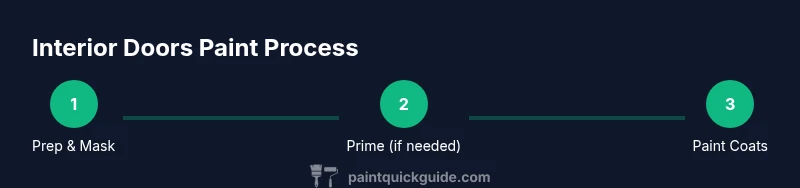
- Remove hardware and detach the door from hinges to access all surfaces. 2) Clean the door thoroughly to remove grease and dust. 3) Lightly sand with 220-grit to create a tooth for the new paint. 4) Wipe away dust with a tack cloth. 5) Apply a stain-blocking primer to bare wood or high-contrast stains, and let dry. 6) Lightly sand the primed surface for a smooth base, then wipe clean. 7) Apply a thin, even coat of paint with a quality brush, extending to the edges and panels. 8) Allow adequate drying time before applying a second coat. 9) Finish with a third coat if needed for full coverage and a uniform sheen. 10) Reattach hardware and rehang when the final coat is fully cured.
Why this order matters: proper sanding and priming create a durable bond, while thin, even coats reduce drips and peeling. Between coats, a brief dry time plus light sanding ensures a smoother final finish.
Step-by-Step: Painting Doors for a Smooth Finish
- Start with edges first: paint the inner edge and then the face, using long, even strokes to minimize lap marks. 2) Use a cutting-in technique along the jambs and frames for clean lines. 3) For panels, apply paint with a light roller or brush in short, consistent passes to avoid roller marks. 4) Avoid overworking the paint, which can cause brush marks and uneven texture. 5) Let the first coat dry completely before inspecting for coverage; apply a second coat as needed. 6) Check for drips and smooth them with the brush while the paint is still workable. 7) After final coat dries per product guidelines, cure time may vary; reassemble after full cure to prevent smudges.
Finishing Options: Sheen, Color, and Durability
When selecting a color, consider the room’s lighting and existing trim; mid-tones tend to hide dust better than bright whites. Sheen affects washability and maintenance: satin is a solid all-around choice for interior doors, while semi-gloss offers higher durability and easier cleaning, especially in high-traffic areas. Color depth can be enhanced with glaze techniques or two-tone finishes on panels, but should be used sparingly to maintain crisp lines. Some homeowners opt for two-tone doors, painting panels a different shade than the frame for architectural interest. Durable formulations like acrylic latex enamels perform well on moderate to high-traffic doors if you maintain proper airflow during curing. Always follow manufacturer recommendations for drying times, and avoid applying coats in humid conditions to prevent moisture blisters or wrinkling.
Rehanging and Curing: Final Touches
Rehang doors only after the final coat has cured — this prevents marks and smudges on fresh paint. Reinstall hinges, knobs, and other hardware, then check the alignment and clearance. If you notice any minor touch-ups after re-hanging, address them with a light dusting of paint on a small brush. Let the door acclimate to room conditions after hanging; resist heavy contact for at least 24–48 hours depending on the paint’s cure profile. Maintain room temperature and humidity to prevent any cracking or soft edges as the finish hardens. Finally, store or display extra paint for future touch-ups and color consistency.
Common Pitfalls and How to Avoid Them
- Skimping on prep leads to peeling and uneven color; invest time in cleaning, sanding, and priming. - Too-thick coats cause runs and brush marks; apply thin, even layers and allow thorough drying. - Painting in a humid environment prolongs dry times; choose a dry day or a well-ventilated space with controlled humidity. - Not protecting adjacent surfaces results in bleed-through and staining; always mask jambs, floors, and glass if present. - Using old brushes on new coats can cause bristle strands in the finish; use new or dedicated brushes for a cleaner look. Keep a damp rag handy to address any sudden drips. - Rushing reassembly can cause misalignment; take time to check door swing and clearance after final cure.
Tools & Materials
- Drop cloths(Heavy-duty painters drop cloths to protect floors)
- Masking tape(Painter's tape for crisp edges)
- Angled sash brush (2–3 in)(For edges and tight corners)
- Cutting brush (1 inch)(Detail work around frames)
- Mini roller (4–6 mm nap)(Even coverage on flat panels)
- Extension pole(Reach high or tall doors)
- 120–220 grit sandpaper(Sanding between coats)
- Tack cloth(Remove sanding dust)
- Primer (stain-blocking or shellac-based)(Seal stains and improve adhesion)
- Interior doors paint (latex enamel)(Choose low-VOC if possible)
- Mineral spirits or water-based cleaner(Clean tools and surfaces)
- Safety mask/respirator(Ventilation is essential)
- Screwdriver/hingeRemoval tool(Optional if removing hardware)
- Labels for hardware parts(Maintain order during reassembly)
Steps
Estimated time: 4-6 hours total including dry times
- 1
Remove hardware & detach door
Take off knobs, hinges, and any hardware. If you can, remove the door from the frame to access all surfaces fully and prevent drips. Keep screws in labeled bags for easy reassembly.
Tip: Label each hinge and knob location to ensure precise reattachment. - 2
Clean & degrease the surface
Wipe the door with a mild degreaser or soap solution to remove oils and dirt. Rinse with a damp cloth and let dry completely before sanding.
Tip: Avoid water pooling on edges; use a damp cloth and dry promptly. - 3
Sand glossy surfaces
Lightly sand all glossy areas with 180–220 grit to create a mechanical grip for the new paint. Wipe away dust with a tack cloth before priming.
Tip: Don’t oversand; aim for dull, matte texture, not bare wood. - 4
Prime bare wood or stained spots
Apply stain-blocking or shellac-based primer to bare wood or areas that show through. This prevents bleed-through and improves color uniformity.
Tip: Let primer dry fully; follow the manufacturer’s recoat times. - 5
Cut-in edges & corners
Use an angled brush to coat the edges and corners first, ensuring a crisp line against jambs. Feather into the panels gently to avoid ridges.
Tip: Keep brush damp with minimal paint on tip for smooth edges. - 6
Apply first coat of paint
Brush along edges, then roll across flat panels in long, even strokes. Maintain a wet edge to avoid lap marks and ensure consistent color.
Tip: Work in sections to control drying and prevent roller marks. - 7
Sand lightly & wipe between coats
Once the first coat is dry, lightly sand with 320–400 grit and wipe clean to remove dust before the second coat.
Tip: Dust-free surfaces yield a smoother final finish. - 8
Apply second coat & assess coverage
Apply a second coat for full coverage and even sheen. Inspect for thin spots; touch up as needed.
Tip: Don’t rush to rehang; allow full cure time per product guidelines.
Your Questions Answered
Do I need to remove the door to paint it?
Removing the door allows full access to all surfaces and edges, reducing drips and ensuring even coverage. If removal isn’t possible, work carefully while the door is propped and secured.
Yes, removing the door is recommended for best results; if not possible, proceed carefully while supported.
What type of paint should I use for interior doors?
A durable, low-odor latex enamel is suitable for most interiors. Oil-based enamels offer extra durability but require longer drying times and solvent cleanup.
Choose a durable latex enamel for ease of use, or oil-based enamel if you need extra durability and don’t mind longer drying.
Which sheen is best for interior doors?
Satin or eggshell offers good washability with fewer visible imperfections, while semi-gloss provides extra durability and easier cleaning on high-traffic doors.
Satin is a great balance for most doors, but semi-gloss is best where cleaning is frequent.
How long does interior door paint take to cure?
Drying times vary by product and conditions, but plan for at least 24 hours between coats and several days for full cure in typical home environments.
Most paints dry to the touch within a day, but full cure takes a few days.
Can I paint over varnished doors without sanding?
Varnish can prevent adhesion, so light scuff-sanding or priming with a bonding primer is usually necessary for a durable finish.
You’ll need to scuff-sand or use a bonding primer to ensure the new paint sticks.
Is it safe to paint with kids in the home?
Work with low-VOC paints and maximize ventilation. Keep children away from the work area until the finish is dry and cured.
Yes, with low-VOC paints and good airflow, and keep kids away until it's dry.
Watch Video
Quick Summary
- Plan color, sheen, and finish before starting.
- Prepare thoroughly for a durable, smooth surface.
- Use proper primers and quality tools for best results.
- Allow adequate drying time between coats to avoid issues.