How to Paint Already Painted Concrete: A Step-by-Step Guide
Learn how to repaint concrete that already has paint with expert guidance on surface prep, bonding primers, and durable acrylic coatings for lasting adhesion and a professional finish.


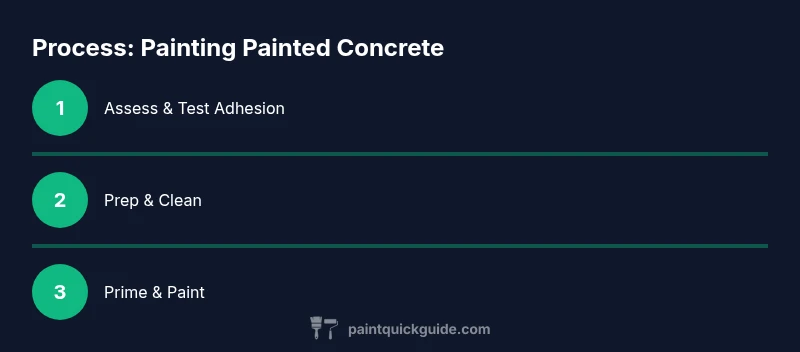
By prepping thoroughly, selecting a compatible bonding primer, and applying multiple thin coats of a high-quality acrylic concrete paint, you can successfully repaint concrete that already has paint. Start with a clean, dry surface, test adhesion on a small patch, and follow the manufacturer’s recoat times. With the right products and patience, the finish will resist wear, moisture, and staining for years.
Assessing the current finish and compatibility
Before you begin, determine what kind of paint is already on the concrete and whether it can be repainted successfully. Look for peeling, flaking, or chalkiness, and perform a small adhesion test: gently scuff a patch with a putty knife and attempt to lift the coating. If the existing layer peels or lifts easily, you’ll need extra prep or a bonding primer designed for painted concrete. PaintQuickGuide recommends checking the product label for compatibility and testing a patch to avoid coating failures later. If moisture is present, address it first, since moisture can undermine adhesion and cause future peeling.
Surface preparation: cleaning and deglossing
A clean surface is the foundation of a durable finish. Start with a thorough cleaning to remove dirt, oil, and efflorescence using a stiff brush and a concrete-safe cleaner. Rinse completely and allow the surface to dry fully—drying times vary with temperature and humidity. For glossy surfaces, degreasing or light sanding to create some roughness helps the primer bite in better. A well-prepped substrate improves primer adhesion and reduces staining through the new coats. Pro tip: wear eye protection and gloves, and protect surrounding plants from cleaners and runoff.
Etching and profiling for glossy surfaces
Glossy or very smooth painted surfaces resist bonding. Roughen the surface with a concrete etch product following the label, or perform mechanical abrasion with 120–180 grit sandpaper. After etching or sanding, sweep away the dust, wipe with a damp microfiber cloth, and let the surface dry completely. The goal is to create a slightly rough profile that increases mechanical grip for both primer and paint, yielding a longer-lasting finish. Always ventilate the area and wear appropriate PPE during etching.
Primers and bonding agents for painted concrete
Primers are the most important step for lasting adhesion on painted concrete. Choose a bonding primer formulated for concrete and labeled to overcoat existing coatings; acrylic latex primers are common and easy to work with, while epoxy primers offer stronger bond for challenging surfaces. Apply a thin, even coat with a roller or brush and let it dry per the manufacturer’s instructions. If you notice loose flakes or peeling in the old coating, consider a stabilizing product before priming to lock in weak areas and reduce future failures. Primers also help seal porous patches and minimize pinholes in the final coat.
Paint selection: latex vs epoxy and color choices
For DIY projects, a quality acrylic latex concrete paint is usually sufficient and easier to apply. Epoxy paints provide superior chemical resistance and abrasion protection but require careful surface prep and precise mixing. Consider whether the space is indoor or outdoor, exposure to moisture, and foot traffic when choosing the finish; satin or matte sheens hide imperfections better than high-gloss finishes. Test color samples on a small patch under the lighting you’ll use for the project to ensure the appearance matches your vision.
Application techniques: rolling, brushing, and spraying
Begin with a long, smooth coat using a 1/4- to 1/2-inch nap roller for rough surfaces, or a microfiber roller for smoother slabs. Use a brush for edges, corners, and tight detail. Apply paint in thin, even coats with a wet edge to avoid lap marks. For large areas, a paint sprayer can save time but requires masking, proper ventilation, and even technique to avoid overspray and runs. Allow each coat to dry fully before applying the next coat.
Curing, recoat times, and sealing
Drying times depend on temperature and humidity; follow label directions and plan dry spaces between coats. Typically, 4–6 hours between coats is common in warm, dry conditions, but cooler or humid environments may extend this to 24 hours. After the final coat, allow a full cure time before exposing the floor to moisture or traffic. If moisture exposure is a concern, consider a penetrating sealant or a clear topcoat to enhance longevity and cleanup resistance.
Maintenance and long-term care
Keep the surface clean with periodic sweeping and mild cleaners; avoid harsh solvents that can degrade coatings. Place mats at entrances and use felt pads under furniture to minimize abrasion. Recoat when you notice wear, peeling, or color fading; early maintenance preserves the finish and extends service life. Regular upkeep reduces the need for a full repaint and keeps your concrete looking fresh for years.
Authority sources and safety notes
When in doubt, consult credible sources to confirm best practices for surface prep and coating selection. Refer to EPA safety guidelines for indoor air quality during coatings application, university extension publications for concrete maintenance, and industry standards from reputable research. Always wear PPE when cleaning, degreasing, or etching, and ensure proper ventilation during all chemical processes. Relevant sources include EPA.gov and university extension sites for practical, research-based guidance.
Tools & Materials
- Grease-cutting or degreasing cleaner (concrete-safe)(Follow label directions; wear gloves)
- Stiff brush or broom(For cleaning; use stiff bristles)
- Pressure washer (optional)(For heavy grime)
- Concrete-safe painter's tape(Mask edges and adjacent surfaces)
- Drop cloths or plastic sheeting(Protect surrounding areas)
- Microfiber cloths(For rinsing and dust removal)
- Degreaser deglose if necessary(Use degreasing agent for slick surfaces)
- Coarse sandpaper or sanding block (120-180 grit)(Create tooth on glossy areas)
- Bonding primer for concrete (acrylic latex or epoxy)(Select based on product label)
- Concrete-compatible acrylic latex paint(Choose satin or matte finish)
- Paint roller with 1/4–1/2 inch nap(For even coverage on textures)
- Paint brush (2-4 inch)(Edges and corners)
- Paint sprayer (optional)(Use only with proper protection and ventilation)
- Personal protective equipment (gloves, goggles, mask)(Protect skin and eyes; odor control)
- Moisture meter (optional)(Check for dampness before painting)
- Mixing cups and stir sticks(Proper mixing of primers/paints)
Steps
Estimated time: 6-8 hours
- 1
Inspect and test adhesion
Assess the current coating and perform a small adhesion test on a patch. If the patch lifts easily, plan for etching or stronger priming. Document any problem areas for targeted prep.
Tip: Always test a patch before committing to the full surface. - 2
Clean the surface thoroughly
Wash away dirt, oil, and contaminants with a concrete-safe cleaner. Rinse until water runs clear and let the surface dry completely. A clean base prevents staining and improves primer grip.
Tip: Avoid washing a surface that is still damp; moisture can trap behind coats. - 3
Degloss or lightly sand glossy areas
If the existing finish is glossy, degloss with a commercial product or lightly sand to impart tooth. Wipe away dust and let dry before priming.
Tip: Don’t over-sand; you only need enough texture for bonding. - 4
Apply bonding primer
Choose a concrete bonding primer compatible with your paint. Apply a thin, even coat and allow to dry fully per the label. Primer ensures better adhesion and reduces the risk of peeling.
Tip: Primer thickness should be uniform; avoid puddling. - 5
Apply the first coat of paint
Roll or brush on a thin, even coat, maintaining a wet edge to avoid lap marks. Work in small sections and keep a consistent pace across the surface.
Tip: Avoid heavy coats; multiple thin coats yield better durability. - 6
Apply a second coat and inspect coverage
Let the first coat dry completely, then apply a second coat for uniform color and depth. Check for missed spots and touch up as needed before final curing.
Tip: Line up your coats and maintain a consistent application direction to reduce streaks.
Your Questions Answered
Can I paint over shiny concrete without etching?
Shiny or high-gloss finishes resist adhesion. Either degloss or etch lightly to create tooth, then prime before painting for a durable bond.
Glossy surfaces need deglossing or etching to bond.
How long does each coat take to dry?
Drying times vary with temperature and humidity. Expect 4–6 hours between coats in warm, dry conditions and longer in cooler, humid environments.
Most coats dry in several hours, but always follow the product label.
Is epoxy primer better than latex primer here?
Epoxy primers offer stronger adhesion but require more precise prep and mixing. For most DIY projects, a good latex bonding primer is sufficient when used with a compatible topcoat.
Epoxy primers work well but aren't always necessary for painted concrete.
Do I need a sealer after painting?
A clear topcoat or penetrating sealant can protect the surface, especially in moisture-prone areas, but is not always required for interior, low-moisture floors.
Sealers help protect but aren’t always needed.
What temperature is ideal for painting?
Aim for 50-85°F (10-29°C) with low humidity. Extreme heat or cold can affect drying and adhesion.
Temperature affects how well the paint dries and bonds.
Can I use a paint sprayer on concrete?
Yes, a sprayer can speed coverage but requires proper masking and technique to avoid runs and overspray. Practice on a scrap area first.
Sprayers can help, but be careful with overspray and masking.
Watch Video
Quick Summary
- Prepare thoroughly for best adhesion.
- Use a bonding primer tailored for painted concrete.
- Apply thin coats and respect drying times between steps.
- Protect surrounding areas and maintain proper ventilation.