Red Nail Paint: Practical How-To Guide for Long-Lasting Color
Learn how to pick the perfect red nail paint, prep nails, apply evenly, and seal with a top coat for lasting color, with practical tips from PaintQuickGuide.


Red nail paint offers a bold, timeless look. In this guide you’ll learn to choose shades and finishes that suit your skin tone, prep nails properly, apply two thin coats, and seal with a durable top coat for long wear. We cover color families, finishes (cream, jelly, shimmer, metallic), base coats, drying times, and maintenance tips from a practical home DIY perspective.
Understanding Red Nail Paint: Shades, Finishes, and Color Theory
Red nail paint is one of the most versatile cosmetic colors, offering timeless appeal from everyday wear to glamorous events. In this section we explain shade families, undertones, and finishes that influence how long the color lasts and how it looks on different skin tones. According to PaintQuickGuide, the exact shade you pick matters almost as much as your technique; blue-based reds tend to read cooler on pale skin, while warm, tomato-y reds flatter warmer complexions. Finishes vary too: cream reds provide solid coverage, jelly reds give depth with translucency, and metallic or shimmer reds catch the light for a party-ready vibe. The goal is to help you select a red nail paint that matches your lifestyle and environment, whether you’re painting on natural nails, extensions, or experimenting with nail art. Consider brush width, bottle viscosity, and brush shape, which affect control and speed, especially for beginners.
How to Choose the Right Red for Your Skin Tone
Selecting the right red starts with undertone recognition: cool (blue-based) reds suit cool undertones; warm (orange-based) reds complement warm skin. For neutral undertones, most reds work well, so you can focus on finish and opacity. If you wear lighter skin tones, a brighter, blue-based red can brighten the appearance; deeper skin tones shine with rich crimson or burgundy reds. When in doubt, test under natural light and compare side-by-side on a nail wheel. PaintQuickGuide recommends trying two or three shades on a clear plastic nail wheel to compare opacity, drying, and how they look in daylight. If you’re unsure about the finish, cream is a forgiving default; jelly can be more forgiving with uneven application, while shimmer accents the color for evenings or holiday looks. Remember that bottle color can mislead; inspect the actual polish shade by swatching on a nail wheel.
Prep and Base Coat: The Foundation for Longevity
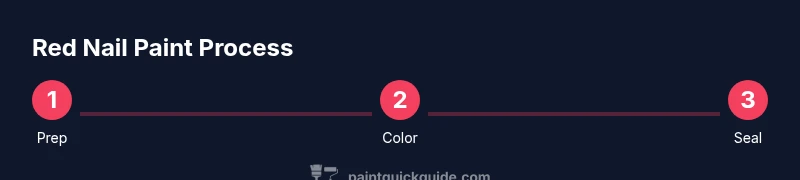
Nail prep is the silent workhorse of a long-lasting red manicure. Start by removing old polish completely and shaping nails to your preferred silhouette. Push back cuticles gently with a cuticle pusher to create a clean nail bed. Wipe nails with an alcohol pad or cleanser to remove oils and fingerprints; a clean surface ensures better adhesion. Apply a thin layer of base coat to protect the natural nail and improve wear. Base coats can also contribute to color payoff, especially with lighter reds. Allow the base coat to dry fully before moving to color, then keep a small brush handy for precision around the cuticles to avoid staining the skin.
Application Technique: The Two-Coat Rule
The core technique for red nail paint is to apply two thin, even coats rather than one thick layer. Begin with a tiny dab of polish near the cuticle, then pull the brush along the nail in a smooth, straight stroke toward the tip, ensuring you cap the free edge. Repeat on the other side and apply a second coat after the first has dried to reduce streaks and increase opacity. Hold the brush at a slight angle to minimize brush marks and control the amount of polish on each stroke. If you see a buildup at the edges, clean the brush tip with a quick wipe on a lint-free pad before continuing. Allow each coat to dry briefly before applying the next to prevent smudges.
Top Coats and Drying Times: Lock in Shine
A top coat is essential for long wear and gloss. After the second color coat is dry, apply a thin layer of top coat, sealing the tip to prevent early chipping. This layer acts as a protective shield against everyday activities like typing and dishwashing. Drying times vary by formula, but most polishes need at least 2-3 minutes for initial set and up to 20-30 minutes for a full hard cure. If you’re in a hurry, use a quick-dry top coat or drop a few quick-dry accelerators along the edges. Remember to avoid dipping fingers back into the bottle to prevent contamination; close the bottle between coats.
Finishes and Effects: Cream, Jelly, Shimmer, and Matte Reds
Red nail paint comes in several finishes, each with distinct wear characteristics. Cream reds offer solid opacity and a smooth look, ideal for beginners. Jelly reds are translucent and build depth with multiple coats; they’re forgiving of minor application flaws. Shimmer and metallic reds add depth and sparkle, but may require more drying time and careful brush control to prevent streaks. Matte reds provide a modern, velvety finish but can be less forgiving in wear; pairing a matte red with a glossy top coat at the tip creates a contemporary hybrid look. Try different finishes to suit occasions and moods, but keep in mind that darker reds can show nail growth more quickly.
Color Stability: Preventing Fading and Staining
Invest in high-quality red nail paint and apply base and top coats to reduce color transfer and staining of the natural nail. Avoid exposing nails to prolonged sunlight and chlorine-heavy water, which can accelerate fading. Refrain from aggressive buffing between manicures, which can thin the nail plate and make color wear worse. If you notice color staining on nails after removal, use a soft buffer and moisturize to restore nail health. Using a non-acetone remover and conditioning oils between color applications helps preserve the nail plate for future colors.
Nail Care for Long-Lasting Red: Maintenance Between Manicures
To maximize wear, moisturize cuticles daily and avoid picking at the edges. Wear lightweight gloves when doing chores like dishwashing or cleaning to protect the polish. If chips occur, perform a quick fix by applying a thin brush stroke of red and re-sealing with top coat. Avoid peeling or picking at the polish; this can lift adjacent layers and cause peeling edges. Regular hydration supports healthier nails and better polish adhesion over time.
Common Mistakes and How to Avoid Them
Common errors include thick coats, skipping base coats, and not letting coats dry fully between steps. Thick coats tend to peel, bubble, or smudge; always use thin coats. Skipping base coats can cause staining and poor adhesion, especially with bright reds. Not allowing enough dry time before applying the next layer leads to smudges and dents. Keep nails free of oils by avoiding lotions right before painting and wipe nails with alcohol for a clean surface. Finally, use a crisp brush for clean lines and finish edges to prevent chipping.
Removing Red Nail Paint Safely: Tips to Protect Nails
When it’s time to remove red nail paint, use a gentle remover and a soft cotton pad. Soak for a few minutes to loosen the lacquer, then wipe away with minimal rubbing to avoid nail damage. If you must scrub, do so with light, circular motions and a non-acetone remover to protect the nail plate. After removal, moisturize with cuticle oil or a nourishing hand cream to restore hydration and flexibility. Avoid peeling off color; this pulls at the damaged nail plate and can cause micro-tears.
Tools, Brushes, and Shopping Smart: Base and Top Coats
Choose tools that promote control and precision. A comfortable brush with a slender, flexible bristle helps reach the cuticle area without flooding. Look for a high-quality base coat that offers strong adhesion and a top coat with good hardness and quick-dry properties. When shopping, compare bottle viscosity and brush quality, as these influence polish distribution and application speed. Keep a separate cleanup brush to tidy edges and prevent smudges, especially with vivid red colors.
Budgeting for Red Nail Paint: Cost, Substitutes, and How to Save
Red nail paint can range widely in price, but you can achieve salon-like results with careful selection. Consider purchasing a trusted classic red and a budget-friendly alternative for experimentation. Invest in a good base coat and a strong top coat, as these often extend wear and durability more than high-priced color alone. Look for multipacks or sales, and rotate finishes to maximize your collection without overspending. Remember that proper storage and handling preserve polish longevity.
Tools & Materials
- Nail file (emery board)(Medium grit (180–240) for shaping)
- Nail buffer(Fine grit for smoothing surface)
- Cuticle pusher/orange stick(Gently push back cuticles)
- Nail cleanser or rubbing alcohol(Remove oils before polishing)
- Base coat(Promotes adhesion and protects nails)
- Red nail paint (color)(Choose undertone to match skin tone)
- Top coat(Seal and add shine)
- Cotton pads(For wiping and cleanup)
- Nail polish remover(Acetone or non-acetone)
- Cuticle oil or hand moisturizer(Nourishes nails after painting)
- Quick-dry drops or spray(Optional for faster drying)
Steps
Estimated time: 40-50 minutes
- 1
Prep nails and shape
Remove old polish completely, shape nails, and gently buff the surface to smooth. This creates a clean canvas for the color to adhere and prevents ridges from showing through the polish.
Tip: Keep strokes light and uniform; avoid over-buffing near the cuticles. - 2
Push back cuticles and clean
Use a cuticle pusher to tidy the nail plate. Wipe with alcohol to remove oils and fingerprint residues that can cause lifting.
Tip: Be gentle around the skin; damage can lead to uneven application. - 3
Apply base coat
Apply a thin layer of base coat, covering the entire nail and sealing the tip. Let it dry fully to prevent color staining and to extend wear.
Tip: Do not flood the cuticles; wipe excess from the skin immediately. - 4
First color coat (red)
Apply a thin coat of red nail paint from cuticle to tip in a single smooth stroke. Cap the free edge to help prevent chipping and ensure even coverage.
Tip: Use light pressure to avoid pushing color under the skin. - 5
Second color coat (red)
Apply a second thin coat, aiming for full opacity without creating thick ridges. If the color looks streaky, add a third light coat rather than a single thick one.
Tip: Keep coats thin and allow each to dry before applying the next. - 6
Top coat and seal
Finish with a top coat that seals the color and protects the edges. Allow adequate dry time; use a quick-dry formula if pressed for time.
Tip: Refrain from touching nails during drying to avoid dents. - 7
Clean edges and hydrate
Remove stray polish from the skin with a small brush dipped in remover. Apply cuticle oil or moisturizer once everything is dry to restore hydration.
Tip: Hydrated nails hold polish better and look healthier. - 8
Optional touch-ups
If chips appear, apply a thin coat of red and top coat again for a quick fix rather than removing entire manicure.
Tip: Keep remover handy for precise cleanup around the edges. - 9
Final check and wear tips
Inspect nails under natural light for any uneven areas. Consider wearing gloves for tasks like cleaning to extend wear.
Tip: Avoid long exposure to water for the first few hours after application.
Your Questions Answered
How many coats should I apply for red nail paint?
Typically base coat, two thin color coats, and a top coat. If opacity is still uneven after two coats, add a third thin color coat rather than thickening any single layer.
Typically you’ll use a base coat, two thin color coats, and a top coat. If needed, add a third thin coat rather than a thick layer.
How can I prevent staining and chipping with red polish?
Use a good base coat, apply thin coats, let each coat dry, and finish with a strong top coat. Avoid heavy exposure to water in the first few hours after application.
Apply thin coats, finish with top coat, and avoid water exposure for a few hours to prevent chipping.
Is there a difference between finishes like cream vs jelly for red?
Yes. Cream reds give solid opacity and a smooth finish; jelly reds build depth gradually and are more forgiving for uneven application. Choose based on desired look and patience for drying time.
Cream gives solid color; jelly adds depth and is more forgiving. Pick based on look and how patient you are with drying.
What tools help apply red nail paint smoothly?
A fine brush, quality base and top coats, lint-free polishing pads, and a clean workspace make a big difference. Ensure you use thin coats and allow drying time between layers.
Good brushes, base and top coats, and clean pads help you get a smooth finish with thin coats.
Can I wear red nail paint on natural nails or do I need enhancements?
Red nail paint works well on natural nails with proper prep. Enhancements can improve wear but require careful removal to prevent damage.
Yes, you can wear red on natural nails with proper prep. Enhancements can extend wear but need careful removal.
How long does red nail paint take to dry?
Drying times vary by finish, but expect 2-3 minutes for initial set and up to 20-30 minutes for a full cure with a top coat. Use a quick-dry top coat if in a hurry.
Most colors set in a few minutes, but full cure can take up to half an hour; quick-dry products help if you’re in a rush.
Watch Video
Quick Summary
- Prep nails thoroughly for best adhesion
- Choose red with undertone that flatters skin tone
- Apply thin coats and allow drying time between layers
- Finish with a quality top coat for longevity
- Remove safely to protect the nail bed