Nail Paint Sets: A Complete DIY Guide for Perfect Manicures
Learn how to choose, use, and care for a nail paint set to achieve salon-quality manicures at home. Includes selection tips, application steps, storage, and maintenance for longer wear.


Goal: Learn how to pick, prep, and use a nail paint set for salon-quality manicures at home. This guide covers choosing base and top coats, color ranges, finishes, and how to apply and cure nails for long wear. You’ll also get storage tips, maintenance routines, and simple tricks to avoid streaks and chips.
What a Nail Paint Set Is and Why It Matters
A nail paint set is a compact kit designed to simplify manicures by bundling color, protection, and upkeep into one purchase. At its core, a good set includes a base coat to anchor color and protect the nail, a top coat to seal the finish, several color shades, and removal tools to refresh the look without fuss. The best sets also include a small buffer, cuticle tools, and sometimes a quick-dry formula. The goal is consistency: products that pair well together stay on longer and look more even.
According to PaintQuickGuide, a well-rounded nail paint set should feature a base coat, a versatile top coat, a curated color range, and reliable removal tools with simple storage. A thoughtful selection reduces bottle-to-bottle incompatibilities and helps you avoid streaks and chipping. For homeowners and DIY enthusiasts, this means you can achieve a salon-quality manicure without juggling multiple brands. The right set also simplifies color coordination across a season, supports nail health, and minimizes waste by offering a cohesive palette.
Types of Nail Paint Sets and Finishes
Nail paint sets come in several formats, each offering different finishes and wear profiles. Traditional enamel sets focus on a wide color range with glossy finishes that dry quickly and are easy to remove. Gel-polish sets include hard-wearing color that lasts longer and cures under light; they require specific curing steps and sometimes professional equipment. Hybrid sets aim to blend ease of traditional polish with some durability of gel, without requiring a UV lamp. Finishes vary beyond gloss: matte, satin, metallic, and pearl finishes offer distinct looks. When evaluating a set, look for shade diversity (neutrals, bolds, and pastels) and finish variety that suits your wardrobe or manicure goals. If you want minimal maintenance, prioritize a solid top coat and a fast-dry base coat. Some sets include nail-art essentials—tiny brushes or decals—to expand your design options without buying separate tools. A good test is to apply colors from the set on a swatch nail to confirm uniform opacity and even drying times across shades.
How to Choose a Nail Paint Set for Your Needs
Start by defining your use case: casual weekly polish, special occasions, or nail art experiments. For beginners, a starter kit with 4–6 colors plus the base coat and top coat is ideal, and you can expand gradually. Consider formulas: long-wear or quick-dry options save time, while classic gloss finishes are easier to remove. Inspect brushes: wider brushes offer faster coverage on larger nails; smaller brushes give precision for emphasis nails or nail art. Check the shade palette for balance: include light neutrals for workdays, a couple of bold hues for weekends, and a versatile red. Packaging matters; bottles with secure caps prevent leaks, and a clear label helps you track drying times. Finally, verify safety notes: look for non-toxic formulations and a low-odor base if you’re sensitive to strong fumes. PaintQuickGuide’s analysis shows that buyers benefit from sets that emphasize color cohesion and easy storage.
Essential Tools and Prep for Nail Painting
Before you reach for your nail paint set, prep is everything. Start with clean hands and dry nails; shape nails, push back cuticles, and remove any old polish. Gentle buffing smooths the surface, which helps with even color adhesion. Gather your tools: base coat, top coat, your color shades, remover, cotton, nail file, buffer, cuticle pusher, and a small brush for cleanup. If you’re using acetone remover, work in a well-ventilated area. Tape or a silicone shield around the finger edges can prevent stray polish on skin. Maintain neatness: wipe spills promptly and cap bottles tightly after use to avoid thickening. If you’re planning a design with multiple colors, organize shades in order of application to speed up the process. With proper prep, your nail paint set yields smoother, longer-lasting results and less post-paint cleanup.
Application Technique: Base, Color, and Top Coats
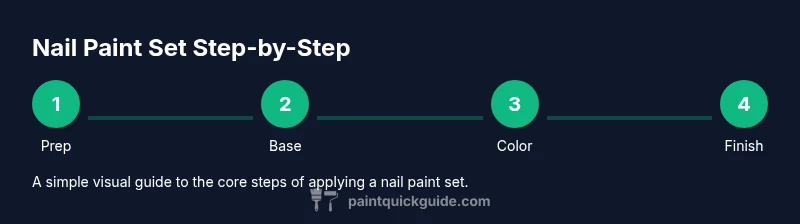
Begin with a clean, dry nail, then apply a thin base coat. This creates a smooth surface and protects the nail from staining. Allow base coat to dry briefly before applying color. Use thin coats rather than a single thick layer to avoid streaks; build color gradually. Apply the first color coat from cuticle to tip in smooth, even strokes, then let it dry. If opacity isn’t ideal, add a second thin coat and repeat until you’re satisfied. Finish with one or two layers of top coat, depending on wear goals; the top coat locks in color, adds shine, and helps resist chipping. If you have short nails or a curved edge, use long, controlled strokes to cover the entire nail edge. For faster drying, consider a quick-dry top coat and a fan or LED light if your set supports curing. Clean up mistakes with a small brush dipped in remover.
Common Mistakes and How to Avoid Them
Rushing through steps leads to streaks, pooling, and uneven edges. Avoid brushing back and forth too quickly; instead, use long, confident strokes. Skipping the base coat invites staining and quicker chipping. Don’t flood the nail with color—thin coats build better and dry more evenly. After finishing, don’t neglect the edge near the tip where chips often start; seal the tip by lightly brushing the edge with top coat. Beware heat and direct sunlight during drying; heat can cause bubbling and dull finish. Finally, store your polish upright and away from moisture; repeated exposure to air thickens formulas and shortens shelf life. With careful technique and the right nail paint set, you’ll minimize touch-ups and maximize wear.
Nail Care and Maintenance with a Nail Paint Set
Healthy nails hold polish longer. Hydrate cuticles daily with oil or moisturizer and keep nails trimmed to prevent snagging. After removing color, wash hands and apply a nail-strengthening treatment or clear coat to protect the nail plate. When not in use, store polishes upright to avoid thickening at the base and keep each bottle capped to prevent evaporation. Rotate shades to avoid chemical incompatibilities and keep formula fresh. If color begins to separate in a bottle, roll the bottle between palms rather than shaking to preserve polish viscosity. A quick weekly check-in on bottle seals helps avoid dried out brush tips or clumps. Proper care extends wear and keeps colors looking vibrant between applications.
Safety, Storage, and Disposal for Nail Paints
Ventilation matters: work in a well-ventilated area to minimize fumes. Keep nail paint sets away from heat sources and direct sunlight, which can degrade formulas and color accuracy. Store upright in a cool, dry place; avoid freezing temperatures. Keep out of reach of children and pets. When disposing of old polish, follow local guidance for hazardous waste; do not pour polish down the drain. Use a dedicated remover container and cap it tightly after use. If a bottle becomes too thick to apply, consider recycling through a proper disposal program rather than pouring it down the sink. A few simple rules protect your health and your home while preserving your nail paint set for future looks.
Cost Considerations and Value
Nail paint sets span a range of price points, with options designed for casual users, emerging hobbyists, and dedicated color collectors. When evaluating value, consider color diversity, formula quality, drying speed, and finish variety. A cohesive set that pairs well with a good base and top coat often delivers better wear and less waste than purchasing individual bottles. If you frequently experiment with nail art, choose sets that include small tools or decals to expand your design options without buying separate items. Look for warranties or brand support for issues such as thickening or bottle leakage. Remember that investing in a known-quality base and top coat can dramatically improve longevity and gloss, making a mid-range set a smarter long-term choice than a bargain bin collection.
Creative Ideas with Nail Paint Sets
A nail paint set isn’t just for solid colors; use one or two shades to create striking accent nails, or mix shades for a custom color tint. Try gradient fades by blending two complementary shades, or experiment with bubble, speckle, or foil effects using available tools in your kit. For a classic look, pair a neutral base with a bold accent nail, and finish with a glossy top coat. For festive occasions, combine metallics with red or deep jewel tones to achieve a chic holiday manicure. Maintain flexibility: rotate shades across weeks so each color gets equal wear, and store the set in a way that makes color swapping quick and easy. The right nail paint set empowers you to express style while keeping nails healthy and well cared for.
Tools & Materials
- Base coat(Clear or pale shade; helps color adhesion)
- Top coat(Seals color and adds shine)
- Nail polishes (assorted shades)(Include neutrals, bolds, and a red)
- Nail polish remover (acetone or non-acetone)(Choose based on skin sensitivity)
- Cotton pads or rounds(For removing polish around nails)
- Nail file and buffer(Shapes nails and smooths surface)
- Cuticle pusher(Push back cuticles without scraping)
- Nail art brushes or tools(Optional for designs)
- Nail cleanser or wipe(Keeps surface clean during design)
- Nail polish thinner or remover for thick bottles(Keep bottles usable longer)
- UV/LED lamp (if using gel)(Only if your set includes gel polish)
Steps
Estimated time: 30-60 minutes
- 1
Prep nails and tools
Start by sanitizing hands, shaping nails, and gently pushing back cuticles. Remove old polish completely and buff the surface to ensure a smooth canvas.
Tip: Keep nails dry and clean to improve base adhesion. - 2
Apply base coat
Brush a thin layer from cuticle to tip. Allow it to dry to a tacky or fully set state as directed on your base coat bottle.
Tip: Avoid flooding the cuticle to prevent lifting later. - 3
First color coat
Apply a thin coat of color in long, smooth strokes. Start at the center and work toward the edges. Let it dry before deciding on a second coat.
Tip: Thin coats dry faster and resist smudges. - 4
Second color coat (if needed)
If you want deeper shade or even coverage, apply a second thin coat. Repeat until the desired opacity is reached.
Tip: If you see brush marks, lightly roll the brush over the surface instead of pressing hard. - 5
Top coat and seal
Finish with 1–2 coats of top coat to seal the color and add gloss. Allow proper drying time between layers.
Tip: Cap the free edge with top coat to prevent chipping. - 6
Cleanup and storage
Clean any stray polish with a brush dipped in remover. Cap all bottles tightly and store upright away from heat.
Tip: Label any color swatches for quick reference.
Your Questions Answered
What should be included in a basic nail paint set?
A basic set should include base coat, a few color shades, top coat, remover, cotton pads, a nail file and buffer, and cuticle tools. Optional pieces like a mini brush and decals can expand design options.
A basic set should have base coat, several color shades, top coat, remover, cotton pads, a nail file and buffer, and a cuticle tool. Extras like decals are optional for beginners.
How many coats should I apply when using a nail paint set?
Typically start with a thin base coat, then one color coat, possibly a second coat for depth, followed by a top coat. Always allow adequate drying time between coats.
Usually you put a thin base coat, then one color coat, maybe a second for depth, and finally the top coat. Let each layer dry before the next.
How long does it take to dry between coats?
Drying times vary by formula, but rely on the product’s guidance. In practice, give each coat a reasonable interval before applying the next to prevent smudges.
Dry times vary, so follow the bottle. Give each coat a reasonable interval to avoid smudges.
Can I mix colors from different sets?
Yes, you can mix colors from different sets, but test on a swatch first to ensure the finish dries evenly and the colors complement each other.
You can mix colors from different sets, just test on a swatch to see how they dry and look together.
How should I store nail polish to maximize its life?
Store bottles upright in a cool, dry place away from sunlight. Keep caps tight to prevent evaporation and thickening.
Keep bottles upright in a cool, dry place with tight caps to prevent thickening.
Is gel polish necessary in a nail paint set?
Gel polish requires a curing lamp and different removal methods. If your set is traditional polish, follow its drying and removal guidelines.
Gel polish needs a curing lamp. If your set is regular polish, follow its drying and removal steps.
Watch Video
Quick Summary
- Choose a cohesive base/top coat pair for longevity.
- Prep nails thoroughly for even color adhesion.
- Apply thin coats in sequence to avoid streaks.
- Seal edges with top coat to prevent chipping.
- Store polish properly to extend life.