Touch Up Paint Auto: A Practical Step-by-Step Guide
Learn how to touch up auto paint with color matching, surface prep, and finishing. Practical tools, step-by-step instructions, and safety tips for durable, seamless repairs.


Touch up auto paint effectively by preparing the area, matching color code, and applying several thin coats with careful feathering. Mask nearby panels, clean the surface, and finish with clear coat for durability. This guide covers materials, step-by-step instructions, and common pitfalls to avoid for a seamless repair. You’ll learn color matching, surface prep, and finishing techniques that stay durable under sun and weather.
Understanding automotive touch-up paint and when to use it
In the world of auto maintenance, touch-up paint is a practical solution for repairing small chips, scratches, and stone dents that mar your finish. The goal is to conceal visible damage without a full repaint, preserving resale value and aesthetics. For a durable repair, you must understand the difference between color-matched basecoat, the clear coat that protects the color, and any primer that may be needed on bare metal. Color matching is essential; even a tiny mismatch becomes obvious in sunlight. The PaintQuickGuide team has found that most common chips are caused by road debris or minor factory defects, and most drivers benefit from a controlled, gradual repair rather than a full repaint. The key is patience and precision, not haste.
When you’re ready, plan the project for a calm day with good lighting. Avoid humid conditions or extreme heat, which can affect paint flow and drying. Budget a few hours for prep, color application, and curing, and organize your workspace so you can work cleanly and steadily. A well-executed touch-up won’t just hide damage—it can look almost invisible with the right technique.
Color matching basics: basecoat vs. clearcoat
Color matching is the backbone of a convincing touch-up. Automotive finishes rely on multiple layers: the base color (basecoat) and a clear protective layer (clearcoat). Some colors also use a primer or a tinted sealer for adhesion and depth. Start by locating your vehicle’s color code, typically found in the door jamb or under the hood. The PaintQuickGuide analysis indicates that accurate color codes reduce mismatch risk considerably. If you don’t have the code, you can use color-matching tools or compare chips in natural daylight to find the closest shade, then test on a small area before committing to the repair. Remember, small color discrepancies are easier to notice on solid colors than metallics, which can disguise slight deviations through reflection.
Finishes vary by gloss and UV resistance. A satin or matte finish may require different clear-coat approaches to achieve a natural look. When in doubt, start with a conservative shade and build toward a match, rather than over-saturating a chip with too much pigment at once.
Surface prep: cleaning, sanding, edging and masking
Proper surface prep is where most touch-ups succeed or fail. Begin by cleaning the area with a gentle degreaser to remove wax, oil, and dirt. Lightly scuff the surface with a fine-grit sponge to create a micro-roughness that helps paint adhere. If the chip edge is sharp or raised, feather the edges with a soft sanding motion so the repaired area blends with the surrounding paint. Mask the entire area around the chip with high-quality painter’s tape, leaving only the repair bite exposed. This prevents accidental overspray and ensures a crisp edge, which is crucial for a believable repair. Allow the area to dry completely before applying any color.
A clean, well-masked surface is the foundation of a seamless finish. Do not rush masking or skip degreasing, as trapped oils can ruin color absorption and create a blotchy patch.
Tools and materials: what you need to start
Before you begin, assemble the essential tools and materials for a smooth process. A small detail brush (0.5–1.0 mm) provides precision for repairing tiny chips; an automotive touch-up paint matched to your color code; a compatible clear coat; masking tape and protective film; rubbing alcohol or wax and grease remover for final cleaning; fine-grit sanding sponges (up to 2000 grit); microfiber cloths; and a small surface cleaner. Optional items include a color-matching pen or spray catalyst for metallics and a polishing compound for blending. Having the right tools reduces the risk of overpaint or feathering errors and helps you achieve a more durable feature.
Paint selection matters: basecoat for color, clearcoat for protection, and primer for bare metal. If metal is exposed, apply primer in a thin, even layer and let it dry before color. Always work in a dust-free area to prevent imperfections from settling on wet paint.
Step-by-step overview and preparation for action
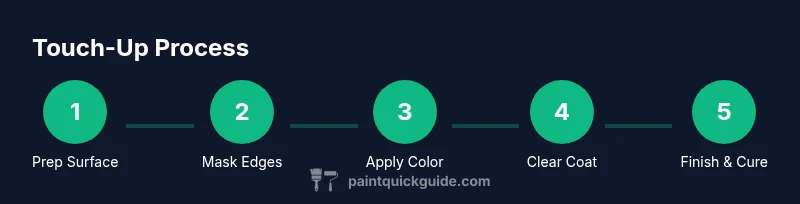
The following steps outline the core process you’ll follow in order to apply touch-up paint on your vehicle. The steps are designed to be performed in sequence so that color, adhesion, and finish all align for a cohesive repair. You’ll first prep and mask, then apply the color in light coats, cure briefly between layers, and finish with a protective clear coat. This structure minimizes brush marks and ensures a natural look that blends with the surrounding paint.
Tip: Keep each coat very thin to avoid buildup that’s hard to sand or blend. If the color looks off in certain lighting, re-check color consistency under daylight and adjust your approach accordingly.
Application techniques: feathering, layering, and blending
Application technique determines how well the repair blends with the original finish. Apply color in fine, controlled strokes, using feathering around the chip edge to create a smooth transition into the surrounding paint. For small chips, a single small dot is often enough, followed by a light, horizontal stroke to blend into the existing color. For larger chips, apply multiple thin coats, allowing each coat to dry lightly before applying the next. After color buildup, evaluate the blend in multiple lighting conditions and adjust your approach if needed. When the color is satisfactory, apply a thin clear coat to seal and protect the repair, then blend gently with the surrounding paint using light polishing.
Pro tip: Work in a clean, dust-free space and avoid touching the repair with bare hands until the finish has cured.
Finishing and protection: clear coat, curing, and polishing
Finish with a compatible clear coat to protect the repair and restore gloss. Apply the clear in thin, even coats, following the manufacturer’s recommended recoat times. Allow adequate curing time before washing or exposing the panel to sun. Once cured, lightly buff the area with a soft cloth or a microfiber pad and a polishing compound to restore uniform shine. Stage the process if you’re blending into metallic or pearl finishes, as those require careful light reflection management to avoid mottling. After polishing, inspect the area again in natural light to confirm a seamless match and ensure there are no visible edges or halos around the repaired patch.
This final step is critical for long-term durability and aesthetic cohesion. Rushing the cure or over-polishing can cause micro-scratches or dull patches that stand out on close inspection.
Common mistakes and troubleshooting: what to watch for
Even seasoned DIYers encounter common pitfalls when touching up auto paint. Overspray and paint buildup can create obvious ridges or a mismatched gloss. Under-color matching is another frequent issue, especially with metallics that reflect light differently than solid colors. If you notice a mismatch after the first coat, reassess your color choice, test on a non-visible area, and adjust if possible. Avoid using too much paint on any coat, which can take longer to cure and create an uneven surface. If you see orange peel texture, reduce paint viscosity or apply lighter coats. For best results, keep the area dust-free and avoid direct sunlight while the paint cures.
Tools & Materials
- Automotive masking tape(Quality tape to seal edges)
- Detail brush (0.5–1.0 mm)(Fine tip for precise spots)
- Automotive touch-up paint (color-matched)(Basecoat color matched to code)
- Clear coat compatible with color(For protection and finish)
- Primer (bare metal only)(Apply if exposed metal)
- Wax and grease remover or isopropyl alcohol(Pre-clean surface)
- Fine sanding sponge (about 2000 grit)(Feather edges gently)
- Microfiber cloths(Dust-free wiping)
- Rubbing compound or polishing compound(For blending after cure)
Steps
Estimated time: 60-120 minutes
- 1
Inspect and clean the area
Carefully assess the chip’s size and depth. Clean the repair zone with a degreaser to remove wax and oils, then dry completely. Removing contaminants ensures proper adhesion and a smoother finish.
Tip: Use a magnifying glass or good lighting to evaluate edge sharpness before you begin. - 2
Mask surrounding area
Apply masking tape around the chip to protect adjacent paint. Leave a precise window around the repair bite. A clean edge helps the repair blend better.
Tip: Press the tape down firmly to prevent edge lift and overspray. - 3
Feather edges with light sanding
Gently feather the chip edge with a fine sanding sponge to create a smooth transition into the surrounding paint. Remove dust with a clean microfiber cloth.
Tip: Keep sanding to the minimum needed to feather the edge; over-sanding can enlarge the repair. - 4
Apply primer if needed
If metal is exposed, apply a thin layer of primer and let it dry completely. For already-coated areas, skip primer. Primer improves adhesion for the basecoat.
Tip: Let the primer cure fully according to the product instructions before color application. - 5
Apply basecoat in thin coats
Use the detail brush to apply a small dot of matched color, then feather outward in light strokes. Allow each coat to dry briefly before applying the next.
Tip: Aim for near-surface color patch that looks slightly lighter than surrounding paint while wet. - 6
Build color gradually and test blend
Apply additional ultra-thin coats to reach color depth. Test by viewing in daylight on nearby panel to ensure consistency with surrounding color.
Tip: If color drifts, adjust the shade or re-test on a disposable surface before continuing. - 7
Apply clear coat and seal
Once color matches, apply a compatible clear coat in thin layers. Let each coat set before the next. This seals the repair and adds depth.
Tip: Keep coats uniform to avoid puddling; apply from multiple angles for even coverage. - 8
Cure, polish, and inspect
Allow the finish to cure in a dust-free environment. Lightly polish with a soft pad to restore gloss and check blending in various lighting.
Tip: Avoid washing the car for at least the recommended cure time; longer cure times yield harder, more durable results.
Your Questions Answered
What is the difference between basecoat and clearcoat in an auto touch-up?
Basecoat provides the color, while clearcoat adds protection and gloss. The two layers work together to produce a durable, realistic finish.
Basecoat gives the color; clearcoat protects and adds gloss, forming the final visible layer.
Do I always need primer for touch-up work?
Primer is needed if you’re repairing bare metal or if the underlying finish is substantially damaged. For intact painted surfaces, primer may not be necessary.
Primer is only needed if metal is exposed or the surface is badly damaged.
Can I use spray paint for touch-ups at home?
Spray paints can be harder to control and may not blend well with existing finishes. Brush-on automotive touch-up products are typically preferred for precision and finish.
Spray paints are often too difficult to control for a clean blend; brush-on touch-up products are usually better.
How can I tell if color matches after painting?
Check the color in daylight and on the actual panel, not in shade. Compare hue, saturation, and gloss to ensure a seamless blend.
Test in daylight on the panel and compare hue and gloss to the surrounding area.
How long should the repair cure before washing the car?
Give the repair ample curing time in a dust-free environment before washing or exposing it to weather. Rushing the cure can cause dull spots or adhesion issues.
Let it cure fully before washing; rushing can ruin the finish.
Is it ever necessary to sand between coats?
Lightly sanding between coats can help with edge feathering and smoothness, but don’t over-sand or remove cured paint.
A gentle sanding between coats can improve blending if done carefully.
Watch Video
Quick Summary
- Plan the repair and match color code before painting
- Feather edges and apply thin coats for a seamless blend
- Finish with a clear coat and proper curing
- Mask thoroughly to avoid overspray
- Assess color under daylight to ensure accuracy