Portable Paint Booths: Setup, Use, and Safety Guide
Learn how portable paint booths work, compare DIY and professional options, and get step-by-step setup, safety checks, and budgeting tips for car refinishing and home painting. Practical guidance from PaintQuickGuide on filtration, ventilation, and maintenance.


A portable paint booth is a compact, self-contained spray enclosure that helps control overspray and fumes, enabling cleaner, safer painting in a variety of spaces. This guide covers how to choose, set up, and safely use a booth for auto refinishing and home painting, with practical tips on filtration, ventilation, and maintenance.
What is a portable paint booth and why you might need one
A portable paint booth is a compact, self-contained spray enclosure designed to minimize overspray and contain fumes. For homeowners and auto refinishing hobbyists, a portable booth can dramatically improve finish quality by stabilizing airflow, temperature, and dust control, whether you’re refinishing a bumper or painting kitchen cabinets. The key benefit is creating a dedicated, ventilated workspace that can be moved between jobs and spaces, reducing risk to people nearby and helping you achieve more consistent color and gloss. In this article, PaintQuickGuide shares practical guidance on selection, setup, safety, and budgeting so you can pick a booth that fits your size projects and space constraints. According to PaintQuickGuide, portable paint booths are valuable tools for DIYers who want pro-like results without a full spray room.
Key design features to evaluate
- Enclosure type: pop-up tent vs. rigid shell. Rigid shells tend to seal better but are heavier.
- Filtration: carbon for fumes, HEPA for dust capture. Many booths use a combination.
- Airflow: consider CFM ratings to ensure adequate ventilation and drying time.
- Venting and ducting: plan a proper exhaust path outdoors; seal gaps to prevent intake of contaminated air.
- Filter life and replacement: identify replacement intervals and cost.
- Noise and footprint: ensure the unit fits your workspace and operates at an acceptable noise level.
- Size and portability: match booth dimensions to vehicle size and workspace.
- Power and safety: confirm outlet type, grounding, and avoidance of ignition sources.
- Build quality and maintenance: choose surfaces that are easy to clean and resist paint buildup.
How to choose between DIY portable vs. commercial portable booths
DIY options, like a pop-up tent with a fan, often suit small projects and tight budgets, but can struggle with consistent airflow and filtration. Commercial portable booths, while less portable than a tent, provide superior filtration, sealed interiors, and more predictable performance for auto refinishing and cabinetry projects. Your choice should weigh project size, paint type (waterborne vs solvent-based), humidity, and workspace. The PaintQuickGuide approach emphasizes total cost of ownership, ongoing maintenance, and expected finish quality. For hobbyist projects such as furniture refinishing, a mid-range portable booth can offer a reliable balance; for auto work, investing in a higher-grade system is often worthwhile.
Setup and best practices for layout and ventilation
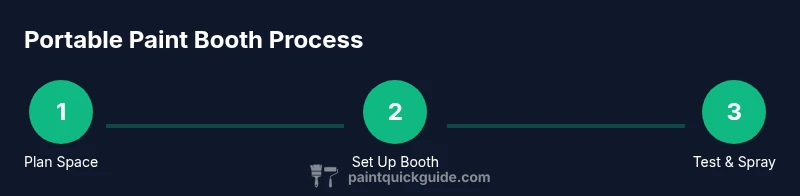
Plan space and airflow before assembly. Choose a location with enough clearance on all sides and near an exterior wall if venting outside. Set up on a level, non-slip surface and ensure the booth is fully enclosed with zippers sealed when in use. Route exhaust ducting to the outside, using a guard or screen to prevent wildlife or debris entry. Use a dedicated, grounded circuit and keep flammable solvents away from heat sources. Run a quick airflow test with a visible indicator (smoke or tissue) to confirm air moves from intake to exhaust and away from you. Finally, prepare your painting area: masking, drop cloths, and PPE should be readily accessible.
Using a portable paint booth for cars vs. indoor house painting
Car painting requires steady airflow, strong filtration for solvent vapors, and careful temperature and humidity control to ensure color consistency. For cars, large parts may require repositioning and thorough masking of surrounding components. Indoor house painting focuses on minimizing dust and preventing fumes from spreading; you may prioritize quick setup and easy cleanup over heavy-duty filtration, but still need good ventilation and PPE. In both contexts, wear appropriate respirators with cartridge filters for your coatings and keep a fire extinguisher nearby. The goal is safe, contained painting with predictable results rather than ad hoc spraying in a shared space.
Maintenance, cleaning, and safety considerations
After each session, remove used filters and inspect for saturation or damage. Clean the interior surfaces with a damp cloth and vacuum; never rinse solvents down the drain. Replace carbon and HEPA filters according to the manufacturer’s schedule or when airflow noticeably drops. Inspect seals, zippers, and the frame for wear; lubricate moving parts if the design allows. Check electrical cords and outlets for heat or signs of wear. Store paints and thinners in a separate, ventilated cabinet away from ignition sources. Keep a safety kit nearby with gloves, goggles, and a respirator spare.
Common mistakes and how to avoid them
- Not venting fumes outside: always use an exhaust path outdoors to prevent indoor buildup.
- Skipping airflow checks: perform a quick test before painting to avoid surprises.
- Using the wrong filter type: confirm carbon vs HEPA suitability for your materials.
- Inadequate PPE: always don a respirator with correct filters and eye protection.
- Poor housekeeping: keep the booth clean to prevent dust inclusions in your finish.
- Ignoring humidity and temperature: track conditions since they affect film formation and cure time.
- Overlooking maintenance: replace filters and inspect seals on a regular schedule.
Cost considerations and budgeting tips
Budget planning should account for the initial price of the booth, plus ongoing costs for filters, PPE, and electricity. Entry-level units provide basic filtration and portability, while mid-range systems offer more stable airflow and better filtration for automotive work. Professional-grade booths deliver the most consistent performance but require a larger upfront investment and more comprehensive maintenance planning. When budgeting, factor in filter replacement intervals, the cost of consumables, and potential downtime for maintenance. PaintQuickGuide analysis, 2026, emphasizes planning for long-term use to reduce per-project costs and improve finish quality.
Authority sources and quick-start checklist
Authority sources
- https://www.osha.gov/
- https://www.cdc.gov/niosh/
- https://extension.illinois.edu/
Quick-start checklist before your first spray
- Verify outdoor venting and space clearance
- Inspect all filters and seals; replace if in doubt
- Gather PPE: respirator, goggles, gloves, coveralls
- Prepare masking and drop cloths; secure nearby surfaces
- Check electrical safety and outdoor weather conditions
Tools & Materials
- Portable paint booth enclosure (tent or rigid shell)(Choose size to fit vehicle or project.)
- Exhaust fan with adjustable speed(Powerful enough to move air quickly; check noise.)
- Exhaust ducting to outdoors(Rigid or flexible ducting; at least 6-8 ft length.)
- Filters (carbon and/or HEPA)(Type depends on coating and fumes.)
- Filter housing or frame(If not included, purchase compatible housing.)
- Air intake filter or pre-filter(To protect interior from dust.)
- Sealing materials (duct tape, weatherstripping)(Seal gaps to minimize leaks.)
- Drop cloths and masking supplies(Protect floors and surroundings.)
- Personal protective equipment (respirator with organic vapor cartridges, goggles, gloves, coveralls)(Match to paint type.)
- Extension cord and safe power strip(Use with GFCI as needed.)
Steps
Estimated time: 90-120 minutes
- 1
Plan the space and prep the area
Select a location, confirm ventilation, and clear the area of obstacles. Map the path for exhausting fumes outdoors and ensure there is a safe distance from ignition sources. This planning reduces setup time and minimizes safety risks.
Tip: Sketch a quick floor plan showing exhaust and intake routes. - 2
Unpack and inspect components
Unbox the booth and check all parts for damage. Verify the enclosure, frame, zippers, and filters are present and intact before assembly.
Tip: Note any missing pieces and contact the supplier right away. - 3
Assemble frame and tent
Assemble the frame per the manufacturer’s instructions and secure the tent or shell. Ensure all joints are tight and the interior surfaces are clean.
Tip: Dry-fit components first to avoid rework. - 4
Install filters and exhaust
Place carbon/HEPA filters in their housings and route the exhaust ducting toward the outside. Seal any gaps with tape or weatherstripping.
Tip: Check for air leaks around all openings. - 5
Connect ventilation and test airflow
Plug in the fan, power up, and perform a basic airflow test using smoke or tissue to confirm intake-to-exhaust flow. Make adjustments as needed.
Tip: A proper test helps prevent surprises during painting. - 6
Prepare paint area and PPE
Set up masking, drop cloths, and PPE within easy reach. Verify that your respirator cartridges match the coating chemistry.
Tip: Have spare cartridges available for different paints. - 7
Perform a test spray and inspect
Do a small test spray on a test panel to check overspray control, finish quality, and cure behavior. Look for fine dust or solvent carryover.
Tip: If sheen or color is off, stop and adjust ventilation or booth seals.
Your Questions Answered
What is a portable paint booth and how does it work?
A portable paint booth is a mobile, self-contained enclosure that uses filtration and ventilation to control overspray and fumes during painting. It helps keep your workspace clean and protects you from exposure to solvents. Proper setup and maintenance are essential for safe and effective results.
A portable paint booth is a mobile enclosure with filters and a fan that captures overspray and fumes, helping you paint more safely and cleanly.
Can I spray indoors with a portable booth?
Yes, as long as you can vent fumes outside and maintain adequate airflow with proper filtration and PPE. Always check local regulations and fire safety guidelines before painting indoors.
Yes, you can, but you must vent fumes outside and use the right filters and PPE.
What maintenance does a portable booth require?
Regularly replace filters, clean interior surfaces, and inspect seals and zippers. Keep a simple maintenance log to track service intervals and wear.
Keep filters fresh, clean the booth, and check seals—log maintenance for easy reference.
What paints are suitable for use with portable booths?
Most water-based and solvent-based paints can be used in a portable booth, provided ventilation and PPE match the coating.
Most paints work, but make sure your ventilation and PPE match the coating.
How much should I budget for a portable booth?
Prices vary by size and features. Plan for the booth, filters, PPE, and electricity; compare models based on filtration efficiency and airflow.
Expect to budget for the booth, filters, PPE, and power use.
Watch Video
Quick Summary
- Plan space and ventilation before buying.
- Prioritize filtration and airflow for best results.
- Inspect and replace filters regularly.
- Wear proper PPE and seal the booth before spraying.
- Budget for booth, filters, and PPE beyond the initial purchase.