Paint vs Powder Coat Wheels: A Practical Guide
Compare paint and powder coating for wheels, covering durability, color options, maintenance, and costs. Learn which method suits daily drivers, show cars, and DIY projects.


Paint vs powder coat wheels comes down to durability, service life, and goal. If you want a low-cost color change and easy touch-ups, paint may work; for long-lasting, uniform finishes that resist chips and brake dust, powder coating is usually the better choice. In this guide, we compare the two to help you decide.
The debate: paint vs powder coat wheels
When choosing how to finish wheels on a car or project bike, homeowners and hobbyists face two popular options: traditional automotive paint and powder coating. The choice affects aesthetics, durability, repair options, and long-term maintenance. The PaintQuickGuide team observes that most wheel finishes fall along a continuum—from quick cosmetic changes to durable, show-ready coatings. The decision hinges on use case, climate, driving style, and whether you expect to revise the look in a few years. By examining the practical realities of both approaches, you can pick a path that aligns with your goals for color, gloss level, and resistance to brake dust and corrosion. The goal here is clarity: understanding how each method performs in real-world conditions helps you avoid overpaying or ending up with a finish you dislike after a few months. This guide uses the phrase paint vs powder coat wheels to frame the comparison and ensure you have actionable criteria for decision-making.
Durability and finish quality
Durability and finish uniformity differ between paint and powder coatings because of the underlying chemistry and application processes. Powder coatings are applied as a dry powder and cured in a controlled oven, producing a hard, dense film with excellent chip resistance and uniform color. Paint, applied as a liquid film and typically cured or dried in ambient or oven conditions, can deliver vivid color and complex shading but is more susceptible to chipping, chalking, and color fading in aggressive driving conditions or highly corrosive environments. In practical terms, if you expect a busy daily driver that encounters road debris and brake dust, powder coating often yields a more durable finish. For a show color or a quick palette swap, paint provides flexibility and a faster turnaround when a shop or DIY setup is available. According to PaintQuickGuide, the choice should hinge on expected wear, environment, and how often you want to refresh the look.
Prep work and surface prep
Surface prep sets the tone for either finish. Painted wheels typically require meticulous surface preparation: cleaning, stripping old finishes if necessary, sanding to create a profile, and applying a primer and multiple color coats with proper drying times. Finishes may require protective clear coats to prevent UV damage and curb rash from making the finish appear dull. Powder coating starts with an equally thorough prep but adds an extra emphasis on etching or blasting the surface to create a micro-rough texture for powder adherence. All contamination—wax, oils, brake dust—must be removed before application. Any residual oils or gloss can cause adhesion failure, resulting in peeling or chipping down the line. The result is a smoother base for coating material and a far more durable final product when done correctly.
Color options and customization
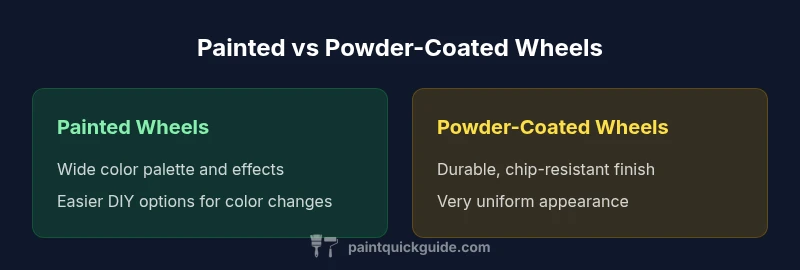
Paint offers broad color flexibility: you can match vehicle colors precisely, create unique shades, or experiment with custom artwork and decals. Metallics and pearlescent effects can be achieved with multiple layers and clear coats, though color matching across batches can be tricky. Powder coatings provide a very consistent result and a wide palette of solid colors, textures, and finishes. The finish tends to be uniform with strong gloss control, but some texture options—like hammered or wrinkle finishes—are less common and can be harder to tweak after curing. For enthusiasts chasing a signature look, paint often wins on customization, while powder coating shines in repeatable, showroom-quality results.
Process steps and downtime
Paint projects typically follow a sequence: wheel removal, thorough cleaning, possible stripping, masking, primer (if needed), color coats, and a protective topcoat. The timeline can vary with shop schedules or DIY setup, but the process can be relatively quick, especially for a color refresh rather than a full restoration. Powder coating requires removing the wheels, media blasting, or chemical prepping to remove contaminants and create a true surface profile, followed by powder application and curing in an oven. The downtime mainly depends on facility access and curing schedules, which means some tasks may take longer than a simple paint refresh. Planning and understanding both processes helps you select a route that minimizes downtime while achieving the desired finish.
Cost considerations and value
Paint costs are highly variable. DIY kits, including primers and clear coats, can be economical for small color changes or experimental looks, but shop-priced painting with color-matched finishes adds to the cost. Powder coating often carries a higher upfront price since a wheel must be prepped, coated, and cured in a controlled environment; the price reflects the labor, curing time, and facility use. Over the long term, powder coating can deliver more value through reduced maintenance, fewer chips, and longer intervals between refinishes. If you prioritize frequent color changes or budget constraints, painting offers flexibility; if durability and a factory-like finish matter most, powder coating typically provides better long-term-value and resilience.
Maintenance and cleaning
Maintenance needs differ. Painted wheels generally require careful cleaning to avoid scratching, with attention to avoiding harsh solvents that can degrade the clear coat. Brake dust can be challenging to remove on matte or textured finishes, and touch-ups may be needed if chips appear. Powder-coated wheels resist brake dust buildup more effectively and are easier to keep looking fresh with mild cleaners. The coating’s smooth, uniform surface tends to shed brake dust more readily and resists UV-related fading when a UV-resistant clear coat is used. Each finish has its recommended cleaning protocols; following them preserves adhesion and gloss, and reduces the likelihood of requiring early rework.
Repairability and long-term care
Paint repairs are possible using color-matched touch-ups or repainting the affected wheel segments. It can be tricky to achieve seamless color matching across a whole wheel, especially if the original finish included metallic or pearlescent effects. Powder coating is more challenging to repair locally; repairs usually call for re-coating the affected section or the entire wheel to ensure consistent color and finish. For most drivers who expect to keep wheels for several years, powder coating minimizes visible wear and maintenance interruptions, while paint offers flexibility for future color changes or quick refreshes as trends or preferences shift.
Safety, heat, and environmental considerations
Wheel coatings must withstand braking heat and environmental exposure. Powder coatings are generally robust against heat and UV exposure, maintaining color and integrity under typical brake temperatures. Paint formulations vary, and some may require additional clear coats or special high-temperature paints for wheels that endure frequent braking or hot conditions. Environmental and safety considerations matter too: powder coating emissions and bake ovens require proper handling, while paint work involves solvent usage and ventilation. In practical terms, a high-quality powder coat finish often delivers better long-term reliability for wheels used in harsh climates or performance driving, though advanced paint systems can be engineered to perform similarly under controlled conditions.
Recommendations by use case: daily driver vs show car
For daily drivers facing road debris and weather exposure, powder coating offers durability and minimal maintenance. Show cars or hobby builds where color customization and decals are a priority may benefit from paint, especially if the look relies on specific hues, metallics, or special effects. If you anticipate frequent color refreshes or want to test a temporary look, paint provides faster iteration with minimal downtime. The choice depends on your goals: long-term resilience and consistency point toward powder coating, while flexibility and customization lean toward paint. PaintQuickGuide’s analysis suggests weighing the trade-offs between upfront costs, long-term value, and the value of color personalization when deciding paint vs powder coat wheels.
DIY vs professional services: which path fits you?
DIY painting can be satisfying for small projects or color refreshes on a budget, but it requires time, proper ventilation, and the right tools to avoid runs and uneven color. Professional painting ensures color accuracy and smooth finishes but costs more and may require wheel demounting and scheduling. Powder coating is typically done by shops with specialized equipment; it demands professional handling, including media blasting and oven curing, which adds to the upfront cost and lead time but yields a durable finish with minimal ongoing maintenance. If you value control and cost savings, a DIY paint route could fit; if you want a premium, durable result with predictable outcomes, a professional powder coating is usually the better bet.
Planning your project: steps to take before committing
Start by evaluating your goals: how long you plan to keep the wheels, whether color customization is a priority, and how much downtime you can tolerate. Gather multiple quotes from reputable shops that specialize in wheels and ask for color samples, finish textures, and warranty terms. Confirm whether the shop uses UV-stable clear coats for paint or a bake-stable epoxy for powder coating, and request a color match or swatch to verify the final appearance. Finally, consider maintenance requirements and potential repair options in the event of chips or curb rash. With a clear plan and a few tested samples, you’ll be positioned to choose the finish that best fits your car, budget, and lifestyle.
Final thought: balancing aesthetics, durability, and cost
Choosing between paint vs powder coat wheels is about aligning your aesthetic goals with practical durability and maintenance expectations. Paint gives you color flexibility and quicker turnarounds for changes, while powder coating offers hard-wearing, consistent finishes that resist brake dust and chips. Your choice should reflect how you drive, where you live, and how you use your wheels. The PaintQuickGuide team believes that smart wheel finishes combine planning, reputable workmanship, and realistic expectations about longevity and upkeep.
Comparison
| Feature | Painted wheels | Powder-coated wheels |
|---|---|---|
| Durability (chip resistance) | Moderate with proper prep and clear coat | High with proper powder chemistry and curing |
| Finish uniformity | Variable; depends on technique and curing | Highly uniform due to controlled application and bake |
| Color options | Wide palette, complex effects possible with multiple coats | Extensive color range with consistent gloss and textures |
| Repairability | Local touch-ups possible but color matching challenging | Repairs require recoating or full wheel rework |
| Process & downtime | DIY or shop-based; shorter turnaround for a color change | Shop-based; longer turnaround due to curing and setup |
| Maintenance and cleaning | Careful cleaning to avoid scratching; frequent refinishing may be needed | Easier to clean; brake dust resists staining; fewer touch-ups |
| Cost overview | Lower upfront for simple color refreshes when DIY possible | Higher upfront; long-term durability often offset by fewer refinishes |
Upsides
- Lower upfront costs for basic paint projects
- Wide color customization options with paint
- Easier to perform quick touches during maintenance
- Powder coating provides durable, uniform finishes with strong chip resistance
- Lower long-term maintenance with a high-quality powder coat
What's Bad
- Paint is more prone to chips and fading in harsh conditions
- Color matching can be difficult after repairs
- Powder coating requires professional services and longer turnaround
- Some textures and color effects are harder to achieve with powder coating
Powder coating generally wins on durability and long-term value; paint is best for customization and lower upfront costs.
Choose powder coating for longevity and a factory-like finish, especially on show or performance wheels. Opt for paint when you want rapid color changes, custom effects, or a DIY-friendly project. Balance your goals, budget, and acceptable downtime to decide.
Your Questions Answered
What are the main differences between painting and powder coating wheels?
Painting and powder coating differ in application, curing, durability, and finish. Paint is a liquid film that can be touched up and color-matched on the fly, but is more prone to chipping and fading. Powder coating is a baked finish that yields a uniform, tougher layer with higher resistance to brake dust and impact, though repairs are less flexible and often require re-coating.
Paint is flexible and cheap upfront but can chip; powder coating lasts longer but needs a shop for application.
Is powder coating wheels more durable than paint?
In general, powder coating offers better chip resistance and a more uniform finish over time, which translates to longer-lasting appearance under typical driving conditions. The durability depends on preps, coating thickness, and proper curing, but powder coating is commonly favored for wheels exposed to road debris and heat.
Powder coating tends to be more durable and chip-resistant than standard paint.
Can I DIY powder coat wheels at home?
DIY powder coating is possible but challenging. It requires equipment such as a powder booth, an electrostatic sprayer, and a curing oven, plus proper safety measures. Most hobbyists choose professional services to ensure a consistent finish and warranty coverage.
DIY powder coating is possible, but it needs special equipment and safety steps.
How long does a powder-coated wheel last vs painted?
Powder-coated wheels typically maintain finish longer under normal driving conditions, with fewer touch-ups needed. Painted wheels may require more frequent refinishing, especially in harsh climates or with curb contact. Longevity depends on prep, environment, and care.
Powder coating usually lasts longer with less maintenance than paint.
What colors or finishes are available for wheel coatings?
Paint offers a wide spectrum of colors, effects, and custom artwork, with clear coats to protect the finish. Powder coating provides a broad color range and consistent gloss, with textures like satin or matte; special effects are more limited but stable and durable.
Paint gives more color variety, powder gives durable color consistency.
Can painted wheels be repaired if chipped?
Yes, painted wheels can be repaired with localized touch-ups or partial repainting. Matching the exact shade and finishing texture can be challenging, especially with metallic or pearlescent paints. Repaint may be required for large chips or fading.
Chips can be repaired, but color match is tricky and may need a full repaint.
Quick Summary
- Assess long-term durability needs before choosing a finish
- Paint offers the most color customization at lower upfront cost
- Powder coating delivers the most durable, uniform finish
- Plan for prep, curing, and potential repairs in advance
- Get multiple quotes from reputable shops for a true comparison