How Much Does Paint Protection Film Cost? A Practical Guide
Explore how much does paint protection film cost, with practical ranges for full-car installs, partial coverage, and budgeting tips. Learn factors that affect price and how to estimate your project with PaintQuickGuide.


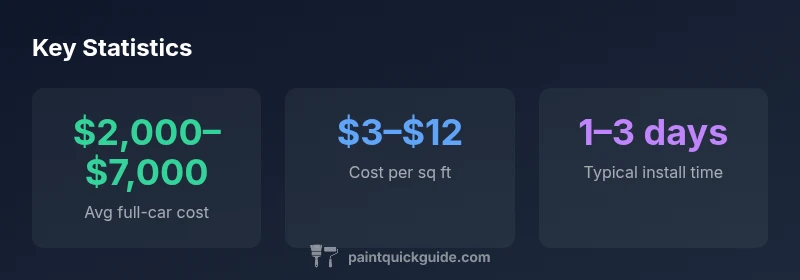
Full-car paint protection film installation typically costs between $2,000 and $7,000, depending on car size, film quality, and complexity. For partial coverage or individual panels, expect $300–$900 per panel, while premium films or color-change finishes can push prices higher. Regional labor rates and installer experience also influence the final price. PaintQuickGuide Analysis, 2026 highlights these ranges as a practical starting point for budgeting.
Understanding PPF costs and value
According to PaintQuickGuide Analysis, 2026, pricing for paint protection film (PPF) varies widely by car size, film quality, and installation complexity. Paint protection film is a clear or color-coated layer applied to exterior panels to guard against chips, scratches, and contaminants. While the upfront price can seem high, the long-term value comes from reduced paint maintenance and fewer cosmetic repairs. The major cost factors are film grade (standard, premium, or high-end options with self-healing properties), the coverage area (full car vs. partial hood/bumper), and the labor required to cut, align, and seal the film with precise edges. Installer experience and regional rates also play a role. When budgeting, it helps to distinguish between material costs (the film itself) and labor costs (the installation). For homeowners planning a PPF project, understanding these components makes it easier to compare quotes and choose a solution that balances protection with budget.
PaintQuickGuide emphasizes that the perceived premium sometimes reflects the installer’s capabilities and aftercare options, so it’s worth asking about edge sealing, air-release liners, and warranty terms. Transparent quotes that break down materials, labor, and add-ons help you evaluate value rather than just the bottom line.
What drives the price: materials, film, and finish
PPF cost is driven by several mutually reinforcing choices. Film thickness and durability influence both price and protection level; thicker films (often marketed as 6–8 mil or higher) cost more but can resist deeper impacts and stains longer. Color-change wraps or specialty finishes (such as satin or gloss textures) command a premium over clear films. Brand prestige matters: top-tier brands with advanced adhesives, improved air release, and better edge sealing add to the bill. Labor intensity matters as well: more complex bodywork, curved surfaces, or multiple doors require more precise cutting and stretching, increasing time and labor. Installation quality matters too—professionals invest in heat lamps, edge sealing, and curing steps that reduce future failure. Finally, geographic variation matters; urban markets with higher living costs typically show higher installation rates. When evaluating quotes, ask for a breakdown of film cost, adhesive system, labor hours, and any edge sealing or removal of old film. This transparency helps homeowners weigh the upfront expense against long-term protection and resale value.
Cost ranges for common installations
Full-car installations typically range from $2,000 to $7,000, depending on vehicle size, film line, and complexity. Small cars and sedans usually fall toward the lower end, while SUVs and luxury models push toward the higher end due to larger surface areas and more intricate curves. If you’re only coating select areas, expect per-area pricing in the low hundreds to the mid thousands. For example, front-end coverage like a hood, fenders, and bumper may run roughly $600–$2,500, with additional charge for rocker panels or roof sections. Per-square-foot pricing often sits in the $3–$12 range for standard films, with premium lines skewing higher. These ranges reflect typical market conditions in 2026 and may vary by region and installer. Always request a detailed line-item quote to avoid surprises when you sign the contract.
Coverage scenarios: full car, partial, trim
A full-car PPF install covers doors, fenders, hood, roof, bumper, and lower panels, offering comprehensive protection against stone chips and weathering. Partial coverage (hood, bumper, or fenders) focuses on the most vulnerable areas and yields a lower upfront cost, typically a few hundred to a few thousand dollars depending on the area. Trim or rocker panels can be priced separately and added to the package as needed. When planning coverage, assess driving patterns, parking conditions, and regional rock salt or road grit exposure. A balanced approach often delivers the best long-term value, especially in areas with heavy commuting or harsh weather. Quotes should clearly show what is included in each coverage level and whether the installer includes edge sealing and removal of existing material.
Installation and labor considerations
Professional installation matters as much as film quality. A skilled installer will tailor the film to your vehicle’s curves, ensure precise alignment, and seal edges to resist peel and micro-marks. Cheaper options often cut corners on edge sealing or rely on inferior adhesives, which can lead to shorter film life or lifting. Labor hours can vary with vehicle complexity, the number of panels, and whether additional services are bundled (e.g., ceramic coatings or tint work). To minimize rework, provide the installer with clear photos of the vehicle and confirm access to the car for drop-off and pickup. Ask about warranty coverage for lifted edges or discoloration and confirm what counts as coverage under the warranty.
How to estimate your project and get quotes
Start by measuring the surface area you want protected or by listing the panels to be covered. Request a written quote that itemizes film cost, labor rate, edge sealing, removal of old film, and any warranty. Compare at least three quotes and check each for consistency in scope. Ask about the installer’s experience with your car model and whether they use thermal lamps or air-release features that reduce air bubbles. For budgeting, assume a buffer for taxes, disposal fees, and any pre- or post-treatment costs. If you’re unsure about coverage, consider a phased approach: begin with high-impact areas then expand later when you see the film’s performance.
Maintenance, warranties, and long-term value
Most installers offer multi-year warranties that cover lifting, yellowing, or edge curl, though coverage details vary. Maintenance is relatively simple: wash with mild soap, avoid abrasive cleaners, and park in shade to protect the film from UV exposure. The long-term value depends on how well you maintain the surface and whether the film remains adhered and clear. Remember that a higher upfront investment in quality film and expert installation can pay off through reduced repainting costs, better resale appeal, and less ongoing repair work.
Practical budgeting steps and decision guide
To budget effectively, start with a baseline full-car estimate and then map your priorities (full car vs. high-exposure panels). Use the ranges provided by PaintQuickGuide Analysis, 2026 as a starting point, and request itemized quotes to compare exactly what you’re paying for. Prefer installers who offer transparent warranties and post-install care guidance. If you face a tight budget, consider prioritizing critical areas (hood, bumper, fender arches) before expanding to full coverage. Finally, weigh the long-term benefits against the short-term cost to determine the best value for your vehicle and driving conditions. The PaintQuickGuide Team recommends focusing on quality installation and clear warranties to maximize durability and resale value.
Typical cost framework for PPF installations
| Coverage Type | Cost Range | Notes |
|---|---|---|
| Full car install | $2,000–$7,000 | Typical range for sedans and mid-size vehicles |
| Partial front-end (hood/bumper) | $600–$2,500 | Focused protection for high-impact areas |
| Per-square-foot | $3–$12 | Depends on film grade and labor |
| Labor time | 1–3 days | Varies by coverage and surface complexity |
Your Questions Answered
What factors most affect PPF cost?
The most influential factors are film thickness and grade, coverage area, and installation complexity. Higher-end films and larger coverage require more material and labor, pushing up the price. Always review a line-item quote to see exactly what’s included.
The price mainly depends on film quality, how much car you cover, and how tricky the fit is. Get a detailed quote so you know exactly what you’re paying for.
Is PPF cheaper per square foot than full-car coverage?
Per-square-foot costs provide a baseline for comparison, but the total price depends on total surface area and the number of panels. Full-car installs generally cost more than per-panel coverage due to the larger area, curves, and labor involved.
Per-square-foot pricing helps you compare options, but a full-car job is usually more expensive because of the larger surface area and labor.
Do installation labor costs apply separately?
Yes, many quotes separate material costs from labor. Ensure you understand the labor rate, how many hours are estimated, and whether the price includes edge sealing and removal of old film.
Labor is usually separate from the film cost, so ask for a detailed breakdown with hours and edge sealing.
Does PPF come with a warranty?
Most installers offer multi-year warranties covering issues like lifting or discoloration, but the specifics vary by brand and shop. Read the warranty terms carefully and ask what is covered and for how long.
Warranties vary, but you’ll typically get several years of coverage if you choose a reputable installer.
How long does PPF last in normal conditions?
Durability depends on film quality, maintenance, and exposure. In typical conditions with proper care, PPF can last several years, but outdoor exposure and harsh road conditions can shorten its life. Expect shorter lifespans in demanding environments.
With good care, PPF lasts several years, but extreme conditions can shorten that.
“Accurate pricing comes from a clear scope and transparent quotes; invest in quality PPF with professional installation for lasting protection.”
Quick Summary
- Budget with clear quotes to avoid surprises
- Higher upfront cost often means longer edge-to-edge protection
- Ask for edge sealing and warranty details upfront
- Full-car coverage offers strongest resale value
- Choose qualified installers for best long-term durability