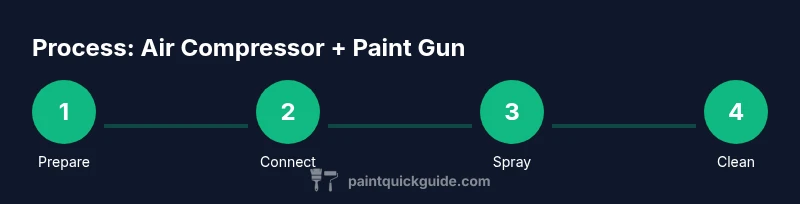
Air Compressor with Paint Gun: Setup and Use Guide
A practical guide to choosing, setting up, and using an air compressor with a paint gun for automotive refinishing, home painting, and DIY projects. Learn sizing, setup, nozzle tips, maintenance, and budgeting to achieve professional finishes.


An air compressor with a paint gun lets you spray even coats on cars, furniture, or walls by delivering a steady stream of pressurized air. To succeed, choose a unit with adequate CFM, a compatible spray gun, and proper hoses and regulators. This setup handles automotive finishes, latex paints, and primers when tuned correctly.
Why a dedicated air compressor with paint gun matters
For anyone pursuing automotive refinishing or home painting with a smooth, even laydown, pairing an air compressor with a paint gun is a game changer. The combination provides regulated, consistent air flow, better atomization, and less texture in the final coat compared with consumer sprayers. According to PaintQuickGuide, investing in a properly rated compressor and a compatible spray gun is the single most cost-effective step toward a professional-looking finish. The PaintQuickGuide team found that hobbyists who prioritize airflow and nozzle quality consistently achieve fewer runs, fewer orange-peels, and more predictable dry times. In 2026, more DIYers are upgrading from improvised spray methods to dedicated air-assisted systems, which helps with project consistency and waste reduction.
How air-assisted painting works
Air-assisted painting uses compressed air to push paint through a spray nozzle, breaking the liquid into a fine aerosol. The air stream both atomizes the pigment and shapes the spray pattern. The key is controlling air pressure and material flow so the droplets land evenly on the surface without runs or misting. Higher-quality guns often provide adjustable fan width and spray pattern, enabling you to cover large panels quickly while maintaining edge control. When you keep the air clean and the nozzle size matched to the coating, you’ll see fewer texture issues and more uniform color absorption, which translates to a more professional finish.
Essential components and compatibility
A successful setup combines several pieces of hardware and consumables. Core components include the air compressor (with sufficient CFM at your target PSI), a spray gun compatible with the coatings you plan to use, and a well-cut hose with durable fittings. A regulator with gauge, moisture trap, and at least one inline filter help maintain stable pressure and clean air. You’ll also need compatible thinner, cleaning solvents, and protective equipment. Optional but valuable add-ons include a pressure pot for larger jobs, a dual-filter system, and color-matching tools. Across automotive and home painting, quality components reduce downtime and improve results, especially for beginners.
Sizing your system: CFM, PSI, and tank size
Sizing is the bridge between the coating you want to apply and the equipment you own. Start with the spray gun’s recommended CFM at a given PSI; most automotive and high-solid paints require mid-range PSI with a steady CFM. A larger tank helps sustain pressure during longer passes and reduces the risk of pressure droop, especially on bigger panels. Duty cycle matters too: a compressor rated for continuous operation will outperform a small portable model on extended sessions. For DIY use, aim for a compressor that can meet or exceed the gun’s CFM rating, with a comfortable safety margin for peak demands. Remember that stable pressure minimizes misting and improves the finish quality.
Setup and safety basics
Set up in a well-ventilated area with appropriate PPE: respirator mask rated for the coating, safety goggles, and nitrile gloves. Make sure work surfaces are clean and protected from overspray with drop cloths or plastic sheeting. Connect the hose to the regulator, then attach the spray gun securely. Start the compressor and let it reach operating pressure before testing on a scrap panel. Never spray indoors without ventilation; use a spray booth or outside with a portable exhaust setup to control fumes and VOC exposure.
Nozzle choices for different paints and finishes
Different coatings demand different nozzle sizes and spray patterns. Automotive finishes often need finer nozzles (smaller orifice) for thin base coats and clear coats, while primers may tolerate larger orifice sizes. Household paints typically respond better to mid-range nozzles that balance coverage and air consumption. Match the nozzle to the paint’s viscosity and required film thickness; test on a scrap panel to fine-tune. Don’t switch nozzle sizes mid-project unless you thoroughly recalibrate air pressure and flow to preserve consistency.
Test panels and technique: getting it right
Always start with a test panel to dial in your settings before spraying the actual workpiece. Begin with a medium oil or water-based base so you can clearly see coverage, evenness, and edge control. Use smooth, overlapping passes and maintain a steady distance from the surface, typically 6–9 inches for automotive work and 8–12 inches for house paints. If you notice dry spray or orange peel, adjust the air pressure or viscosity, and ensure the surface is clean and dust-free. Keep your wrist relaxed and move your arm in controlled arcs to avoid splotches or heavy runs.
Maintenance, cleaning, and troubleshooting
After finishing a job, flush the system with the appropriate cleaner and thoroughly rinse the spray gun. Disassemble and clean the nozzle, needle, and cup to avoid coating residues that can clog or ghost in future sprays. Check hoses for cracks and replace worn seals or O-rings. Common problems include poor atomization, heavy overspray, and equipment leaks; these usually result from incorrect pressure settings, dirty air lines, or improper thinning. Regular maintenance saves time and extends the life of your equipment.
Cost considerations and practice routines
A reliable setup ranges from entry-level to pro-grade, with overall cost influenced by compressor CFM, gun quality, and accessories. For DIYers, budgeting for a mid-range 6–8 CFM unit, a professional spray gun, a good regulator, and a moisture trap provides solid performance without breaking the bank. You’ll also want protective gear and cleanable coatings. Practice runs on scrap panels help you achieve consistent results and reduce material waste, making the investment more economical over time. Build your setup incrementally, testing with different coatings and thinning ratios to understand how each variable affects the finish.
Authority sources
- For safety and ventilation standards, review guidelines from government agencies and academic resources to ensure you follow best practices and local regulations.
- Always verify that your equipment calibration aligns with the paint manufacturer’s guidelines to preserve warranty and coating properties.
- Consider keeping a maintenance log to track part replacements and performance changes over time.
Authority Sources (continued)
- https://www.osha.gov/
- https://www.epa.gov/
- https://www.cdc.gov/niosh/
Authority Sources
- https://www.osha.gov/
- https://www.epa.gov/
- https://www.cdc.gov/niosh/
Tools & Materials
- Air compressor with adequate CFM at target PSI(Two-stage preferred for consistent pressure and longer duty cycle)
- Spray gun compatible with your coatings(Choose gravity-fed or siphon feed based on preference and project size)
- Hose with fittings(Solid fittings; 25–50 ft length commonly used for mobility)
- Regulator with gauge(Controls PSI at the gun for stable atomization)
- Moisture trap / air filter(Keeps water and particulates out of the spray line)
- Paint thinner/cleaner(Use appropriate thinner for your coating and clean after use)
- Drop cloths or plastic sheeting(Protect surrounding areas from overspray)
- Safety gear (respirator, goggles, gloves)(Respirator should be rated for the coating VOCs)
- Scrap panels for test spraying(Use inexpensive panels to dial in settings before finishing)
Steps
Estimated time: 60-120 minutes
- 1
Inspect and prep equipment
Check all components for damage, tighten fittings, and ensure the compressor reaches operating pressure without leaks. Clean the spray gun cup and nozzle to prevent clogs. Prepare your workspace with ventilation and drop cloths.
Tip: Run a quick air purge on clean solvent to clear any manufacturing residue before first use. - 2
Attach and calibrate the setup
Connect the hose to the regulator and gun; verify pressurized air output. Set initial PSI to the gun manufacturer’s recommendation and adjust once you test on a panel. Attach a moisture trap and filter inline.
Tip: Use the smallest practical needle and nozzle for your first test to reduce material waste. - 3
Thin and mix paints appropriately
Follow the paint manufacturer’s thinning guidelines and record your ratios for future reference. Stir thoroughly to avoid settled pigment. Pour into a clean cup, leaving the rest in the can.
Tip: Always perform a test spray on scrap material to confirm viscosity and flow. - 4
Test spray on a scrap panel
Hold the gun at a consistent distance (6–9 inches for automotive work) and pass smoothly across the panel with overlapping strokes. Observe for orange peel, runs, or dry spray. Adjust air pressure and thinning as needed.
Tip: Keep your pace steady; vary movement to avoid heavy buildup in one pass. - 5
Spray your actual project
Begin with light, even coats rather than a single heavy layer. Allow adequate flash time between coats as specified by the coating. Maintain consistent distance and motion to ensure a uniform finish.
Tip: Cool, steady hands and short, consistent passes yield the best results. - 6
Clean and store equipment
Rinse the gun and lines with the correct solvent until the rinse runs clear. Disassemble and dry all parts before storage. Label remaining thinner and paints for safe disposal.
Tip: Never leave coatings in the gun overnight; clean promptly to prevent hardening.
Your Questions Answered
What size compressor do I need for a spray gun?
Select a compressor that can deliver the spray gun’s required CFM at the operating PSI. A margin above the gun’s spec helps sustain steady airflow during longer coats.
Choose a compressor with enough CFM to meet your gun’s needs, plus a little extra for stability.
Can I use latex paint with a spray gun?
Yes, but latex often requires thinning and a larger nozzle. Test viscosity on scrap and adjust thinning according to the manufacturer’s guidelines.
Yes, but you may need thinning and a different nozzle for best results.
Do I really need a moisture trap?
A moisture trap helps prevent water from entering the spray gun, which can cause splotches and poor atomization, especially in humid conditions.
Yes, use a moisture trap to avoid water in the spray path.
How often should I clean the spray gun?
Clean the spray gun after each use, including the nozzle, needle, and cup. Flush lines with the appropriate solvent and store components dry.
Clean the gun after every project to prevent buildup.
What about safety when spraying automotive finishes?
Automotive finishes have VOCs and require proper ventilation, a respirator, and eye protection. Work in a dedicated area and follow the coating’s safety data sheets.
Use ventilation and PPE when spraying automotive finishes.
Can I spray thin coats without runs or orange peel?
Yes, by maintaining a consistent distance, moving at a steady pace, and applying multiple light coats rather than one heavy layer.
Yes—stick to light, even coats with even speed.
Watch Video
Quick Summary
- Choose a compressor with adequate CFM for your spray gun.
- Match nozzle size to paint viscosity for optimal atomization.
- Test on scrap panels before finishing the actual project.
- Maintain and clean equipment to extend lifespan and finish quality.