Paint Ball Gun: Safe Setup, Use, and Maintenance Guide
Learn to safely select, assemble, maintain, and troubleshoot a paint ball gun for home or hobby use. This practical guide covers gear, setup steps, cleaning, and storage.


This guide helps you safely select, assemble, and maintain a paint ball gun (paintball marker) for home or hobby use. You’ll learn essential safety gear, setup steps, maintenance routines, and troubleshooting to keep your marker accurate and reliable.
What is a paint ball gun and why safety matters
A paint ball gun, also known as a paintball marker, is a device that fires spherical paint-filled pellets. For hobbyists and DIY players, understanding how it works and respecting safety rules is essential. This guide focuses on home and recreational use of a paint ball gun, emphasizing safe handling, eye protection, and responsible gameplay. Our aim is to help you enjoy paintball while minimizing risk to yourself and others. The PaintQuickGuide team notes that improper handling is the leading cause of injuries in recreational paintball, which is why this article starts with safety fundamentals and ongoing maintenance.
By framing safe practices around common home use and hobby leagues, you gain confidence to set up, fire, and store your marker correctly. The term paint ball gun will be used interchangeably with marker throughout this guide to reflect user familiarity while maintaining precise terminology.
Essential safety gear and precautions
Before you load the marker, equip appropriate safety gear: a full-face mask with ANSI Z87.1 certification, paintball gloves, and long-sleeve clothing. Keep barrel plugs or socks in place when not on the field. Never shoot at close range, and always respect field rules and local regulations. In this section we cover protective gear selection, safe play zones, and how to handle potential malfunctions by stopping play and inspecting the marker. You will also learn how to communicate with teammates to avoid accidental discharges and how to check your surroundings before firing.
Additionally, store your marker unloaded and uncapped when not in use, and always perform a quick safety check each time you pick up the gun. The goal is to reduce risk of accidental discharge and eye injuries, which are the most serious concerns in hobby paintball.
How to choose a paint ball gun
Choosing a paint ball gun involves evaluating marker type, caliber, air system, and reliability. For beginners, a semi-auto marker in .68 caliber with a consistent feed is ideal for learning. Consider whether you want CO2 or High-Pressure Air (HPA); CO2 is cheaper but can cause inconsistent velocity with temperature changes, while HPA offers steadier performance. Look for a reliable bolt system, easy field maintenance, and readily available replacement parts. Finally, verify that the marker is compatible with common loaders and barrels to avoid compatibility headaches later on. Paint ball guns vary widely in weight, ergonomics, and ease of maintenance, so test how the grip feels in your hand before purchasing.
Buy from reputable retailers who provide basic maintenance guides and a starter kit with o-rings and lube, so you can begin with proper care from day one.
Setup basics and maintenance essentials
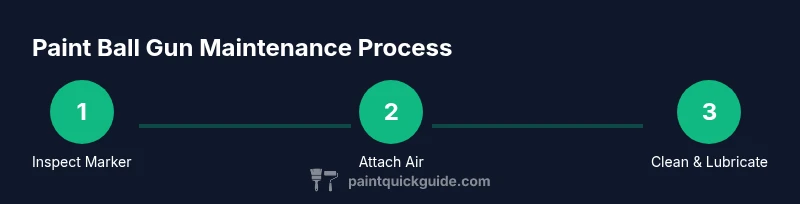
Setting up a paint ball gun properly reduces jams and improves accuracy. Start by inspecting the marker for visible damage and ensuring all screws are tight. Attach the air supply, verify the tank pressure (if you’re using HPA, set within manufacturer specs), and install the loader. Check that the bolt cycles cleanly and that the trigger feels solid without excess play. Finally, install a barrel sock or cover and a barrel plug if you’ll be transporting the marker.
Regular maintenance is essential: inspect O-rings for wear, lubricate per the manufacturer’s guidance using a small amount of silicone grease, and replace worn seals promptly. Store the marker in a cool, dry place with the air system depressurized when possible to prevent gas loss.
Cleaning, lubrication, and storage tips
Post-game cleaning is critical for longevity and performance. Wipe down the exterior with a microfiber cloth, remove paint residue from the bolt, and run a barrel swab through the barrel to prevent buildup. Lubricate O-rings and the bolt lightly; avoid over-lubrication, which can attract dust and debris. Dry-fire tests should be performed in a controlled environment. For storage, disconnect the air source, remove paint from the hopper, and store the marker in a case away from direct sunlight and extreme temperatures. Check the seals periodically and replace any o-rings showing signs of cracking or hardening.
Troubleshooting common issues and fixes
Common issues include inconsistent velocity, frequent barrel pops, and air leaks. If velocity is erratic, re-check the air regulator settings and chronograph the marker in a stable environment. For barrel pops, inspect the hop feed and ensure the loader is feeding consistently. If you hear air escaping, inspect O-rings for wear and replace as needed. Always carry spare O-rings and a small toolkit; this reduces downtime during games. When in doubt, consult the manufacturer’s maintenance guide and avoid improvising seal materials.
Responsible use and field-ready practices
Paint ball guns are designed for specific environments—-fields or private ranges with proper protection. Always use a mask, keep a safe distance from non-participants, and follow the field’s rules on velocity and engagement distance. Dispose of spent shells properly and maintain respect for others to keep the sport fun and safe. This section emphasizes the mindset of safe play, ongoing maintenance, and responsible storage to ensure longevity of your marker and enjoyment of the game.
Tools & Materials
- Air Tank (CO2 or HPA)(Ensure the tank is within its hydrostatic test date and compatible with your marker)
- Hopper/loader(Must feed shells reliably; inspect for cracks)
- Barrel sock/plug(Use during transport and non-playing times)
- Allen wrenches set(Common sizes 1/8", 3/32" for marker disassembly)
- Lubricant suitable for markers(Silicone-based; apply sparingly to O-rings)
- O-ring replacement kit(Carry a basic kit for quick field repairs)
- Barrel cleaning rod and swab(Keep the bore clean to prevent jams)
- Microfiber cloth(For exterior cleaning and wipe-downs)
- Safety gear set(Mask, gloves, and protective clothing)
Steps
Estimated time: 30-45 minutes
- 1
Inspect marker and safety features
Check the marker for cracks, loose screws, and ensure the safety switch functions smoothly. Confirm the barrel is clear and the safety mechanism engages when the marker is not in use.
Tip: Perform this check before every session to prevent failures under pressure. - 2
Attach air supply and verify pressure
Connect the air tank securely, then set the regulator to the marker’s recommended FPS/velocity range. Verify no leaks by listening and inspecting cylinder connections.
Tip: If you hear a hiss, tighten fittings gradually and re-check after 5 minutes. - 3
Load the hopper and cycle the bolt
Place shells into the loader and cycle the bolt to seat a round. Ensure the marker sits in a stable position and that the loader feeds smoothly.
Tip: Avoid forcing shells; pump or cycle the bolt gently to prevent jams. - 4
Attach safety cover and barrel plug
Install a barrel sock or plug when moving between areas to prevent accidental discharges. This step is essential for transport safety.
Tip: Barrel plugs are your first line of defense against unwanted firing. - 5
Chronograph and velocity check
Use a chronograph to confirm velocity within the field-specified limits. Adjust regulator or hammer as needed and re-test until stable.
Tip: Record your numbers for future reference and avoid sudden dial changes during play. - 6
Conduct a safe test-fire
Fire a few rounds at a safe distance to confirm grouping and feed reliability. Stop immediately if misfeeds or leaks occur.
Tip: Stand behind cover while testing and ensure no bystanders are in line with the marker. - 7
Clean, lubricate, and store
Disassemble necessary parts, wipe away residue, apply light lubrication to O-rings, and store in a cool, dry place with the air source detached.
Tip: Keep a dedicated maintenance kit in your gear bag for quick post-game care.
Your Questions Answered
What safety gear should I wear when using a paint ball gun?
Always wear a full-face mask with ANSI Z87.1 rating, paintball gloves, and long sleeves. Keep a safe distance from others and follow field rules to prevent injuries.
Always wear a full-face mask and gloves when using a paint ball gun and follow field rules.
What is the difference between CO2 and HPA for a paint ball gun?
CO2 is cheaper but can be less consistent due to temperature changes. HPA provides steadier pressure and velocities, but tanks are typically more expensive. Choose based on desired consistency and maintenance willingness.
CO2 is cheaper but temperature-sensitive; HPA is more consistent and reliable but costs more.
How often should I clean my paint ball gun?
Clean the marker after each playing session to remove paint and debris. Do a more thorough cleaning weekly if you play regularly, focusing on the bolt and o-rings.
Clean your marker after each game; give it a deeper clean weekly if you play often.
Can I modify or upgrade my marker?
Moderate upgrades like replacing o-rings, barrels, or hoppers can improve performance. Avoid unauthorized modifications that may affect safety or violate field rules and warranties.
Upgrades are okay if they’re field-approved and won’t compromise safety.
What should I do if the marker jams or leaks during use?
Stop firing, disconnect the air supply, inspect for jam or leak, and replace faulty O-rings or seals as needed. If unresolved, seek professional service.
If it jams or leaks, stop firing and check the seals; replace parts if needed or consult a pro.
Are there legal considerations for using a paint ball gun?
Follow local regulations and field rules. Do not use markers outside designated areas and avoid carrying them in public spaces where prohibited.
Follow local laws and field rules; don’t carry markers in public spaces where prohibited.
Watch Video
Quick Summary
- Wear proper safety gear at all times
- Regularly chronograph to stay within velocity limits
- Keep marker clean and lubricated for reliability
- Transport with barrel cover and unloaded marker