Intumescent Paint: Practical Fire-Resistant Guide
Discover how intumescent paint creates fire resistance on steel and wood, how it expands with heat, and practical prep, application steps, drying times, safety, and project cost considerations.


Intumescent paint provides fire resistance by expanding into an insulating layer when exposed to heat, protecting steel, timber, and other substrates. Proper prep and correct film thickness are key to reliable performance. These coatings act as passive protection, delaying heat transfer while maintaining structural integrity during the earliest stages of a fire.
What is intumescent paint and how it works?
Intumescent paint is a specially formulated coating that sits on structural elements like steel beams, steel columns, timber, and sometimes concrete. Its primary purpose is passive fire protection: during a fire, the coating swells and chars, expanding into a thick, insulating layer that slows heat transfer into the substrate. This delay buys critical time for occupants to evacuate and for responders to act, potentially preserving load-bearing capacity. The chemical reaction is triggered by heat, prompting a physical expansion that creates a porous barrier with low thermal conductivity. The resulting layer is not a paint film in the ordinary sense; it becomes a protective firewall that can be several millimeters thick, depending on the substrate and design thickness. Performance is linked to correct thickness, uniform coverage, and adhesion to a clean, dry surface. Because intumescent coatings are designed to work on specific materials, always verify substrate compatibility with the manufacturer’s data sheet. In practice, a well-applied system can meet code requirements for certain fire-resistance ratings without extra cladding or heavy mechanical fireproofing, making it a cost-effective option in many commercial and residential projects.
According to PaintQuickGuide, intumescent paint provides a cost-effective way to improve fire resistance for DIY projects. These coatings act as passive protection, delaying heat transfer while maintaining structural integrity during the earliest stages of a fire. The goal is a thin, uniform film that expands predictably when exposed to heat.
Types and compatibility: surfaces and substrates
Intumescent coatings come in several chemistries, each optimized for different substrates and conditions. Water-based systems are popular for interior steel and timber because they tend to have lower odor and faster cleanup, while solvent-based formulations can offer greater resistance to damp environments and harsher conditions. Some products are designed to be applied directly to prepared metal, while others require a primer or even a separate base coat. When you choose a product, check the substrate data sheet for compatibility with steel, wood, concrete, or masonry. If you plan to topcoat, verify that the topcoat won’t interfere with the intumescent expansion or UV stability. In all cases, perform a small adhesion test on the exact substrate and surface preparation you intend to use. This ensures you won’t encounter delamination or poor expansion once the coating is heated. PaintQuickGuide’s guidance emphasizes measuring surface roughness and cleanliness, as well as confirming the system’s intended fire rating before scaling up.
Preparation and priming for best results
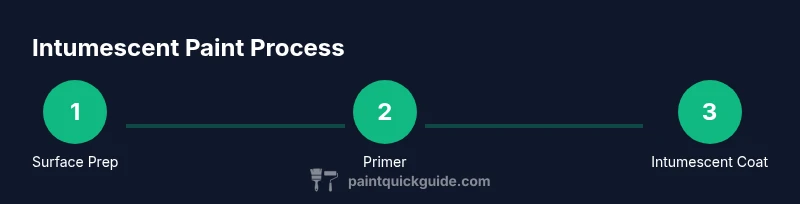
Surface prep is the single most important step for reliable intumescent performance. Begin by cleaning the substrate to remove oil, grease, dust, and corrosion products. If rust is present on steel, treat it with a rust converter or mechanical removal so the coating bonds evenly. Lightly abrade glossy surfaces to increase adhesion, then wipe again with a tack cloth. Allow the surface to dry completely before applying any primer. Apply a primer that is compatible with both the substrate and the intumescent coating you’ll use. Primers help promote adhesion and ensure a uniform base film, which is crucial for predictable expansion. Any moisture trapped under the coating can cause blistering, so confirm the surface dew point and ambient conditions before moving forward.
Application basics: coats, thickness, and finishing
Follow the manufacturer’s guidance for the exact film thickness and number of coats. Most systems require at least one or two thin coats rather than one thick layer to avoid trapped solvents and poor expansion. Maintain even pressure and a consistent distance from the surface when spraying, or use a high-quality roller or brush for manual applications. If a topcoat is required, ensure it is compatible with the intumescent system and does not compromise the expansion properties. Drying times vary with temperature and humidity, so plan around local conditions. After curing, inspect the finish for uniform coverage and any holidays or thin spots. Finally, test a small area with controlled heating (as per manufacturer protocol) to confirm the expected expansion behavior.
Cost considerations, sustainability, and maintenance
Cost for intumescent coatings varies with substrate, required thickness, system complexity, and whether a topcoat is used. The price reflects materials, labor, and any specialty equipment needed for access and application. While some systems are straightforward to apply, others may require skilled installers to achieve consistent results across complex geometries. Durable performance depends on proper surface preparation, correct film thickness, and maintenance checks. Long-term maintenance involves periodic inspection for coating integrity and reapplication when the expanded layer shows wear or damage. Consider the total life-cycle cost, not just upfront price, and select a system that provides the necessary fire rating for your specific use case.
Safety, regulations, and environmental considerations
Work in a well-ventilated area and wear appropriate PPE, including gloves and a respirator if recommended by the manufacturer. Many intumescent products have low VOC levels once cured, but solvents can be hazardous during application, so follow product data sheet instructions and local regulations. Store products upright and away from heat to prevent premature curing. In some regions, fire protection coatings have specific code approvals; ensure your chosen system meets local fire-rating requirements before installation. Dispose of any waste according to local environmental regulations and manufacturer guidelines.
Choosing products and when to hire a pro
If you are coating simple substrates with standard geometries, a well-documented DIY-ready system might suffice. For complex shapes, high-fire-risk environments, or when a guaranteed fire rating is required, hiring a qualified contractor is prudent. Always verify product approvals, recommended thickness, substrate compatibility, and topcoat requirements. A professional can also assist with surface preparation, thickness testing, and a final inspection to confirm compliance with building codes.
Tools & Materials
- Intumescent coating (base coat)(Choose a product matched to substrate and fire rating target)
- Primer compatible with intumescent coatings(Follow manufacturer recommendations for surface type)
- Topcoat compatible with intumescent system(Only if the system requires a finish layer)
- Clean rags and degreaser(For removing oils/grease before coating)
- Solvent or water for cleanup(Depends on product formulation)
- Nitrile gloves, respirator or mask, safety goggles(Personal protective equipment per product data)
- Ladders or scaffolding(Ensure safe access to all areas)
- Fine-grit sanding block or abrasive pad(Key gloss and improve adhesion)
Steps
Estimated time: 2-8 hours
- 1
Assess substrate and compatibility
Identify the substrate (steel, timber, concrete) and confirm the intumescent system is rated for that material. Review the manufacturer’s data sheet for surface prep, adhesion, and thickness requirements. Plan access and safety measures before starting.
Tip: Keep the substrate dry and free of dust; record conditions for quality checks. - 2
Prepare the surface
Remove rust, oil, grease, and old coatings. Lightly abrade glossy surfaces to promote adhesion, then clean again. Ensure the surface is completely dry before priming.
Tip: Use a tack cloth to remove fine dust after abrasion. - 3
Apply primer
Apply an even coat of primer approved for the substrate and intumescent system. Allow full cure time per the manufacturer’s guidelines. A good primer improves adhesion and uniform expansion.
Tip: Test adhesion on a small area before full coverage. - 4
First coat of intumescent paint
Apply the first thin coat in smooth, overlapping passes. Maintain consistent distance and pressure to avoid runs or holidays. Do not rush drying; ensure ambient conditions meet product specs.
Tip: Use a high-quality brush or sprayer designed for the product type. - 5
Check thickness and recoat if needed
Inspect the dried film for uniform thickness. Apply additional coats as required to meet the target film thickness. Allow each coat to dry before applying the next.
Tip: If you see holidays, lightly re-sand and apply a thin additional layer. - 6
Topcoat (if required)
If the system specifies a topcoat, apply it after the intumescent layer has cured. Use a compatible finish that won’t interfere with expansion or UV exposure.
Tip: Check UV resistance and color-fastness if the coating is for exterior use. - 7
Cure and inspect
Allow the coating to cure completely under the recommended conditions. Inspect for uniform coverage and integrity. Clean equipment and dispose of waste per guidelines.
Tip: Perform a post-cure inspection in controlled heat tests if required by code. - 8
Document and plan maintenance
Record product names, batch numbers, thickness measurements, and environmental conditions. Schedule future inspections to ensure ongoing performance and reapply as needed.
Tip: Maintain a maintenance log and follow manufacturer recoat intervals.
Your Questions Answered
What is intumescent paint?
Intumescent paint is a passive fire protection coating that expands when heated to form an insulating layer, slowing heat transfer and helping preserve structural integrity.
Intumescent paint expands when heated to form an insulating layer that slows heat transfer.
On which surfaces can intumescent paint be used?
It can be used on steel, timber, and some concrete and masonry substrates, but always check the manufacturer’s compatibility guide for each product and substrate.
It can be used on steel and timber, but check the product guide for compatibility.
Do I need a topcoat after applying intumescent paint?
Many systems include or require a topcoat for UV protection and aesthetic reasons; verify with the product data sheet to ensure it does not impair expansion.
A topcoat may be required for protection; confirm with the product data sheet.
How long does it take for intumescent coatings to cure?
Cure times vary by product, thickness, and environment; follow manufacturer guidelines and perform a cure check before exposure to heat.
Cure time depends on the product and conditions; follow the manufacturer.
Is intumescent paint safe for home and car projects?
Yes, when used as directed, but ensure proper ventilation and PPE during application and disposal of waste according to local regulations.
Yes, with proper ventilation and PPE during application.
How do I choose the right intumescent product?
Match the substrate, fire rating target, and environmental conditions to the manufacturer’s data sheets, and consider whether a topcoat is required.
Choose a product based on substrate, required fire rating, and environment.
Watch Video
Quick Summary
- Prepare surface thoroughly before coating
- Use compatible primers and topcoats
- Apply thin, uniform coats with proper drying times
- Verify thickness and curing before exposure