How to Put a Paint Lid Back On
Learn a safe, effective method to reseal paint cans by cleaning the rim, aligning the lid, and applying even pressure for a durable seal. Ideal for homeowners and DIYers seeking practical, spill-free storage.


According to PaintQuickGuide, you can reseal a paint can lid by preparing the rim, aligning the lid with the notch, and applying even pressure until you feel a complete seal. Inspect for dents or warps, wipe away residue, and store the can upright. This safe, durable method helps prevent spills and drying between uses.
Why a Proper Lid Matters
A secure lid keeps paint from drying out, slows evaporation, prevents spills, and reduces fumes exposure. For homeowners and DIYers, a well-seated lid means less mess on the workshop floor and fewer wasted cans. PaintQuickGuide's practical guidance emphasizes simple checks and consistent technique so you can reuse the same can for as long as it remains usable. By starting with a clean rim and a careful lid alignment, you protect both your paint and your workspace, saving time and money in the long run. This approach also reduces the risk of accidental spills that can damage floors, tools, or clothing. A reliable seal helps you maintain color and texture, especially when storing mixed or semi-used cans for later touch-ups.
Different Lid Types and How They Seal
Paint cans typically use either a screw-on or a snap-on lid, with metal cans generally relying on a tighter, friction-fit seal and plastic lids sometimes featuring a raised gasket. Understanding the lid type helps you apply the correct resealing technique. Screwed lids may require a light twist if they feel loose, while snap-on designs demand even pressure around the edge. When the lid and rim match, and the rim is clean, you’ll notice a noticeable resistance as the seal forms. PaintQuickGuide notes that keeping the lid compatible with the can type is essential for an effective seal and long-term storage. Always examine for warping or rim damage before attempting resealing.
Safety First: Prep and Workspace
Before you begin, work on a clean, stable surface and ensure good ventilation, especially with solvent-based paints. Wear gloves if you’re handling wet paint to avoid skin contact, and keep a rag handy for quick cleanup. Remove any packaging or labeling that could interfere with lid seating. If you’re using a wheeled cart or an adjustable table, secure it to prevent shifting during the resealing process. A steady workspace reduces the risk of spills and makes it easier to inspect the lid and rim closely for any defects.
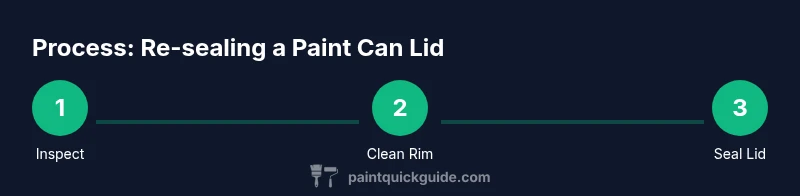
Step 1: Inspect the Lid and Can for Damage
Start by examining both the lid and the can rim for dents, warping, or corrosion. A deformed rim can prevent a true seal, leading to leaks and faster drying of stored paint. If you find significant damage, consider replacing the lid or the can rather than forcing a seal, which can worsen the defect. Light rust or minor nicks can often be managed with careful cleaning and reseating, but major damage should be addressed with new components to ensure safety and quality. PaintQuickGuide emphasizes inspecting every time you reuse a can.
Step 2: Clean the Rim and Sealing Surface
Wipe the sealing surface of the rim and the underside of the lid with a lint-free cloth to remove dust, dried paint, and oils. Residue can interfere with a tight seal, causing air pockets or uneven pressure. If necessary, use a small amount of isopropyl alcohol on the cloth to remove stubborn residues, then let the area dry completely before resealing. A clean surface supports consistent seating and reduces the chance of leaks during storage or transport.
Step 3: Align the Lid with the Can
Position the lid so that any notches, tabs, or alignment marks line up with corresponding features on the can. Misalignment can cause cross-threading or uneven seating, which weakens the seal and makes it harder to achieve a full, uniform closure. Once aligned, place the lid gently on the rim and square it so it sits flat without rocking. Proper alignment is the foundation for a reliable seal and easier future openings.
Step 4: Apply Even Pressure to Re-seal
With the lid centered, press firmly around the edge of the lid using the palm of your hand or the flat part of your fingers. Apply steady, even pressure rather than tapping or twisting aggressively. If the lid feels slightly resistant, rotate the can as you press to ensure a uniform seal all the way around. This step is critical for preventing leaks and preserving paint integrity over time.
Step 5: Check the Seal and Test for Leaks
After seating, inspect the edge for a consistent, uniform ring of contact. Test for a seal by gently tilting the can and looking for any paint seepage or air bubbles at the rim. If you notice a gap or leakage, recheck alignment and rim cleanliness, then reseat. A proper seal should feel firm with no give along the circumference. If stubborn, repeat steps 2–4 once more before discarding the attempt.
Step 6: Handling Stubborn Lids and Damaged Rims
Some lids resist seating when rims are damaged or paint has dried unevenly. In such cases, apply a light, even pressure and use a rubber mallet or the flat side of a clean tool to gently coax the lid into place—never strike hard. If the lid still won’t seat squarely after careful attempts, replace the lid or can to avoid future leaks. Do not reuse a damaged lid for safety and quality reasons. This minimalist approach saves you from messy rework later.
Step 7: Storage and Maintenance for Longevity
Store paint cans upright in a cool, dry place away from direct sunlight. Re-seal after each use to limit evaporation and color drift. Label cans with the date opened, paint type, and any additives used. Regularly check the rims for rust or deformation and address issues promptly to extend the life of the contents. A routine maintenance habit saves money and reduces waste over time.
Common Mistakes and How to Avoid Them
Common mistakes include over-tightening, which can warp rims, failing to clean the rim, using a damaged lid, and forcing a lid onto a misaligned can. Avoid these by taking a moment to inspect, clean, and align before pressing. Always replace damaged lids or cans rather than attempting a risky seal. By following the steps in this guide, you’ll minimize spills, save paint, and keep your workspace clean. PaintQuickGuide’s method emphasizes deliberate, repeatable steps to avoid trial-and-error reseals.
Authoritative sources
- https://www.osha.gov
- https://www.nist.gov
- https://www.epa.gov
These sources provide general safety and handling guidance relevant to painting projects and storage practices. Always refer to manufacturer recommendations for specific paints and lid designs.
Tools & Materials
- Paint can(Closed or opened as needed; inspect for dents.)
- Paint lid(Ensure it matches the can and is not warped.)
- Lint-free cloth(Used to clean rim and lid sealing surfaces.)
- Isopropyl alcohol (optional)(For stubborn residues on rims.)
- Gloves(Protect skin when handling wet paint.)
- Flat-head tool or plastic wedge (optional)(Assist with stubborn lids gently.)
- Rubber mallet (optional)(Lightly tap lid edge if needed (avoid damage).)
Steps
Estimated time: 15-25 minutes
- 1
Inspect lid and can for damage
Check for dents, warping, and rim corrosion. Damaged parts can prevent a true seal, leading to leaks or accelerated drying. If you find significant defects, replace the lid or can rather than forcing a seal.
Tip: If the rim looks dull but intact, proceed with cleaning; a clean rim is often the only blocker to a good seal. - 2
Clean rim and sealing surface
Wipe the rim and underside of the lid with a lint-free cloth. Remove all paint, oils, and dust. For stubborn grime, use a small amount of isopropyl alcohol on the cloth and let dry completely before resealing.
Tip: Dry surfaces seal better, so ensure both surfaces are dry before seating the lid. - 3
Align lid with can notch
Position the lid so alignment marks or notches line up with the can. Misalignment can cause cross-threading or gaps that compromise the seal. Place the lid on top and ensure it sits flat before applying pressure.
Tip: Take a moment to verify alignment from multiple angles; a misaligned lid is hard to correct after seating. - 4
Seat lid evenly
Press around the edge evenly with the palm or fingertips. Avoid biasing pressure on one side. A uniform seal prevents leaks and maintains paint integrity.
Tip: If you feel resistance, don’t force. Check alignment and rim cleanliness again and reseat. - 5
Check the seal
Inspect the outer edge for a continuous seal with no gaps. Lightly tilt the can to see if paint drips or air bubbles appear at the rim. A good seal should hold with minimal movement.
Tip: If you see liquid escaping, recheck the seal and reseat once more. - 6
Address stubborn lids
For lids that won’t seat properly, apply steady pressure while rotating the lid slightly to find the best seat. If the rim is damaged or the lid is deformed, replace the component to ensure safety and quality.
Tip: Do not hammer or wedge aggressively; persistent resistance often means replacement is needed. - 7
Store and label
Wipe excess paint from the exterior, store upright, and label with date opened and contents. Proper storage reduces evaporation and helps future color matching.
Tip: Keep lids fully engaged when stored to minimize air exposure. - 8
Final check
Give the can a gentle shake after resealing to ensure the lid holds and the seal remains intact during movement. Open and recheck after a few minutes if the can was moved.
Tip: If the paint appears separated or unusually dry, consider stirring or reconditioning as per label guidance.
Your Questions Answered
Can I reuse a lid from a different paint can?
Only if the lid matches the can’s sizing and alignment features. A mismatched lid can leak or not seal properly, even if it fits visually. If in doubt, use the original lid or replace both components.
Only reuse a lid if it fits the can exactly. If unsure, use the original lid or replace components to avoid leaks.
What should I do if the lid won’t close due to dents?
Dents usually require replacement. Attempting to force a dented lid can damage the can or create a poor seal. If the dent is small, you may try gentle pressure around the edge, but replacement is safer.
If the lid is dented, replace it rather than forcing a seal. Gentle pressure might help only with minor, non-structural damage.
Is it okay to reseal glossy enamel with a standard lid?
Yes, as long as the rim and lid are clean, undamaged, and properly aligned. Always ensure compatibility between lid and can and check for a complete seal after reseating.
Yes, provided the lid and rim are undamaged and well-aligned. Check the seal after reseating.
How should I store partially used paint after resealing?
Store upright in a cool, dry place, with the date opened and contents labeled. Re-seal tightly after each use to minimize evaporation and maintain color consistency.
Store upright, label with date, and reseal tightly for best results.
Can I use a screwdriver to help reseal a lid?
No. Do not use metal tools to pry or force the lid. Use proper resealing techniques and replace components if needed to avoid damaging the can.
No—avoid metal tools. Use the proper resealing steps and replace damaged parts if needed.
Watch Video
Quick Summary
- Inspect for damage before resealing.
- Clean rims and lids to ensure a true seal.
- Align notches and apply even pressure.
- Test the seal and store cans upright.
- Replace damaged lids or cans when needed.