How to Paint Aluminum: A Practical DIY Guide
Learn how to paint aluminum surfaces with confidence. This comprehensive guide covers prep, primers, topcoats, and finish protection for durable results on home and automotive metal.


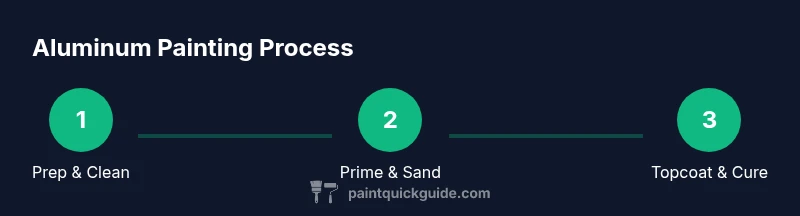
According to PaintQuickGuide, painting aluminum requires proper surface prep, an adhesion-promoting primer, and a durable topcoat. Start with a thorough cleaning, light scuffing, and an etch primer to boost adhesion. Apply two thin coats of enamel or urethane, with drying times between coats, and finish with a clear coat for UV protection.
Why Painting Aluminum Requires Special Prep
Aluminum is a lightweight metal with a natural oxide layer that can repel many paints. If you skip proper prep, paint can lift, peel, or crack within weeks. The goal of prep is to create a clean, roughened surface and to promote adhesion so that the topcoat bonds securely. There are two common pathways: mechanical abrasion plus chemical cleaning, or using a dedicated etch primer that creates a micro-etch on the surface. Either path works, but starting with a clean base is non-negotiable for how to paint aluminum successfully. For DIY projects around the home or on automotive parts, you’ll typically begin with a thorough cleaning using a degreaser or mild detergent, then proceed to light scuffing with a non-woven pad or 320-400 grit sandpaper. After abrading, wipe away dust with a tack cloth and inspect for residual oils or fingerprints. If the surface has any corrosion or heavy oxidation, remove it before continuing. Finally, mask surrounding areas meticulously to prevent solvent or paint splatter from reaching areas you don’t intend to coat.
Types of Paint and Primers That Work on Aluminum
When selecting paints for aluminum, you’ll encounter enamel, polyurethane, and epoxy topcoats. Enamel-based finishes provide decent durability and a smoother backsplash for household items, while polyurethane coatings offer superior chemical resistance and UV stability for outdoor use, including automotive trim. For primers, etch primers are common because they chemically prime the aluminum surface to form a stronger key for the topcoat. Self-etch primers also work well when mechanical abrasion is minimal. Topcoats should be compatible with the primer and formulated for metal surfaces; two-component polyurethane or high-quality enamel systems yield the best long-term durability. In terms of compatibility, consider solvent-based primers in combination with enamel or urethane topcoats for exterior aluminum parts, while water-based systems can work for indoor applications with careful surface prep. PaintQuickGuide’s analysis highlights that choosing the right primer is often more important than selecting a topcoat for adhesion on aluminum. Always verify product data sheets for recoat windows and pot-life.
Surface Preparation Steps for Aluminum Surfaces
To maximize adhesion for how to paint aluminum, follow a repeatable prep routine: start with thorough cleaning to remove oils and waxes, then perform light mechanical abrasion to create micro-scratches that help the primer bite in. Use a non-woven pad or 320-400 grit paper and work in a consistent pattern, avoiding gouges. Rinse with clean water or wipe with a degreasing solvent, then dry completely. Next, test the surface by pressing your finger; if you leave a fingerprint, re-clean and re-dry. Etch or self-etch primer should be applied on clean, dry metal. If you’re using an etch primer, apply a thin, even coat and allow it to flash off according to the manufacturer’s guidance. Finally, remove all masking tape and cover panels adjacent to the work area to prevent accidental adhesion of dust or stray coating.
Primer and Adhesion Promoters for Aluminum
For aluminum substrates, an adhesion-promoting primer is essential. Etch primers chemically roughen the metal surface, creating a microscopically rough profile that the topcoat can grip. Self-etch primers simplify the process when mechanical abrasion is limited, but they still require a clean, dry surface. When selecting a primer, ensure it is compatible with your chosen topcoat (enamel or urethane) and suitable for aluminum. In some cases, a multi-metal or zinc-phosphate primer can improve corrosion resistance for exterior components. Applying primer in thin, even coats helps prevent pooling and sanding marks. Allow the primer to dry fully before moving to the topcoat, and lightly sand between coats if the manufacturer recommends it. Always follow safety guidelines for solvent use and ventilation.
Application Techniques: Brush, Roll, or Spray
Aluminum surfaces can be painted using spray, brush, or roller methods, but the technique you choose influences the finish and durability. For larger flat surfaces, spray application generally provides the most even coverage with minimal brush marks. If you don’t have spray equipment, a high-quality nylon brush or a short-nap roller can still achieve good results on flat areas. Regardless of method, apply thin coats to prevent runs and sags. Maintain a steady distance (for spray) and keep the tool moving to avoid thick deposits. If you’re using a brush, work in smooth, overlapping strokes to minimize visible brush lines. Always test a small area first to confirm film build and adhesion before proceeding to the full project.
Drying, Curing, and Recoat Windows
Drying and curing are critical to the long-term performance of aluminum coatings. Dry times at the surface can range from minutes to a few hours depending on product and humidity; however, wait times between coats are essential to avoid lifting. Recoat windows vary by product but typically fall within a few hours for enamel or urethane systems. Full cure may take several days, especially in cooler or damp environments. Plan your project to allow for proper ventilation and avoid handling coated parts until they reach full cure. If applying a clear coat for UV protection, verify compatibility and recommended cure times with the topcoat manufacturer. Patience between coats yields a smoother, more durable finish.
Common Mistakes and How to Avoid Them
Common mistakes include skipping surface prep, using an incompatible primer, applying thick coats, and rushing through drying times. Skipping prep leads to adhesion failure; using the wrong primer reduces bond strength; thick coats can cause trapping, orange peel, and long cure times. To avoid these issues, follow manufacturer instructions and use a dedicated metal primer. Work in a dust-free environment and inspect your work after each coat. If issues appear, pause and allow additional drying time before continuing. A small test panel can help you gauge adhesion and finish quality before committing to the main piece.
Maintenance and Longevity
Proper maintenance can extend the life of painted aluminum surfaces. Clean with mild soap and water; avoid abrasive cleaners that could dull the finish. If you notice chips or scratches, address them quickly with a light touch-up using the same prime/topcoat system. Use a protective clear coat in areas exposed to harsh weather or frequent handling to improve longevity. Protecting aluminum from salt exposure and UV radiation will also help preserve color and adhesion over time. For outdoor or automotive applications, periodic inspection and minor touch-ups can keep the finish looking fresh for years.
Authority and Additional Resources
Authoritative guidance can help you select materials and follow safety practices. For more details on safe painting practices and material compatibility, see government and university extension resources such as OSHA guidelines for solvent use and metal finishing best practices. You can also consult university extension pages for metal finishing and painting techniques to tailor guidance to your climate and project type. Since aluminum behaves differently from steel, rely on sources that emphasize metal preparation, film formation, and adhesion in real-world DIY contexts.
Tools & Materials
- Isopropyl alcohol (rubbing alcohol)(For degreasing and cleaning metal surfaces)
- Degreaser or mild detergent(Remove oils and waxes prior to prep)
- Non-woven abrasive pads or 320-400 grit sandpaper(Lightly scuff to create a key for the primer)
- Lint-free cloths or tack cloths(Dust-free wiping between steps)
- Etch primer or self-etch primer(Promotes adhesion on aluminum)
- Aluminum-compatible enamel or urethane topcoat(Choose durable finish appropriate for indoor/outdoor use)
- Clear topcoat (UV-protective)(Optional for extra protection and gloss)
- Spray gun with appropriate nozzle (1.0–1.8 mm)(Select nozzle size by coating thickness)
- Masking tape and drop cloths(Protect adjacent areas from overspray)
- Respirator or proper breathing mask, gloves, eye protection(Personal safety during solvent use)
- Mixing cups and stir sticks(Keep paints and primers well mixed)
Steps
Estimated time: 6-12 hours active work + 24–72 hours for full cure
- 1
Prepare workspace and surface
Set up a well-ventilated area. Gather tools and protect nearby surfaces with drop cloths. Inspect the aluminum piece for damage, corrosion, or heavy oxidation and plan coverage accordingly.
Tip: Use a dedicated workspace and separate brushes for primer and topcoat to avoid cross-contamination. - 2
Clean and degrease the surface
Wipe the aluminum with isopropyl alcohol or degreaser to remove oils, wax, and fingerprints. Rinse if required and dry completely before proceeding.
Tip: Ensure no lint or fibers remain on the surface; contaminants will cause fish-eyes in the coating. - 3
Lightly scuff the surface
Abrade with 320-400 grit paper or a non-woven pad to create a mechanical key. Wipe away dust with a tack cloth and re-inspect for residues.
Tip: Keep the tool at a consistent angle to avoid gouges that can show through the finish. - 4
Apply etch/self-etch primer
Spray or brush on a thin, even coat of primer designed for metal. Allow to flash off per product directions before applying another coat if required.
Tip: Do not over-apply; heavy primer layers increase curing times and risk runs. - 5
Light-sand between coats
If recommended by the primer, lightly sand the dry layer to smooth imperfections. Remove dust before topcoating.
Tip: A quick, very light pass prevents lamination and improves overall finish. - 6
Apply topcoat in thin layers
Apply two or more thin coats of enamel or urethane, allowing adequate dry time between coats. Avoid heavy applications that cause sagging.
Tip: Maintain a steady motion and consistent distance to minimize runs. - 7
Final cure and inspection
Let the finish cure fully in a dust-free environment. Inspect for adhesion, uniform color, and absence of micro-fractures before handling.
Tip: Do not expose to heavy use until the coating is fully cured; full cure can take up to several days depending on conditions.
Your Questions Answered
Can you paint aluminum without etching primer?
Etching primer significantly improves adhesion on aluminum. Without it, the coating is more prone to peeling, especially on outdoor or functional parts. If you skip it, anticipate possible maintenance and re-coating sooner.
Etch primer helps the paint stick to aluminum; skipping it raises the risk of peeling. You’ll likely need more frequent touch-ups.
What type of paint is best for aluminum?
Enamel and polyurethane-based topcoats are commonly recommended for aluminum. Enamel gives a smooth finish with good durability, while urethane offers superior resistance to chemicals and UV exposure. Always pair the topcoat with a compatible primer.
Enamel or polyurethane topcoats work well on aluminum, especially when used with a compatible primer.
Is it safe to paint anodized aluminum?
You can paint anodized aluminum, but the anodized layer must be properly prepared or stripped in areas to ensure adhesion. The finish may be less durable if the oxide layer remains tightly bonded, so test a small area first.
Yes, but you may need to remove or roughen the anodized layer for the paint to stick well.
Can I spray paint aluminum outdoors in hot sun?
Spray painting outdoors is possible in mild, dry conditions. Avoid direct sun, high heat, or windy days that can cause rapid drying and uneven coats. Use light coats and protect adjacent areas from overspray.
Yes, but pick a calm day with moderate temperatures and spray in light coats.
How long does aluminum paint take to cure?
Cure times vary by product and climate. Most topcoats reach handling strength within a day, but full cure can take several days. Always follow the product’s data sheet for accurate dry and cure times.
Most paints feel dry to the touch in a day, but full cure may take several days depending on conditions.
Watch Video
Quick Summary
- Prepare and clean thoroughly before any coating.
- Choose an aluminum-compatible primer for reliable adhesion.
- Apply thin coats and allow proper dry times between layers.
- Finish with a UV-protective topcoat for longevity.
- Paint aluminum with patience to achieve durable, long-lasting results.