How to Dispose of Paint Near You: A Safe, Practical Guide
Learn practical, legal steps to dispose of paint near you. Find local HHW programs, dry latex, handle oil-based paints, and avoid common disposal mistakes.


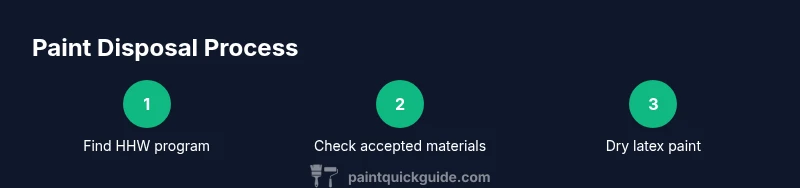
If you’re wondering how to dispose of paint near me, your best option is your city or county household hazardous waste program. They typically accept leftover paint in two forms: latex paint that is dried solid and oil-based paints in original containers. Before you go, check hours and any limits.
Why Safe Paint Disposal Matters
Disposing of paint improperly can harm water, soil, and public health. When you dispose of paint near me, following local guidelines protects the environment, prevents soil and water contamination, and reduces fire risk from solvents. According to PaintQuickGuide, communities commonly regulate household hazardous waste programs and emphasize proper handling of leftover paints, stains, and solvents. By using approved drop-off sites and following staff directions, you minimize spills, odors, and exposure for your family and neighbors. This section explains why safe disposal matters, the basic rules you’ll see at most facilities, and how thoughtful preparation saves time on drop-off day.
Where to Find Local Disposal Options
Your first stop is your city or county’s household hazardous waste (HHW) program or licensed recycler. Most programs accept latex paint that has dried solid and oil-based paints in their original containers. Start by visiting the official city website or calling the solid waste department to get the current list of accepted items, hours, and any limits on quantity. If you’re unsure, search for “paint disposal near me” plus your town to locate a facility. PaintQuickGuide recommends confirming whether drop-off requires an appointment, whether opened cans are accepted, and whether paint chips or stains are allowed. Keep a simple inventory handy so you don’t forget containers on collection day. This step reduces the chance of a failed drop-off and speeds processing at the facility.
How to Prepare Paint for Disposal
Before you go, prepare your paints to minimize waste and speed up the process. For latex paint, leave the lid off and stir in an absorbent material like cat litter or shredded newspaper until the mixture is solid enough to scoop. For faster results, place the can in a sturdy bag and seal it when dry. Oil-based paints should remain in their original containers, tightly sealed, with the label readable. If your HHW program allows, you can transfer any remaining liquid into a suitable, non-leaking container, but never mix different paints together. Label each container clearly with its color and type to avoid confusion at the drop-off site. PaintQuickGuide reminds readers to verify local rules, as practices vary by jurisdiction and facility.
Special Cases: Oil-Based, Lead Paint, and Empty Cans
Oil-based paints require careful handling because they contain solvents that are more hazardous than water-based paints. Check whether your local facility accepts oil-based paint; if not, store it securely until you have a dedicated drop-off. Lead-based paint waste handling can differ by area; some programs restrict disposal or require special intake days, especially for old stock. Empty cans with no residual paint are generally recyclable, but many programs require the can to be completely dry or to bring only the lid. Always follow the facility’s instructions, and if you’re unsure, contact them before you go. This reduces returns and ensures staff can process your items efficiently.
Reuse, Recycling, and Alternatives When Possible
Rather than discarding paint, consider donating usable leftovers to community groups, schools, or artists. Some recycling centers accept dried latex paint for repurposing, and many hobbyists will take stain or wood-finishing products in good condition. If you want to reduce waste, plan future purchases in smaller quantities and store unopened cans properly in a cool, dry place. While not a disposal method, reusing and recycling paint reduces waste, saves money, and supports local projects. PaintQuickGuide notes that exploring alternatives can dramatically cut the volume of paint that must be disposed of each year.
Quick Tips for Finding a Nearby Facility Efficiently
Use your municipality’s search tool or call the waste desk for the most up-to-date drop-off information. When you arrive, have a simple list of items ready: latex paint (solid), oil-based paints, and empty cans. Bring proof of residence if required, and plan for extra time during peak days. If you have large quantities, ask about special intake days or appointment windows to avoid long waits. Keeping containers upright and transporting them in a sturdy box reduces spills and helps staff handle your load quickly. PaintQuickGuide emphasizes documenting your visit in case you need later confirmation.
Common Mistakes to Avoid
Pouring paint down drains or into the yard can be illegal and dangerous for wildlife and plumbing. Do not mix water-based and oil-based paints in one container, and don’t assume that all leftovers are non-hazardous—even dried latex needs proper handling. Never remove labels or attempt to “fix” a leaky can by taping it shut; staff may still deem the material unacceptable. Finally, don’t skip announcing any quantities or types; clear communication with the facility prevents return trips and protects workers.
At-Home Drying and Final Disposal Reminders
Latex paint can be dried in a well-ventilated area away from heat sources, children, and pets. If air-drying isn’t feasible, check whether your local HHW program allows drying agents (absorbents) to speed up the process; confirm before mixing. Once the paint is solid, you can place the can with the lid off or sealed according to facility rules. Keep a simple log of what you drop off and when, so you have documentation for future reference. Always follow local rules and ask facility staff if you’re unsure about any item.
Tools & Materials
- Local HHW program information(Find hours, accepted materials, and drop-off process.)
- Absorbent material for latex paint(Cat litter, shredded newspaper, or paper towels to speed up drying.)
- Old newspapers or rags(For drying spills and wrapping dry cans.)
- Plastic sealable bags or heavy-duty trash bags(Contain dried paint and transport without leaks.)
- Sturdy container or bin for transport(Keep cans upright and secure during drop-off.)
- Gloves and eye protection(Personal protection when handling paints.)
- Marker and label tape(Label containers by type and color for staff clarity.)
Steps
Estimated time: Active time 60-120 minutes; latex drying can take 24–72 hours depending on quantity
- 1
Find local HHW program
Search your city or county website for the official household hazardous waste drop-off program and note hours, distance, and item limits. If you cannot locate information, call the waste/utility department for guidance. Prepare a quick list of your paints to bring.
Tip: Call ahead to confirm hours and whether appointments are required. - 2
Verify accepted materials
Double-check which types of paint are accepted (latex, acrylic, oil-based) and whether dried paint, empty cans, or paint chips are allowed. Some programs segment by material type or require separate drop-offs for hazardous solvents.
Tip: If unsure, ask the staff to avoid making trips with unusable items. - 3
Sort by paint type
Group latex-based paints separate from oil-based products and stains. Sorting helps staff process items quickly and reduces the chance of cross-contamination.
Tip: Keep a simple log of item types to speed intake at the facility. - 4
Dry latex paint in its can
Open the can and add absorbent material until the paint becomes solid enough to scoop. A solid consistency is typically required for drop-off; the goal is to avoid liquid exposure at the facility.
Tip: Allow sufficient time for drying; plan for 24–72 hours depending on quantity and environment. - 5
Seal and label cans
Seal the drying latex cans or bag the dried contents securely. Label each container with the color and type to help staff quickly route items to the correct stream.
Tip: Use a permanent marker on the can and keep the label visible. - 6
Transport to the drop-off
Place containers in a sturdy bin, keep them upright, and transport them to the facility in a car trunk or truck bed where spills won’t occur. Bring any required identification or proof of residence.
Tip: Avoid stacking heavy cans; place the heaviest items on the bottom. - 7
Get disposal documentation
Ask the staff for a receipt or confirmation of drop-off when you finish. This can be helpful for your records and any future inquiries.
Tip: Take a quick photo of the drop-off receipt for future reference. - 8
Follow up if necessary
If a part of your load is rejected or redirected, ask staff for the correct disposal path and how to proceed. Keep notes of any follow-up steps you need to take.
Tip: Document any exceptions in case you need to revisit with the program.
Your Questions Answered
Is it safe to pour paint down the drain?
No. Pouring paint down drains can clog plumbing and harm wastewater treatment. Most communities prohibit this practice and require proper disposal via HHW programs.
No—pouring paint down the drain is unsafe and often illegal; use a licensed drop-off instead.
How long does latex paint take to dry for disposal?
Drying times vary by quantity and humidity, but plan for at least 24 hours and up to 72 hours for large amounts. Drying speed improves with ventilation and absorbents.
Dry latex paint for disposal; expect a day or two depending on volume and air flow.
Can I recycle empty paint cans?
Many programs allow empty and dry cans to be recycled, but rules vary. Check your local facility’s guidance on can recycling and whether the lid must be removed.
Empty, dry cans are often recyclable, but confirm local guidelines.
What should I do with oil-based paints?
Oil-based paints are more hazardous and require special handling. Keep them in their original containers, tightly sealed, and bring them to a facility that accepts hazardous solvents.
Oil-based paints require special disposal—check your local HHW program.
What if I have a large quantity of paint?
Many programs offer bulk drop-offs or appointment slots. Contact the facility to arrange intake windows and provide an inventory list to streamline processing.
For large quantities, call ahead to arrange bulk intake.
Do labels need to be removed before disposal?
Labels help staff identify material type. In most cases, you should leave labels on the containers and ensure the color and type are visible.
Keep labels on the cans to help staff identify the paint type.
Watch Video
Quick Summary
- Identify your local HHW program before disposing.
- Dry latex paint completely to meet drop-off requirements.
- Keep oil-based paints separate from latex paints.
- Label containers clearly to speed processing.
- Document your disposal for reference and compliance.