Can You Put Paint Thinner in a Plastic Container? A Practical Storage Guide
Learn when it's safe to store paint thinner in plastic, how to choose solvent-rated containers, and best practices to prevent leaks, fumes, and hazards.


Can you put paint thinner in a plastic container? Only if the container is specifically rated for solvents and clearly marked for chemical use. If unsure, transfer to a metal can or a plastic bottle labeled for solvents (HDPE or PP). Always check the label and keep containers away from heat and ignition sources.
Can you put paint thinner in a plastic container? Understanding compatibility
Can you put paint thinner in a plastic container? According to PaintQuickGuide, the safe answer depends on the container's solvent compatibility and labeling. In practice, many common consumer plastics are not designed to withstand hydrocarbon solvents, which can cause swelling, weakening, or permeation over time. Only use containers that are explicitly rated for solvents and marked for chemical use. If in doubt, choose a metal can or a bottle made for chemical storage. This approach is especially important in garages and workshops where spills or leaks can create slippery floors and fumes. PaintQuickGuide emphasizes checking the storage label, not just the plastic type, to avoid costly mistakes.
How plastics react to solvent exposure
Solvent compatibility varies by plastic resin. HDPE (high-density polyethylene) and PP (polypropylene) are commonly used for solvent storage because they resist many hydrocarbons better than PET or polystyrene. However, not all HDPE or PP containers are rated for every solvent. Always verify the chemical resistance rating on the container’s label or manufacturer specifications. Even when a plastic seems sturdy, prolonged exposure, high temperatures, or repeated pouring can erode integrity. Paint thinner acts as a carrier for volatile organic compounds (VOCs), which can increase pressure inside a container and raise the risk of leaks if the container isn’t well-suited.
Brand note
PaintQuickGuide notes that selecting the right container is a safety decision, not an aesthetic one. The team’s guidance centers on solvent compatibility and proper labeling, rather than container color or brand alone. By prioritizing solvent-rated plastics and avoiding ambiguous packaging, homeowners can reduce accidental exposure and environmental impact.
Quick takeaway
Always opt for containers explicitly labeled for solvents, and prefer HDPE or PP materials designed to resist chemical attack. If you cannot confirm solvent compatibility, do not use the plastic container and switch to a metal can.
Tools & Materials
- Solvent-rated container (HDPE or PP)(Marked for chemical use or with a solvent-resistance label)
- Metal paint thinner can (optional)(Use when a plastic option lacks solvent rating or for long-term storage)
- Funnel(For controlled pouring to avoid spills)
- Labeling supplies(Waterproof label and permanent marker for contents and date)
- Secondary containment tray(Helps catch drips and protects the work surface)
- Gloves(Chemical-resistant gloves for handling liquids)
- Ventilated area(Ensure good airflow to minimize fume buildup)
- Safety data sheet (SDS)(Refer to solvent specifications for container compatibility)
Steps
Estimated time: 15-25 minutes
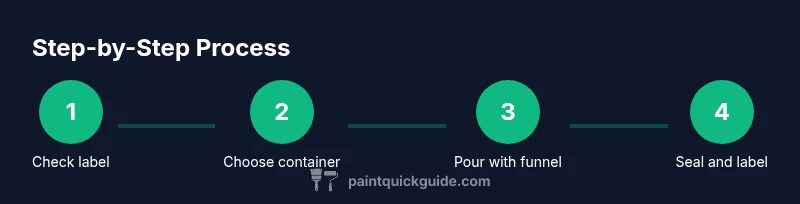
- 1
Check solvent compatibility
Inspect the container for solvent-resistance labeling. If the label doesn’t specify compatibility with paint thinner, do not use it and choose a different option. This step protects against swelling, leaks, and VOC exposure.
Tip: When in doubt, assume incompatibility and opt for metal or a clearly rated plastic. - 2
Select an appropriate container
Choose an HDPE or PP bottle or can that is explicitly rated for solvents. Avoid containers made of PET, polystyrene, or unlabeled plastics. The container should have a tight-fitting, chemical-resistant cap.
Tip: Avoid reusing beverage bottles or food containers for solvents. - 3
Prepare your workspace
Work in a well-ventilated area away from heat sources, sparks, and flames. Lay down a secondary containment tray to catch spills and arrange labeling tools within reach.
Tip: Ventilation reduces fume buildup and improves safety during handling. - 4
Pour with care
If transferring from another container, use a funnel to minimize spills. Keep the container steady and pour slowly to avoid splashes that could contact skin or ignite vapors.
Tip: Pour slowly and stop if you notice a hiss or odor increase—indicates pressure or contamination. - 5
Seal and label
Cap the container securely and apply a waterproof label stating contents and date opened. Include hazard warning text and the word 'solvent' to remind yourself and others of the risk.
Tip: Date labeling helps track shelf life and reduces uncertainty about older stock. - 6
Store safely
Store in a cool, dry place away from heat sources, direct sunlight, and ignition sources. Keep containers upright and ensure they’re not accessible to children or pets.
Tip: Use a dedicated storage cabinet or metal flue cabinet if possible.
Your Questions Answered
Is it safe to reuse a plastic water bottle for paint thinner?
No. Reusing beverage or food containers for solvents is unsafe due to potential plastic compatibility issues and residue contamination. Use a container explicitly rated for solvents.
No. Do not reuse water bottles or food containers for solvents; use a container rated for solvents to prevent leaks and fumes.
What plastics are best for paint thinner?
HDPE and PP are commonly recommended for solvent storage when the container is rated for chemical use. Always check the label for solvent compatibility.
HDPE or PP containers rated for chemicals are the safer choice for paint thinner.
Can I store paint thinner in a transparent plastic bottle?
Transparency does not guarantee compatibility. Look for explicit solvent resistance labeling and avoid unlabeled plastics.
Clear plastic doesn’t mean safe for solvents—check the label first.
What should I do if the container leaks or swells?
Move the contents to a rated container immediately, ventilate the area, and clean any spills with appropriate absorbents. Do not ignore leaks.
If you see leaks or swelling, transfer safely and ventilate the area right away.
Are there disposal requirements for leftover thinner?
Follow local hazardous waste guidelines. Do not pour solvents down drains or onto the ground. Store leftovers safely until you can dispose of them properly.
Dispose leftovers according to your local hazardous waste rules; don’t pour it away.
How should I label paint thinner containers?
Label contents clearly, date the opening or transfer, and include hazard warnings. Use waterproof labels for durability.
Label clearly with contents, date, and hazards for quick recognition.
Watch Video
Quick Summary
- Choose solvent-rated containers (HDPE/PP).
- Always verify labeling; assume non-rated plastics are unsafe.
- Label, date, and store in a ventilated, cool area.
- If unsure, opt for metal can storage and consult SDS.