Can You Go Paintballing with Glasses? A Practical Safety Guide
Learn whether you can safely play paintball with glasses, plus guidance on choosing eye protection, fitting glasses under a mask, and tips to stay comfortable and safe on the field.


Yes, you can play paintball with glasses, but you must wear a properly fitting eye protection system that seals around or over your frames. Most players use a full-face mask or protective goggles with a secure strap, plus anti-fog coating. The PaintQuickGuide team notes that proper fit, lens quality, and comfort are essential for safe, enjoyable gameplay.
Can You Go Paintballing with Glasses? Eye Safety Basics
Eye safety is the top priority in any paintball game, and the question often comes up: can you go paintballing with glasses? The short answer is yes, but only when you pair your frames with purpose-built eye protection that seals well and stays in place during activity. According to PaintQuickGuide, the safest approach is a full-face mask or ANSI-rated goggles that fit your head and create a reliable barrier for the eyes. Glasses alone do not replace certified eye protection, and an ill-fitting setup can leave your eyes exposed to fast-moving paint, mask gaps, or peripheral hits. In practice, the right setup means choosing gear that protects your eyes, provides clear vision, and remains comfortable through long games. This guide walks you through options, fit strategies, and practical tips to help you play confidently while wearing glasses.
Eyewear Options: Goggles, Masks, and How They Interact with Glasses
There are two main routes for eye protection when you wear glasses on the paintball field. The first is a full-face mask with integrated eye protection that sits over your glasses, offering a sealed shield against projectiles. The second is a separate pair of high-quality goggles designed for paintball that can sit over or around your frames. Some players opt for OTG (over-the-glass) designs that are compatible with prescription lenses, but fit and field of view should be verified before purchasing. When choosing, look for ANSI or ASTM certifications, anti-fog coatings, and a wide, unobstructed lens that minimizes distortion. Fit matters just as much as protection: a mask that gaps at the nose or temples can allow ricochets to reach the eyes. The PaintQuickGuide team emphasizes trying gear in a controlled environment to ensure comfort and visibility on the day of play.
How to Fit Glasses Safely Under a Paintball Mask
Start by selecting a mask that can accommodate your glasses without pressing the frames into your cheeks or temples. Gently place your glasses, then bring the mask to lock position, ensuring the lenses remain clear and glasses do not press into your face. If the mask touches your frames, consider mask liners or adjusting strap tension to create a seal around the face without pinching. An adjustable strap helps keep the mask stable during quick movements and dives. If you notice any gaps around the mask seal, use cheek foam or face pad adjustments to improve coverage. Finally, verify that the lenses are not fogging; if fogging occurs, switch to anti-fog wipes or a spray and perform a quick fog test before game play.
Eye Protection Fit Tests and Fog Management
A successful fit test starts with a dry run in a low-stakes environment. Put on the full setup, take a few deep breaths, and exhale toward the mask surface to check for fog buildup and seal integrity. Fog prevention is essential: use anti-fog products, keep the inside of the lens clean, and ensure there is adequate airflow through the mask without compromising the seal. If your glasses steam up, adjust the mask’s venting, angle the lenses slightly downward, or switch to a higher-quality anti-fog option. Practicing in a well-ventilated area helps you learn how the mask behaves during sprinting, ducking, and crouching so you can react without compromising your eye protection.
Common Setup Scenarios: Glasses with Prescription Lenses
Prescription glasses add another layer of complexity. Many players with prescriptions opt for OTG goggles or a mask compatible with insertable prescription lenses. If you wear prescription lenses, consider having the inserts prepared by an optician so the lenses sit between the mask’s inner lens and your frames. If inserts aren’t available, ensure your frames sit comfortably behind the mask’s foam without causing pressure points. In higher-speed scenarios, even tight frames can shift; therefore, a retainer strap or mask extension can help keep glasses secured during abrupt movements. Always test your complete setup in a controlled environment before playing in public games.
Maintenance, Comfort, and Quick Adjustments
Maintenance is the quiet hero of reliable eye protection. Clean lenses after sessions to prevent residue that could affect visibility, and store masks in a cool, dry place to preserve foam seals. Comfort matters: if a mask feels tight after a long match, take a short break and adjust the straps. Keep spare nose pads or foam inserts handy to maintain a comfortable seal. When adjusting during play, prioritize safety by not modifying the mask while engaged in action; pre-adjustments in a safe area ensure you’re ready for the next round. With the right care, glasses and protective equipment can coexist on the field for many games to come.
Quick Comparison: Glasses vs. Contact Lenses for Paintball
While contact lenses offer an unobstructed field of view, they do not provide protection on their own. Wearing glasses with a protective mask is the safer option for most players, since the mask shields the eyes from direct hits. Prescription contacts can be used in tandem with a well-fitting gasketed mask, but the risk of eye irritation or lens displacement exists if you get hit near the eye area. If you prefer the freedom of contact lenses, consult with an eye care professional about compatibility with paintball masks and pollution exposure on the field. Overall, the safest approach is to prioritize protective gear designed for paintball and rely on expert guidance when pairing eyewear with face protection.
Tools & Materials
- Full-face paintball mask or ANSI-rated goggles(Ensure mask is certified for paintball and fits your face securely)
- Prescription glasses or non-prescription glasses(Masks should accommodate frames without pressure points)
- Anti-fog spray or wipes(Helps visibility in varying conditions)
- Eyewear retainer strap or mask strap extender(Keeps glasses in place during rapid movements)
- Nose guard or shield (optional)(Extra protection if needed)
Steps
Estimated time: 60-90 minutes
- 1
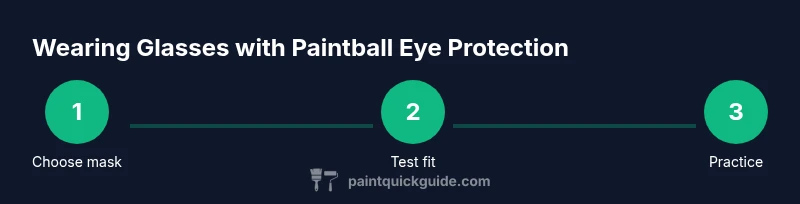
Choose eye protection first
Select a mask or goggles with a proven seal and comfortable fit. Ensure it is rated for paintball and designed to work with glasses if you wear frames. A good shield prevents direct hits from reaching the eye area and maintains clear visibility throughout the game.
Tip: Ask staff to help you simulate a few head movements to test for pressure points. - 2
Test fit with your glasses on
Put on your glasses first, then don the mask. Check that the frames sit behind the mask’s foam without pressing, and that you can see clearly through the lenses. If you feel pressure at the temples, adjust strap tension or consider a different mask model.
Tip: If your frames press uncomfortably, try a different frame size or add a soft pad between the frame and mask. - 3
Secure glasses with a retainer
Use a retainer strap or masking strap extension to keep glasses from shifting. A secure fit is critical when you crouch, sprint, or dive.
Tip: Test the retainer in motion—do a few quick bends to ensure it stays put. - 4
Check seal and adjust for fog
Perform a fog test by breathing toward the lens surface and watching for condensation. If fog appears, apply anti-fog product and ensure adequate airflow without compromising protection.
Tip: Carry a small anti-fog cloth and reapply as needed between rounds. - 5
Practice before live play
In a controlled area, practice ducking, sprinting, and aiming with your protective setup. This builds familiarity and reduces adjustment time during games.
Tip: Start with slower movements to refine fit and comfort. - 6
Plan for field adjustments
During matches, be ready to adjust if lenses fog or if the mask shifts. Make minor adjustments during breaks rather than mid-game to maintain safety.
Tip: Know where your spare parts and tools are stored on-site.
Your Questions Answered
Can I wear regular prescription glasses under a paintball mask?
Yes, many players wear prescription glasses under a paintball mask, but you should choose a protective system that accommodates frames and seals well. It’s important to test fit and comfort before playing and consider prescription inserts if available.
Yes, you can wear prescription glasses under a paintball mask, but test fit and use protective gear that seals properly.
What kind of eye protection should I choose?
Choose ANSI/ASTM-rated goggles or a full-face mask designed for paintball. Look for a secure seal, anti-fog features, and a design that accommodates glasses if you wear frames.
Pick certified goggles or a full-face mask with a good seal and anti-fog features.
Are there risks if glasses are not properly protected?
Improper protection can lead to eye injuries from direct hits or mask gaps. Always verify a solid seal and ensure the glasses don’t press uncomfortably against the mask foam.
Gaps or poor fit can raise the risk of eye injuries. Ensure a solid seal and comfortable fit.
Is it safe to wear sunglasses or non-prescription glasses?
Sunglasses or non-prescription glasses alone do not provide adequate eye protection for paintball. Use a certified eye-protective system over or around your frames.
Sunglasses aren’t enough; use certified eye protection over or around your glasses.
How can I tell if my setup fits properly?
A proper setup sits snugly with no gaps, allows clear vision, and remains stable during movement. If you feel pressure or fog, adjust or try a different mask.
Check for a snug fit with no gaps and clear vision; adjust if needed.
Watch Video
Quick Summary
- Secure proper eye protection before playing
- Ensure glasses fit comfortably under the mask
- Use a retainer to keep glasses in place
- Fog prevention is essential for safe visibility
- Test in a controlled area before live games